What Are the Best Universities in Serbia?
Moving to a new country like Serbia often means rethinking every aspect of your life, and for those of you with ambitions to further your education, finding the right university can feel like navigating a maze blindfolded. You're probably wondering about everything from accreditation and language barriers to student life and tuition fees. This guide is here to shed some light on the higher education landscape in Serbia, helping you uncover the best universities and what makes them stand out, so you can make an informed decision for your academic journey.
Understanding Serbia's Higher Education System
Before we dive into specific institutions, let's get a lay of the land, shall we? Serbia's higher education system follows the Bologna Process, which means degrees and credit systems are largely compatible with those in other European countries. This is a huge plus for anyone looking to transfer credits, continue their studies elsewhere, or have their qualifications recognized internationally. It’s not always straightforward, of course; sometimes you'll need to go through a "nostrifikacija" process to get your foreign degree officially recognized in Serbia, but the Bologna alignment certainly helps smooth things over.
The system is generally split into universities (univerziteti) and colleges of applied studies (visoke škole strukovnih studija). Universities offer a broader range of academic and professional programs, from undergraduate (bachelor's) to master's and doctoral studies. Colleges of applied studies, on the other hand, focus more on practical, vocational training, leading to specialized diplomas that are often directly applicable in specific industries. For most expats considering a full degree, universities will be your primary focus.
The Ministry of Education, Science and Technological Development oversees the entire system, ensuring quality and standards. While bureaucracy can be a slow beast in Serbia, especially when dealing with official documents and student visas, the academic quality, particularly at the older, more established universities, is genuinely high. You're not just getting an affordable education; you're getting one that holds weight.
Public vs. Private Universities
Just like back home, Serbia has both public and private universities. The public universities are funded by the state, which often translates to lower tuition fees for both domestic and international students compared to many Western countries. These institutions also tend to be larger, with a longer history, more diverse faculties, and often a stronger research focus. They are the backbone of Serbian academia and generally hold the highest prestige.
Private universities, while growing in number and popularity, operate on a different model. Their tuition fees are typically higher, and they often focus on more market-oriented programs, sometimes offering more flexible schedules or smaller class sizes. Some private institutions are excellent, particularly in fields like business, IT, or design, but it's always wise to do your homework. Check their accreditation, read reviews from current and former students, and see how their degrees are perceived in the job market. As a general rule of thumb, for comprehensive academic programs with a strong research component, public universities are usually the go-to choice.
Accreditation and Quality Assurance
When you're shelling out good money and even better time for an education, you want to be sure it's worth something, right? This is where accreditation comes in. In Serbia, the National Entity for Accreditation and Quality Assurance in Higher Education (NEAQA or AKOKVO in Serbian) is the body responsible for evaluating and accrediting higher education institutions and their study programs. It's their job to ensure that universities meet national and international standards.
Before you commit to any program, always, always verify its accreditation status. You can usually find this information on the university's official website, or by checking the NEAQA's public registry. An accredited program means your degree will be recognized and respected, both within Serbia and, thanks to the Bologna Process, much of the wider European Higher Education Area. Without proper accreditation, your degree might be little more than a piece of paper, and nobody wants that. It’s also crucial if you plan to eventually get your foreign qualification recognised in Serbia, as accreditation is often a key criterion.
Top Universities in Serbia for International Students
Alright, let's get to the good stuff – the institutions themselves. When people talk about higher education in Serbia, a few names immediately come to mind, largely because of their history, academic prowess, and the sheer number of faculties they host. These are predominantly public universities, steeped in tradition, and located in Serbia's major cities, offering a vibrant student experience.
University of Belgrade
Ah, the University of Belgrade. This is the grand dame of Serbian higher education, the oldest and largest university in the country, established way back in 1808. It's a behemoth, comprising 31 faculties and 12 research institutes, covering almost every field of study imaginable – from engineering and natural sciences to medicine, law, economics, and humanities. If you can think of a subject, chances are the University of Belgrade teaches it.
For international students, the sheer breadth of programs is a massive draw. You’ll find faculties like the Faculty of Medicine, known for its strong curriculum and highly regarded doctors, or the Faculty of Electrical Engineering, which consistently produces top-tier engineers. The Faculty of Organizational Sciences and the Faculty of Economics are also very popular choices, offering modern curricula with an international outlook. Belgrade, as the capital, offers an incredibly dynamic student life, with countless cultural events, nightlife, and opportunities for networking. However, navigating a university of this size can sometimes be a bit overwhelming, and securing accommodation can be competitive, so starting your search early is crucial.
University of Novi Sad
Moving north to Serbia's second-largest city, Novi Sad, you'll find another excellent institution: the University of Novi Sad. Established in 1960, it's younger than Belgrade's giant but has quickly grown into a comprehensive academic center with 14 faculties and three institutes. Novi Sad itself is a charming, multicultural city, often considered more relaxed than Belgrade, but still bustling with student life.
The University of Novi Sad is particularly strong in technical sciences, agriculture, and arts. Its Faculty of Technical Sciences is renowned, especially for IT and engineering programs, and attracts many students. The Faculty of Agriculture is also a leader in its field, reflecting the fertile Vojvodina region it's located in. For those inclined towards the arts, the Academy of Arts is highly respected. The university often has a more welcoming feel for international students, with some programs offered fully in English. It provides a fantastic balance between academic rigor and a high quality of life, and the cost of living in Novi Sad can often be a bit lower than in Belgrade, which is a definite plus for students keeping an eye on their budget.
University of Niš
Venturing south, the city of Niš hosts the University of Niš, founded in 1965. This university might be a bit smaller than its Belgrade and Novi Sad counterparts, but it’s a significant academic hub for the southern and eastern parts of Serbia. It consists of 14 faculties, covering a wide array of disciplines, including medicine, electronics, mechanical engineering, and philosophy.
The University of Niš is especially well-regarded for its Faculty of Electronic Engineering, which has a long tradition of excellence and strong industry connections. Its Faculty of Medicine also draws a good number of international students, offering solid programs. Niš is a city with a rich history and a more traditional Serbian atmosphere, and it's generally one of the most affordable cities to live in as a student. While it might not have the same dizzying array of international events as Belgrade, it offers a warm, community-focused environment where you can truly immerse yourself in Serbian culture. If you’re looking for quality education without the high-city price tag, Niš is definitely worth considering.
Practical Considerations for International Students
So, you've got your eye on a university, and maybe even a specific program. Fantastic! Now comes the nitty-gritty: how do you actually make this happen? As an expat who’s dealt with Serbian bureaucracy more times than I care to admit, I can tell you that preparation is key. There will be paperwork, there will be waiting, and there will be moments where you just want to throw your hands up. But with a bit of patience and the right information, it’s entirely manageable.
Application Process and Requirements
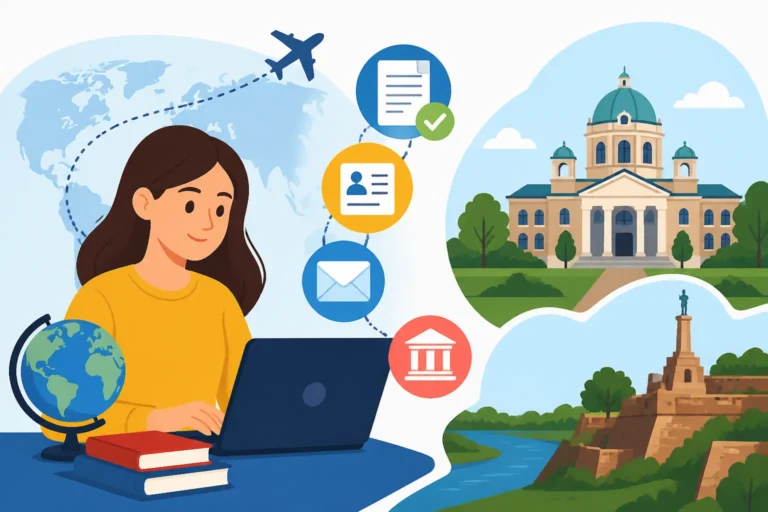
The application process for international students usually involves a few key steps. First, you'll need to gather your academic documents: high school diplomas, transcripts, and any previous university degrees. These documents often need to be translated into Serbian by a sworn court translator and then apostilled or superlegalized, depending on your country of origin. This step alone can be a bit of a headache, so start early!
Most universities will require you to submit an application form, along with proof of English language proficiency (usually a TOEFL or IELTS score) if you’re applying for an English-taught program. For Serbian-taught programs, you’ll need to demonstrate proficiency in Serbian, which can sometimes be assessed through an entrance exam or a certificate from a language school. There might also be entrance exams specific to your chosen field of study. Each university and faculty has its own specific deadlines and requirements, so checking their official international student pages is paramount. Many universities also require a motivational letter and sometimes a letter of recommendation. For a detailed walkthrough, you can find helpful information on How to Apply to a Serbian University as an International Student.
Language of Instruction and Serbian Language Learning
While many postgraduate programs and an increasing number of undergraduate programs, especially in fields like IT, business, and medicine, are now offered entirely in English, a significant portion of the curriculum at public universities is still delivered in Serbian. Don’t let this deter you, but be realistic about your language skills. If your chosen program is in Serbian, you'll need to invest time in learning the language.
Platforms like iTalki can be incredibly useful for finding Serbian tutors and getting a head start on the language before you even arrive. Immersing yourself in the language will not only help you academically but also vastly improve your daily life and integration into Serbian society. Even if you're studying in English, picking up some basic Serbian phrases is highly recommended. Locals truly appreciate the effort, and it opens up so many more doors to understanding the culture. Plus, many professors, even if they teach in English, might occasionally explain complex concepts in Serbian, so some familiarity can be very beneficial.
Tuition Fees and Cost of Living
One of Serbia’s biggest draws for international students is the affordability of its higher education compared to Western Europe or North America. Tuition fees vary widely depending on the university, the faculty, and the program, but they are generally much lower. For example, you can find a breakdown of costs in guides like How Much Is Tuition for International Students in Serbia?.
Here’s a rough idea of what to expect:
| University | Typical Annual Tuition (EUR) for International Students | Key Strengths |
|---|---|---|
| University of Belgrade | €1,500 – €5,000 (varies greatly by program, e.g., Medicine higher) | Engineering, Medicine, Law, Economics, Humanities |
| University of Novi Sad | €1,200 – €4,000 | Technical Sciences (IT/Engineering), Agriculture, Arts |
| University of Niš | €1,000 – €3,500 | Electronic Engineering, Medicine |
| Private Universities | €3,000 – €8,000+ | Business, IT, Design, more specialized fields |
Beyond tuition, the cost of living in Serbia is also very student-friendly. Rent for a decent apartment in a student city like Belgrade, Novi Sad, or Niš will be your biggest expense, but it’s still considerably lower than in many other European capitals. Utilities, food, and transport are also relatively inexpensive. Many international students find they can live comfortably on €500-€800 per month, depending on their lifestyle. Just remember to factor in health insurance, which is mandatory for your residence permit, and other personal expenses. If you plan to work part-time, remember to understand Understanding Income Tax and Social Contributions for Employees in Serbia and potentially use resources like Taxes for Expats to navigate your financial obligations.
Student Life and Support Systems
Moving to a new country for studies is a massive adventure, but it can also come with its fair share of challenges. Loneliness, culture shock, and administrative hurdles are very real. Thankfully, Serbian universities and cities offer a lot of support and opportunities to make your experience as smooth and enjoyable as possible.
Accommodation and Campus Facilities
Most public universities in Serbia offer student dormitories, which are by far the cheapest accommodation option. However, demand often outstrips supply, especially in Belgrade, and conditions can vary. You'll need to apply well in advance, and sometimes prioritize based on academic merit or financial need. Living in a dorm is a fantastic way to meet other students, both local and international, and quickly build a social network.
Alternatively, many students opt for private accommodation, either renting a room in a shared apartment or a small studio flat. While more expensive than dorms, this offers more privacy and often better facilities. Websites and local real estate agencies are the typical routes for finding these, but beware of scams. Always see the place in person if possible, and never pay large deposits before signing a contract. Most universities also have libraries, computer labs, sports facilities, and canteens offering affordable meals, which are great for student budgets.
Student Organizations and Activities
One of the best ways to integrate and make friends is to get involved in student life. Serbian universities, particularly the larger ones, have a plethora of student organizations, clubs, and societies. These range from academic clubs related to your field of study to sports teams, cultural groups, debate clubs, and even international student associations like Erasmus Student Network (ESN).
Joining these groups is not only fun but also a brilliant way to practice your Serbian, learn about local customs, and meet like-minded people. Many faculties also organize regular social events, parties, and excursions, providing a lively atmosphere outside of lectures. Embrace these opportunities! They are a crucial part of the expat student experience and will help you feel at home. For general guidance, remember to check out resources like The Complete Guide to Studying at a Serbian University (2027).
Visa and Residence Permit for Students
This is probably one of the most administrative-heavy parts of your journey. As an international student, you will need a student residence permit, often preceded by a Type D long-stay visa if you're coming from a country that requires one. The process involves submitting an acceptance letter from the university, proof of sufficient funds, health insurance, and proof of accommodation, among other documents.
The Ministry of Interior (MUP) handles residence permits, and while they've made strides in digitization, it can still be a bureaucratic marathon. Make sure all your documents are in order, translated, and notarized as required. It's also vital to register your address (prijava boravka) with the local police within 24 hours of arrival or moving to a new address. For more detailed information on this complex process, you might want to look at How to Apply for a Student Residence Permit in Serbia. Being proactive and organized will save you a lot of stress down the line.
Conclusion: Is Studying in Serbia Right for You?
Serbia offers a unique and enriching academic experience for international students. It’s a country that blends ancient history with modern ambition, offering high-quality education at a fraction of the cost you might find elsewhere. Whether you choose the bustling metropolis of Belgrade, the cultural charm of Novi Sad, or the historic warmth of Niš, you’ll find universities committed to academic excellence and a vibrant student community ready to welcome you.
Yes, there will be administrative hurdles, and yes, adapting to a new culture and language takes effort. But the rewards – a respected degree, a truly international experience, new friendships, and a deep dive into a fascinating culture – are well worth it. Do your research, prepare diligently, and embrace the adventure. Serbia truly has some hidden gems in its higher education system, and for the right student, it can be an absolutely fantastic place to learn and grow.
Disclaimer
The information provided in this article is intended for general guidance and informational purposes only. While every effort has been made to ensure accuracy and timeliness, regulations, policies, and university programs in Serbia can change frequently. Readers are strongly advised to verify all information with official university websites, the Serbian Ministry of Education, and relevant immigration authorities or legal professionals before making any decisions. We are not responsible for any inaccuracies or outdated information.