Can I Move to Serbia Permanently as a Skilled Professional?
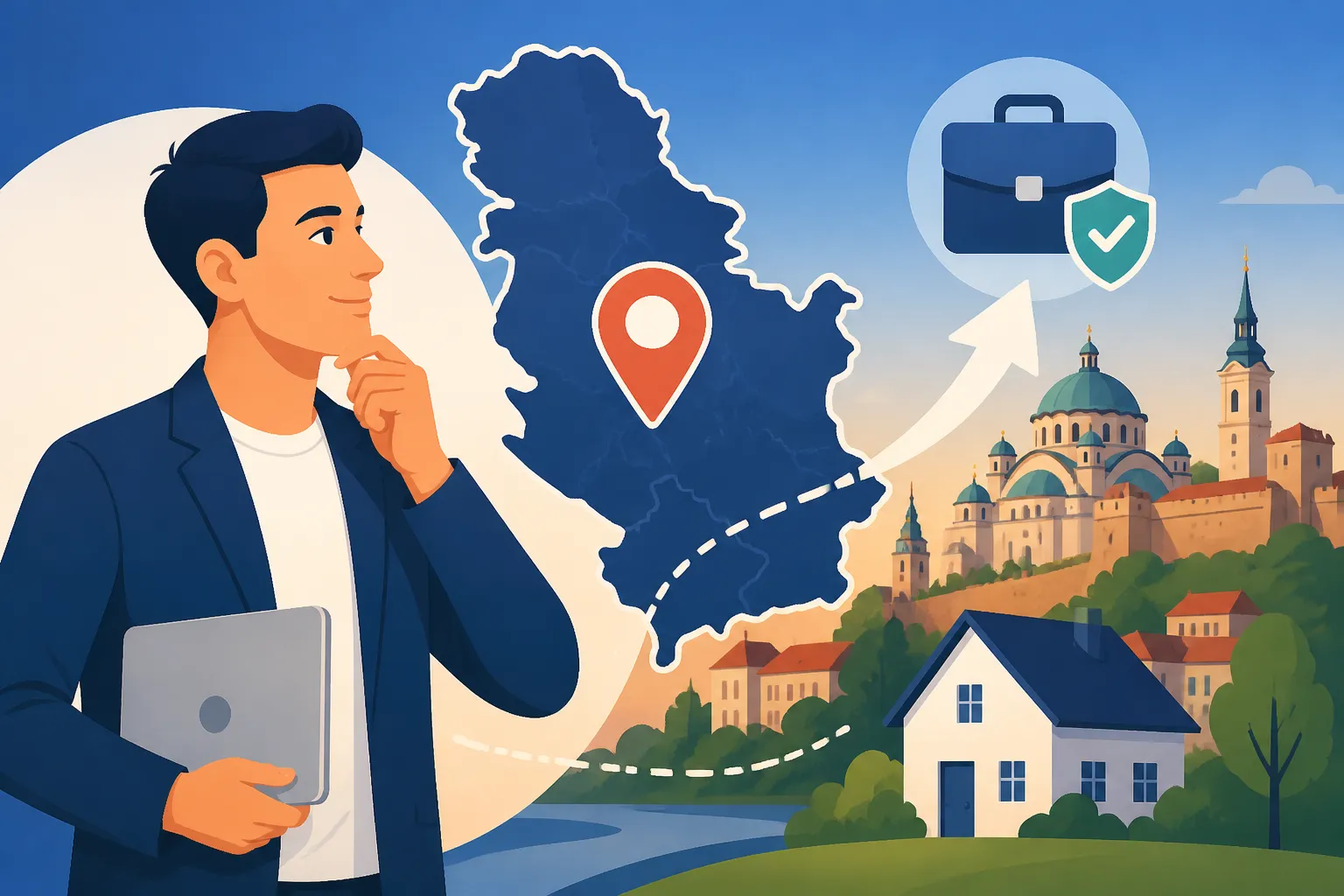
The dream of putting down permanent roots in a new country, especially one as vibrant and complex as Serbia, is a common one among skilled professionals. It's not just about a job; it's about building a life, a future. But let's be realistic: while Serbia welcomes talent, the path to truly permanent residence isn't a simple stroll through the park. This guide will meticulously break down the steps, requirements, and often frustrating nuances involved for skilled professionals looking to make Serbia their long-term home, going far beyond the initial temporary permits.
Understanding the Path to Permanent Residence as a Skilled Professional
So, you're a skilled professional, perhaps in IT, engineering, or a niche field, and you've found a great opportunity in Serbia. That's fantastic! But it's crucial to understand that your journey to permanent residency (stalni boravak) doesn't start with a direct application. It's a multi-stage process, and the first stage, almost without exception, involves securing temporary residence (privremeni boravak) through employment.
Initial Steps: Temporary Residence Through Employment
Before you can even think about permanent residence, you must establish a solid foundation of legal temporary residence in Serbia. For most skilled professionals, this means getting a job. A confirmed job offer from a Serbian employer is your golden ticket to the initial residence permit. Historically, Serbia had separate work and residence permits, but thankfully, things have been streamlined with the introduction of the Single Permit for Work and Residence. This combined permit is issued by the Ministry of Interior (MUP) and essentially gives you both the right to live and work in the country.
Your employer will play a huge role here. They’re usually the ones initiating the application process on your behalf, providing crucial documents like a job contract, a detailed job description, and proof that they tried to find a Serbian or EU citizen for the role first (though this can sometimes be bypassed for highly specialized positions). From your side, you'll need your passport, a valid visa (if required for your nationality to enter Serbia, though many nationalities are visa-exempt for short stays), proof of accommodation in Serbia, health insurance (more on this later!), and potentially authenticated educational documents or professional qualifications. The MUP will verify your employer's legitimacy and the validity of your employment. This first Single Permit is typically granted for a period of one year, and you'll need to renew it annually. This continuous renewal, without significant breaks, is absolutely vital for your long-term goal.
The Importance of Continuous Residency
This is where many expats, myself included, often get tripped up or misunderstand the true requirements. Obtaining permanent residence in Serbia isn't simply about living here for a few years; it's about demonstrating continuous and legal residence. The current rule, which you'll find outlined in more detail in a guide like Understanding the 3-Year Requirement for Permanent Residence in Serbia, generally states that you need to have held temporary residence for at least three consecutive years based on the same ground (e.g., employment).
What does "continuous" truly mean? It means your temporary residence permits must seamlessly transition from one to the next, with no significant gaps. While short trips abroad for holidays or business are perfectly acceptable and won't break your continuity, prolonged absences can be an issue. Generally, you shouldn't be outside Serbia for more than six months in any given 12-month period, and no single absence should exceed 10 months over the entire three-year period. If you change jobs, it's crucial to ensure your new employer processes the transfer of your Single Permit swiftly, or that your new permit application directly follows the expiration of your old one. Any major lapse could reset your "clock" for permanent residence eligibility, which is a frustration no one wants to deal with after putting in the time and effort. It's a bureaucracy that demands vigilance, so keep meticulous records of all your permits, applications, and travel dates.
Meeting the Criteria for Permanent Residence
Once you've diligently maintained your temporary residence for the required three years, you're ready to tackle the main event: applying for permanent residence. This stage requires more than just showing up with your old permits; it requires proving your genuine commitment to making Serbia your permanent home.
Proving Self-Sufficiency and Integration
The Serbian authorities want to see that you're not just passing through, but that you've integrated into society and can sustain yourself without becoming a burden. This means demonstrating financial stability. You'll need to show consistent income, typically through bank statements and salary slips from your employment in Serbia. They want to see that you're earning enough to support yourself and any dependents you might have. While there isn't a strict "minimum income" often quoted, it needs to be sufficient relative to the average living costs and your declared expenses.
Beyond finances, social integration plays a significant, albeit less formal, role. While not a hard and fast rule, demonstrating efforts to learn Serbian, participating in local community activities, and generally engaging with Serbian culture can strengthen your application. This isn't about passing a formal language test, but rather showing a genuine desire to be part of the society. Think about it: a country wants its permanent residents to be active, contributing members.
And let's not forget the practical side: health insurance. Throughout your temporary residence, you would have needed health coverage. Once you're employed, your employer should have registered you with the Republic Health Insurance Fund (RFZO), ensuring you're covered by the public system, which is a huge step towards local integration. However, it's worth noting that if you're just starting your journey or want supplemental coverage, international providers like Cigna Global offer comprehensive plans that can bridge gaps or provide peace of mind during your initial move, before you're fully integrated into the national system.
The Application Process for Permanent Residence
Applying for permanent residence is a comprehensive administrative task, primarily handled by the Ministry of Interior (MUP) where you originally registered your temporary residence. This isn't something to rush into; gather all your documents well in advance.
Here's a general rundown of what you'll typically need to submit:
- Application Form: Duly completed and signed.
- Valid Passport: With at least six months validity.
- Proof of Continuous Temporary Residence: This is where all your past temporary residence approvals and cards come in. Ensure there are no gaps!
- Proof of Financial Means: Bank statements, employment contracts, salary slips showing consistent income over a significant period (e.g., the last 6-12 months).
- Proof of Accommodation: A recent rental contract, property title deed, or a certified statement from the person providing you accommodation.
- Criminal Record Check: From your home country and any country you've lived in for more than six months in the past five years. These often need to be apostilled and officially translated into Serbian.
- Birth Certificate: Apostilled and officially translated.
- Marriage Certificate (if applicable): Apostilled and officially translated, especially if you're applying with dependents or based on marriage.
- Health Insurance Proof: Documentation of your RFZO coverage.
- Administrative Fees: There will be several fees associated with the application, so budget accordingly.
- Photographs: Standard passport-sized photos.
The MUP will review your entire history in Serbia, including any fines or legal issues. Transparency and accuracy are paramount. The process can take several months, so patience is a virtue. It’s also wise to prepare for potential requests for additional documentation or interviews. For a step-by-step guide on this, refer to How to Apply for Permanent Residence in Serbia.
Navigating the Serbian Professional Landscape
As a skilled professional, your ability to secure and maintain employment is the cornerstone of your permanent residence application. Understanding the Serbian job market and how your qualifications fit in is therefore essential.
Job Market Realities for Expats
Serbia's job market, particularly for expats, is quite dynamic, but certain sectors stand out. The IT and tech industry is undeniably the biggest draw. Belgrade, and to a lesser extent Novi Sad and Niš, are burgeoning tech hubs. Companies are actively seeking software developers, QA engineers, data scientists, project managers, and IT support specialists. Many of these roles are within international companies or outsourcing firms, meaning English is often the primary working language. For a deeper dive, check out Working in Serbia's Tech, IT and Outsourcing Sectors: The Expat Guide (2026).
Beyond tech, there are opportunities in engineering, finance, and sometimes in niche manufacturing or service industries, particularly with foreign direct investments. However, for roles outside the international sphere, proficiency in Serbian becomes significantly more important. While many Serbians, especially younger generations, speak excellent English, daily business operations and client interactions in local companies will often require Serbian. Don't underestimate the value of learning the language, not just for work but for everyday life and integration. If you're looking for support with the actual relocation once you have a job, services like Sirelo can help with the logistics of moving your belongings to Serbia, making the transition smoother.
Recognition of Foreign Qualifications and Experience
This is a critical step for many skilled professionals, particularly those in regulated fields like medicine, law, or engineering. Serbia has a formal process for the recognition of foreign degrees, known as "nostrifikacija." Without this, your foreign university diploma might not hold the same weight or allow you to practice certain professions in Serbia.
The nostrifikacija process is handled by the National Centre for Academic Recognition and Equivalence (ENIC/NARIC Centre). It involves submitting your original diplomas, transcripts, and curriculum descriptions for evaluation. They compare your foreign education to the Serbian educational system to determine its equivalency. This can be a lengthy and document-intensive process, so starting early is advisable. For medical professionals, engineers, or other regulated professions, simply having your degree recognized might not be enough. You may also need to register with relevant professional chambers or associations in Serbia, which might require additional exams or practical experience. You can find more details in How to Get Your Foreign Qualification Recognised in Serbia. Be prepared for a bureaucratic hurdle here, but it's a necessary one to ensure your skills are officially valued.
| Aspect | Temporary Residence (Single Permit) | Permanent Residence (Stalni Boravak) |
|---|---|---|
| Initial Basis | Employment, study, family reunification, property ownership | Typically requires 3+ years of continuous temporary residence |
| Duration | Usually 1 year, renewable annually | Indefinite, but residence card needs renewal (e.g., every 5-10 years) |
| Work Rights | Tied to specific employer/ground of residence (with Single Permit) | Full work rights, unrestricted employment |
| Eligibility Timeline | Immediate upon meeting specific grounds (e.g., job offer) | Minimum 3 years of valid temporary residence, specific conditions |
| Key Requirement | Proof of specific reason (e.g., job contract, study enrolment) | Proof of continuous residence, financial stability, integration |
| Travel Restrictions | Maintain continuity, limited prolonged absences | Generally fewer restrictions, but still advised to not be absent for too long (e.g., 1 year) to maintain status |
| Healthcare Access | RFZO access via employment, or private insurance required | Full RFZO access (as a resident) |
| Family Inclusion | Possible via family reunification for temporary residence | Easier family reunification with stronger rights |
Beyond Residence: Embracing Life in Serbia
Achieving permanent residence is a monumental administrative victory, but it's just one part of truly making Serbia your home. The next, equally important step, is embracing life here fully.
Cultural Adaptation and Community
Serbia is a country with a rich history, vibrant culture, and incredibly warm, hospitable people. However, like any new place, it has its quirks and customs that might take some getting used to. Patience is key, especially with bureaucracy, which can sometimes feel like a labyrinth. Learning basic Serbian phrases, even just "Zdravo" (hello) or "Hvala" (thank you), will go a long way in showing respect and making connections. Serbians appreciate the effort. Dive into local traditions, explore the incredible food scene, visit historical sites like Belgrade Fortress, and don't shy away from engaging with your neighbours.
You'll find active expat communities in larger cities like Belgrade and Novi Sad, offering a network of support, advice, and social activities. These groups are fantastic resources for everything from finding an English-speaking doctor to understanding local utility bills. Making local friends is perhaps the most rewarding part of integrating. Serbians are fiercely loyal friends, and once you're in, you're family. For a broader overview of settling in, consider reading Learning About Living and Working in Serbia: A Complete Guide for Expats.
Long-Term Planning and Family Considerations
With permanent residence secured, your long-term planning takes on a new dimension. You can now bring your loved ones with greater ease; the process for family reunification, which allows your spouse and children to join you, becomes more straightforward. You can delve into the specifics in Family and Dependent Residence in Serbia: Bringing Your Loved Ones. Schooling options for children range from public Serbian schools to private international schools, offering a spectrum of curricula and costs.
Financially, having permanent residence solidifies your position. You'll continue to pay taxes in Serbia, and understanding the nuances of the system, particularly if you have foreign income or investments, is crucial. The Complete Guide to Taxes in Serbia for Expats (2026) is an invaluable resource. Similarly, managing your finances will involve engaging fully with the Serbian banking system, opening local accounts, and potentially exploring investment opportunities. Banking in Serbia: A Complete Guide for Foreigners (2026) can walk you through that.
Finally, having permanent residence is also a stepping stone towards potential Serbian citizenship, should you decide that's your ultimate goal. After a certain period of continuous permanent residence, you might become eligible to apply for naturalisation, truly cementing your place in this fascinating country.
Disclaimer
The information provided in this guide is for general informational purposes only and does not constitute legal, financial, or immigration advice. While every effort has been made to ensure accuracy and timeliness, laws and regulations in Serbia can change. It is strongly recommended to consult with qualified legal and immigration professionals in Serbia for advice tailored to your specific situation.