How to Sponsor Your Parents for Residence in Serbia
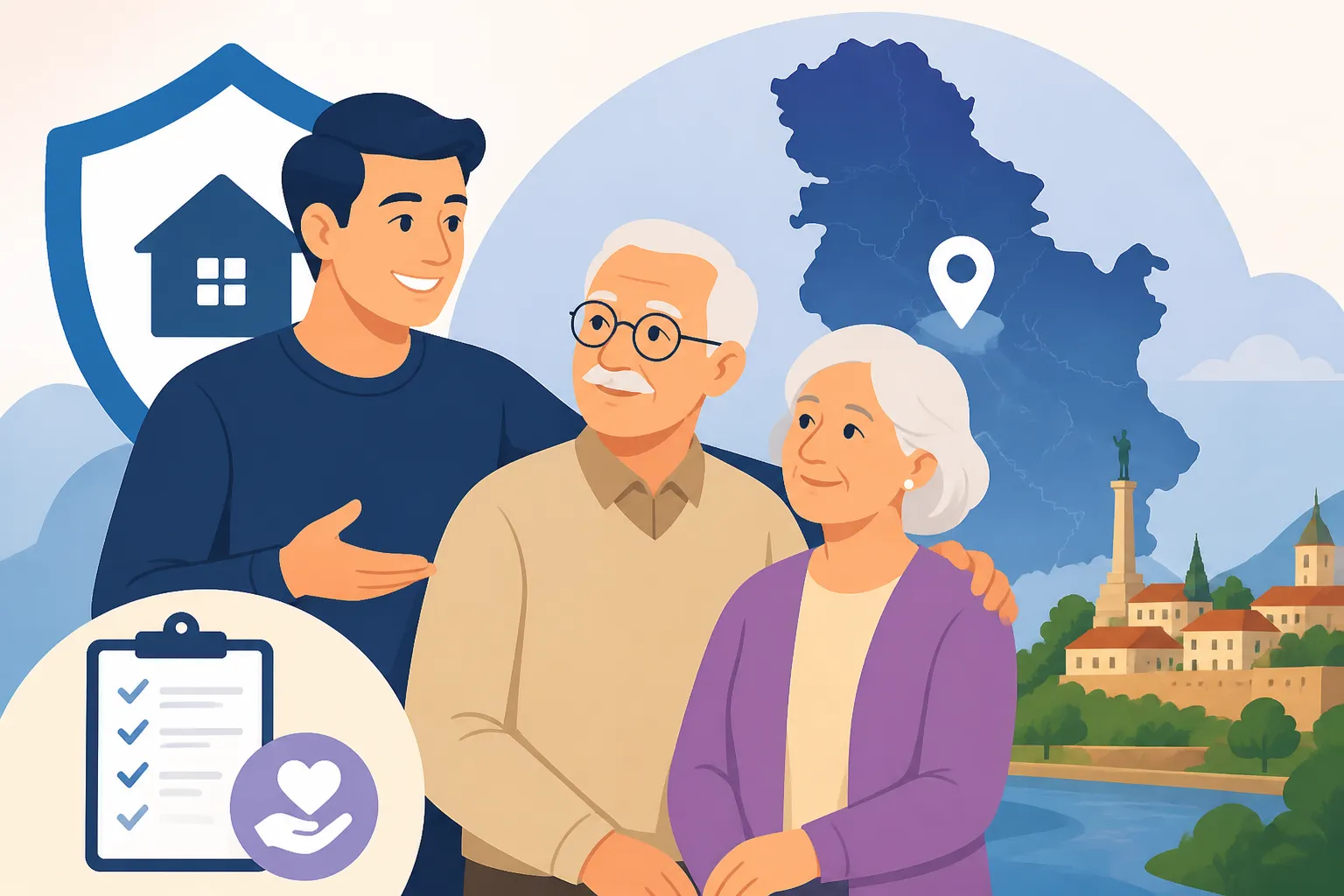
The longing to have your parents closer, especially as they get older, is a universal feeling for expats. You’ve built a life here in Serbia, and the thought of bringing your loved ones to share this experience, or simply to be nearby for support, is incredibly compelling. However, navigating the Serbian immigration system to sponsor your parents for residence can feel like trying to solve a Rubik's Cube blindfolded. It’s complex, it requires meticulous preparation, and it’s certainly not as straightforward as sponsoring a spouse or minor child. This comprehensive guide will walk you through the often-frustrating but ultimately rewarding process of helping your parents secure a residence permit in Serbia, covering everything from legal requirements to practical daily living.
Understanding the Legal Framework for Family Reunification in Serbia
Bringing your parents to live with you in a foreign country is a significant step, and Serbia, like many nations, has specific legal provisions for family reunification. However, it’s crucial to understand that sponsoring parents falls under a different, often more stringent, category than spouses or minor children. The Serbian authorities want to ensure that any sponsored individual will not become a burden on the state and that their presence is genuinely for family unity.
The Concept of Family Reunification for Parents
In Serbia, the legal basis for family reunification is primarily outlined in the Law on Foreigners. While this law broadly supports the idea of keeping families together, the interpretation and application for parents of adult expatriates can be quite nuanced. For direct dependents like spouses and minor children, the path is generally clearer, as the assumption of dependence is more direct. For parents, however, especially those who might still be considered independent in their home country, proving "dependence" on you, the expat sponsor, is often the critical hurdle.
The authorities will look closely at whether your parents genuinely rely on you for financial support, housing, and potentially healthcare. This isn't just about a desire to live closer; it's about demonstrating a concrete, ongoing need for your sponsorship. They want to ensure that your parents are not just seeking a more comfortable life but genuinely need to be reunited with you due to a lack of support in their country of origin. This humanitarian aspect is weighed against the administrative requirement to prevent individuals from becoming public charges. The legal framework, while present, requires diligent evidence from the sponsor to prove genuine reliance and commitment.
Eligibility Criteria for the Sponsor (You, the Expat)
As the expat living in Serbia, you are the cornerstone of this application, and your own residence status and stability are paramount. To be an eligible sponsor, you absolutely must have a valid temporary residence permit (privremeni boravak) or, even better, permanent residence in Serbia. If you're still on a short-term visa or your own temporary residence is precarious, their application will likely be denied outright. The longer you've been a legal resident and the more stable your situation, the stronger your case.
Crucially, you need to demonstrate robust financial stability. This means proving you have sufficient income to support not only yourself but also your parents, without them relying on the Serbian social welfare system. The Ministry of Interior (MUP) typically looks for proof of income that significantly exceeds the average Serbian salary or, at minimum, a multiple of the minimum wage per person in your household. This could mean submitting bank statements, employment contracts, payslips, or proof of self-employment income. Furthermore, you must have adequate housing – not just a spare room, but a space that meets Serbian standards for occupancy per person. A signed rental contract, proof of property ownership, and sometimes even a certificate of house size will be required. A clean criminal record is also a non-negotiable requirement for you, as the sponsor.
Eligibility Criteria for the Sponsored Parents
Now, let's talk about your parents. Their eligibility is largely tied to their relationship with you and their circumstances in their home country. While there's no strict age limit, older parents (typically retirement age) are often viewed more favourably in terms of potential dependence. The biggest challenge, as mentioned, is proving their financial and often emotional/physical dependence on you. This isn't always easy. If your parents have a substantial pension, assets, or other children who could support them in their home country, the Serbian authorities might question the necessity of their move.
You'll need to provide evidence that they either lack sufficient means to support themselves, have no other immediate family members capable of providing care in their home country, or have health conditions that necessitate your direct care. This could involve submitting their pension statements, proof of property ownership (or lack thereof), medical records, and official statements from them declaring their dependence. They will also need valid passports, a clean criminal record from their home country (often requiring an apostille and certified translation), and a commitment to securing health insurance in Serbia. It's a delicate balance of demonstrating genuine need without implying they'll be a burden on Serbia.
Navigating the Application Process: Step-by-Step
The application process for family reunification, particularly for parents, is a multi-step journey that demands precision and patience. Any missing document or incorrect translation can lead to significant delays or even rejection. Think of it as a detailed administrative marathon.
Gathering the Essential Documentation (For Both Parties)
This is where the real work begins, and honestly, it’s often the most daunting part. You and your parents will need to gather an extensive list of documents, and nearly everything originating outside Serbia will require specific legalisation. This typically means getting an apostille (a stamp that certifies the authenticity of a document for international use) from the issuing authority in their home country, followed by a certified translation into Serbian by an ovlašćeni prevodilac (certified court translator) here in Serbia. Don't skip these steps; uncertified translations or missing apostilles are common reasons for application rejection.
For your parents, key documents include:
- Their valid passports (with at least six months validity beyond the intended stay).
- Their birth certificates (apostilled and translated).
- Their marriage certificate (if applicable, apostilled and translated).
- Proof of their financial situation – pension statements, bank statements, or official declarations of dependence.
- Medical certificates confirming their health status (sometimes requested).
- A police clearance certificate from their home country (apostilled and translated).
- A statement from them declaring they have no other immediate family members who can care for them in their home country (if applicable).
For you, the sponsor, you'll need:
- Your valid Serbian residence permit (ID card).
- Your birth certificate (apostilled and translated, if not already done for your own residence).
- Proof of your income (employment contract, payslips, bank statements showing regular income).
- Proof of adequate accommodation (rental contract, property deed, utility bills).
- A statement from you confirming financial and accommodation sponsorship.
- Your Serbian police clearance (MUP will likely check this internally).
- Proof of relationship (your birth certificate, listing your parents).
It's a lot, I know. It's truly a test of patience and organizational skills. For more general guidance on the types of documents and translation requirements, you might find a guide like "Understanding Document and Translation Requirements for Serbia Immigration" helpful.
Proving Financial Means and Adequate Accommodation
This section deserves special attention because it is frequently the biggest stumbling block for parent sponsorship. The Serbian authorities are very keen on ensuring that your parents will not become a financial burden. "Sufficient funds" is often interpreted as a monthly income for the sponsor that is at least at the level of the average salary in Serbia, multiplied by the number of household members (you plus your parents). So, if the average net salary is, for example, around 85,000 RSD, and there will be three of you, you'll need to demonstrate an income significantly higher than that. Bank statements showing consistent income over several months, alongside your employment contract detailing your salary, are crucial here.
When it comes to accommodation, you must prove you have adequate living space. This means having a property (owned or rented) that offers sufficient square footage per person according to local standards. For instance, a one-bedroom apartment for you might not be considered sufficient for an additional two people. You'll need to provide your rental agreement (which should be officially registered) or your property title deed (list nepokretnosti). Sometimes, MUP officials might even conduct a home visit, though this is less common for parents than for spouses in some cases. The goal is to show that your parents will have a comfortable and legal place to live without overcrowding.
Submitting the Application to the MUP (Ministry of Interior)
Once you've meticulously gathered and prepared all your documents, it's time for the submission. Applications for temporary residence based on family reunification are typically submitted at the Aliens Department (Odeljenje za strance) of the Ministry of Interior in your city of residence. In Belgrade, this is usually at the MUP headquarters in Savska ulica. It’s highly recommended to make an appointment in advance, as walk-in queues can be incredibly long and frustrating. You can often find information on booking appointments via the MUP website or by calling their information lines, though patience is key here too!
You and your parents will usually need to attend together for the initial submission. You’ll hand over all the original documents (and copies, as they often require both) along with the completed application forms. There will also be administrative fees (taksene marke) to pay, which can be purchased at the post office or bank prior to your appointment. These fees cover the processing of the application and the issuance of the residence card if approved. Ensure you have the exact amount ready. The MUP officer will review your documents, and if everything looks to be in order, they will accept the application and provide you with a confirmation receipt. This receipt is important as it serves as proof of your parents' pending legal status in Serbia. Remember, the journey has only just begun! You might find the article "How to Apply for Temporary Residence (Privremeni Boravak) in Serbia" useful for a more general overview of the MUP process.
| Document Type | Required For | Legalisation (If Foreign) | Purpose |
|---|---|---|---|
| Passport (valid) | Parents | N/A | Identity & Travel Document |
| Birth Certificate | Both | Apostille + Translation | Proof of Relationship & Identity |
| Marriage Certificate | Parents (if applicable) | Apostille + Translation | Proof of Marital Status |
| Police Clearance | Parents | Apostille + Translation | Proof of Good Conduct |
| Proof of Financial Means | Sponsor & Parents | N/A (for Sponsor) / Translation (for Parents) | Demonstrate Ability to Support & Dependence |
| Proof of Accommodation | Sponsor | N/A | Demonstrate Adequate Living Space |
| Sponsor's Residence ID | Sponsor | N/A | Proof of Sponsor's Legal Status |
| Medical Certificate | Parents (sometimes requested) | Translation | Confirm Health Status |
| Application Form | Parents | N/A | Official Request for Residence |
| Administrative Fees | Parents | N/A | Processing Costs |
Post-Submission: What to Expect and Common Hurdles
After the relief of submitting all those carefully prepared documents, a new phase of anxious waiting begins. This stage can be frustratingly opaque, and it’s important to manage expectations and be prepared for potential bumps in the road.
Processing Times and Potential Interviews
Unfortunately, there's no single, fixed timeline for processing family reunification applications for parents in Serbia. While the law often specifies a certain period, real-world processing times can vary significantly, ranging from a few weeks to several months, or even longer in complex cases. It's not uncommon to hear of waiting times of three to six months, and sometimes even longer, especially if there's a backlog or if additional checks are required. During this period, your parents will technically be awaiting a decision, and it’s generally advisable for them to remain in Serbia, though travelling abroad is usually permitted with the MUP receipt.
It's also entirely possible that both you and your parents may be called for an interview. These interviews are designed to clarify any ambiguities in the application, verify the information provided, and assess the genuine nature of the dependence and family ties. Questions might delve into your parents' living situation, their financial support, why they need to move to Serbia now, and your plans for their integration. Be prepared to answer honestly and consistently with the information provided in your documentation. It’s not a test to trip you up, but an opportunity to provide clarity.
Dealing with Requests for Additional Information and Denials
Don't be surprised if, during the processing period, you receive a call or a letter requesting additional documents or further clarification. This is quite common and doesn’t necessarily mean your application is in trouble; it often just means the MUP officer needs more specific evidence for a particular point. Respond promptly and provide exactly what they ask for. Delays in providing requested information can prolong the process or even lead to denial.
Denials, while disheartening, do happen. Common reasons include insufficient proof of financial means from the sponsor, inadequate accommodation, or a failure to convincingly demonstrate the parents' dependence on the expat. Sometimes, it can be due to minor errors or omissions in the initial application or problems with document legalisation. If an application is denied, you will receive a formal decision explaining the reasons. You typically have the right to appeal this decision within a specified timeframe. An appeal usually involves submitting a written argument addressing the reasons for denial, potentially with new or clarified evidence, to a higher administrative body. This process can be lengthy and might benefit from legal counsel specializing in immigration law.
Maintaining and Renewing Parent's Residence
Getting the initial temporary residence permit is a huge milestone, but it's not a one-and-done deal. Your parents' residence permit will be issued for a specific period, usually one year. Before it expires, you will need to apply for its renewal. The renewal process is similar to the initial application, requiring updated documentation to prove continued eligibility. This means demonstrating that your financial situation remains stable, your accommodation is still suitable, and your parents continue to meet the dependence criteria.
You’ll need to provide updated bank statements, your current residence permit, and proof that your parents have maintained valid health insurance. It’s vital to initiate the renewal process well in advance of the expiry date to avoid any gaps in their legal status. Consistency is key here; authorities want to see that the conditions that initially granted residence are still being met.
Health Insurance and Healthcare for Sponsored Parents
Healthcare is a critical consideration for anyone moving to a new country, but it becomes even more significant when sponsoring elderly parents. You need to ensure they have access to adequate medical care without it becoming an overwhelming financial burden.
Mandatory Health Insurance Requirements
One of the non-negotiable requirements for any temporary residence permit in Serbia is proof of valid health insurance. For your parents, this almost certainly means private health insurance. Unlike employed individuals or registered entrepreneurs who contribute to the public health insurance fund (RFZO), your retired parents, unless they are of working age and take on employment, will not automatically qualify for the state system. The RFZO primarily covers those actively contributing to the Serbian social security system.
Therefore, you will need to secure a private health insurance policy for each of your parents. This policy must provide comprehensive coverage for medical emergencies, doctor visits, specialist consultations, hospital stays, and prescription medications within Serbia. The minimum coverage amount is usually specified by the MUP, but it's always wise to opt for more robust coverage, especially for older individuals with potentially higher healthcare needs. This isn't a checkbox item; it's a fundamental part of their well-being and a mandatory legal requirement for their residence. For a deeper dive into the overall health system, you can consult "The Complete Guide to Healthcare in Serbia for Expats (2026)".
Exploring Private Health Insurance Options
When choosing a private health insurance plan for your parents, you have several options. Local Serbian insurance companies offer plans specifically designed for foreigners seeking residence permits. These plans can be more budget-friendly but might have limitations in terms of network and specific coverage. Alternatively, international health insurance providers offer more comprehensive global plans, which might be more expensive but provide broader coverage and portability, which could be beneficial if your parents also travel.
Brands like Cigna Global are known for offering robust international health insurance solutions that can cover expats in Serbia. When considering such a plan, look closely at:
- Coverage limits: Ensure they are sufficient for potential serious medical events.
- Age restrictions: Some policies have age limits or higher premiums for older applicants.
- Pre-existing conditions: This is crucial. Many policies exclude or limit coverage for conditions diagnosed before the policy starts. Read the fine print carefully.
- Network of providers: Check if the insurance company has a good network of private clinics and hospitals in Belgrade or your city of residence.
- Direct billing vs. reimbursement: Direct billing is far more convenient.
It's wise to get multiple quotes and compare plans thoroughly, focusing on what’s most important for your parents’ specific health needs. The article "How to Buy Private Health Insurance as a Newcomer in Serbia" might offer additional useful insights.
Accessing Healthcare Services in Serbia
Once your parents have their private health insurance, accessing healthcare in Serbia is generally straightforward, particularly through private clinics. Serbia has a well-developed private healthcare sector, especially in larger cities like Belgrade and Novi Sad, offering a wide range of services with modern facilities and often English-speaking staff.
To see a doctor, your parents would typically make an appointment directly with a private clinic or a private GP. For specialist care, they can usually book appointments directly without a referral, though some private insurance plans might have specific referral requirements. If a hospital stay is needed, the private insurance would cover eligible costs based on their policy. For emergencies, they can go to any emergency room, and their private insurance should cover the costs. It's important to keep the insurance card and policy details readily available for any medical appointments. While the public system has its benefits, for sponsored parents, the private healthcare route is generally the most accessible and efficient way to ensure quality care.
Practical Considerations and Long-Term Planning
Beyond the legal and medical aspects, bringing your parents to Serbia involves a host of practical considerations that directly impact their quality of life and your long-term responsibilities.
Language Barriers and Integration for Elderly Parents
Moving to a new country is a challenge for anyone, but for older individuals, language barriers and cultural adaptation can be particularly tough. While many younger Serbians speak English, especially in cities, daily life interactions outside tourist areas often require some knowledge of Serbian. Simple tasks like going to the local market, interacting with neighbours, or understanding local news can become frustrating without basic language skills.
Encouraging your parents to learn some basic Serbian phrases will go a long way. There are language schools in larger cities that cater to foreigners, and even online resources. Beyond language, integration means finding a community and engaging with local life. Look for expat groups that might have older members, or explore local clubs, senior centres, or activities that align with their interests. Helping them build a social circle independent of you is crucial for their well-being and sense of belonging. The level of social support they receive will significantly impact their overall happiness in their new home.
Financial Planning and Cost of Living
While Serbia is often cited as having a lower cost of living compared to Western European countries, supporting two additional adults, especially with potentially higher healthcare needs, is a significant financial commitment. Do not underestimate this. Even if your parents have a pension from their home country, the exchange rate and the actual purchasing power might not be what they're used to. You, as the sponsor, are effectively taking on their financial responsibility for the foreseeable future.
You need to factor in:
- Housing costs: Even if they live with you, utilities will increase. If they have their own place, that’s rent, utilities, and potentially maintenance.
- Food and daily expenses: More mouths to feed, more groceries, more daily incidentals.
- Healthcare costs: Beyond insurance premiums, there might be co-payments, uncovered treatments, or medications.
- Travel and leisure: If they wish to travel or engage in social activities, these costs add up.
- Unexpected expenses: Medical emergencies, home repairs, etc.
Creating a detailed budget is non-negotiable. Also, consider how to effectively transfer money into and out of Serbia, which can have its own set of rules and fees. For more details on budgeting and expenses, you might want to read "The Complete Guide to Cost of Living in Serbia for Expats (2026)" and "How to Transfer Money Into and Out of Serbia as an Expat".
Potential Path to Permanent Residence for Parents
The initial residence permit for your parents will be temporary. The long-term goal for many is to eventually secure permanent residence (stalni boravak). In Serbia, the general rule for acquiring permanent residence is after five years of continuous temporary residence. This means your parents would need to successfully renew their temporary residence permits annually for five consecutive years.
However, moving from temporary to permanent residence is not automatic and can be even more complex for parents than for spouses. The MUP will once again scrutinise their continued dependence on you and their integration into Serbian society. They will want to see continued financial stability from you, consistent health insurance coverage for them, and evidence that they have truly made Serbia their home. There's no specific fast-track for parents, and each renewal and the eventual permanent residence application will require fresh documentation and a reaffirmation of their situation. This is a very long-term plan, and it's essential to understand that it requires sustained commitment and adherence to all requirements. For a deeper understanding of this process, you can explore "The Complete Guide to Permanent Residence in Serbia (2026)".
Moving Logistics and Settling In
Once the residence permit is in sight, the practicalities of the physical move and getting truly settled become the focus. This stage requires coordination and attention to detail, much like the application itself.
Organizing the Move to Serbia
Bringing your parents and their belongings to Serbia requires careful logistical planning. Depending on how much they plan to bring, you might be looking at international shipping services. This can range from a few extra suitcases on a plane to a full household removal. Start researching international moving companies well in advance to compare quotes and services. Consider factors like transit time, customs regulations, and insurance for their possessions.
If they are bringing a substantial amount of personal effects, it’s worth investigating customs duties and import regulations for household goods. Sometimes, personal items can be imported duty-free if certain conditions are met, such as proving they have been owned and used for a certain period. This is where services like Sirelo, which connect individuals with international moving companies, can be invaluable. They can help you find reputable movers who are familiar with the specific logistics of relocating to Serbia. Discuss with your parents what truly needs to come, and what can be acquired or replaced in Serbia to streamline the process.
Registering with Local Authorities and Services
Once your parents arrive and their residence permit is secured, there are a few more administrative steps to ensure they are fully integrated into Serbian life. The most immediate is registering their address, known as prijava boravka, with the local police within 24 hours of arrival if they’ve been abroad, or after securing residence. This is a mandatory requirement for all foreigners and is essential for maintaining their legal status. If they are living with you, you will need to accompany them for this. The police will stamp their passport or residence card. For detailed instructions, refer to "How to Register Your Address (Prijava) with the Police in Serbia".
Beyond this, if your parents are residing in a separate dwelling, you will need to help them set up utilities like electricity (EPS), water, and internet. If they are living with you, ensure they are registered as household members for utilities if required by your landlord or the utility companies. Setting up a local Serbian bank account can also be beneficial for managing daily expenses and receiving any foreign pension payments, which can be covered in "The Expat Guide to Opening a Bank Account in Serbia". These small but essential steps help solidify their presence and ease their daily lives.
Building a Support Network
Beyond the paperwork and practicalities, emotional well-being and social integration are paramount for your parents. Moving to a new country can be isolating, and having a support network is crucial. As their primary sponsor, you’ll be their initial and main point of contact, but it’s important for them to develop their own connections.
Encourage them to join expat groups or clubs, especially those with older members. Look into local community centres or senior activities, which might offer opportunities to meet local Serbians. If they have specific hobbies or interests, seek out clubs or groups that cater to those. Sometimes, finding other expats from their home country can provide a familiar sense of camaraderie. Learning a few basic Serbian phrases, even just for social interaction, can open doors. Your role is not just to provide a roof and financial support, but to facilitate their journey towards feeling truly at home and connected in Serbia.
Disclaimer
The information provided in this guide is intended for general informational purposes only and does not constitute legal, financial, or medical advice. Immigration laws, tax regulations, and healthcare policies in Serbia are subject to change. While we strive to provide accurate and up-to-date information, it is essential to consult with qualified legal professionals, tax advisors, and healthcare providers for advice tailored to your specific situation. Reliance on any information in this guide is solely at your own risk.