Can I Study in Serbia on a Tourist Visa?
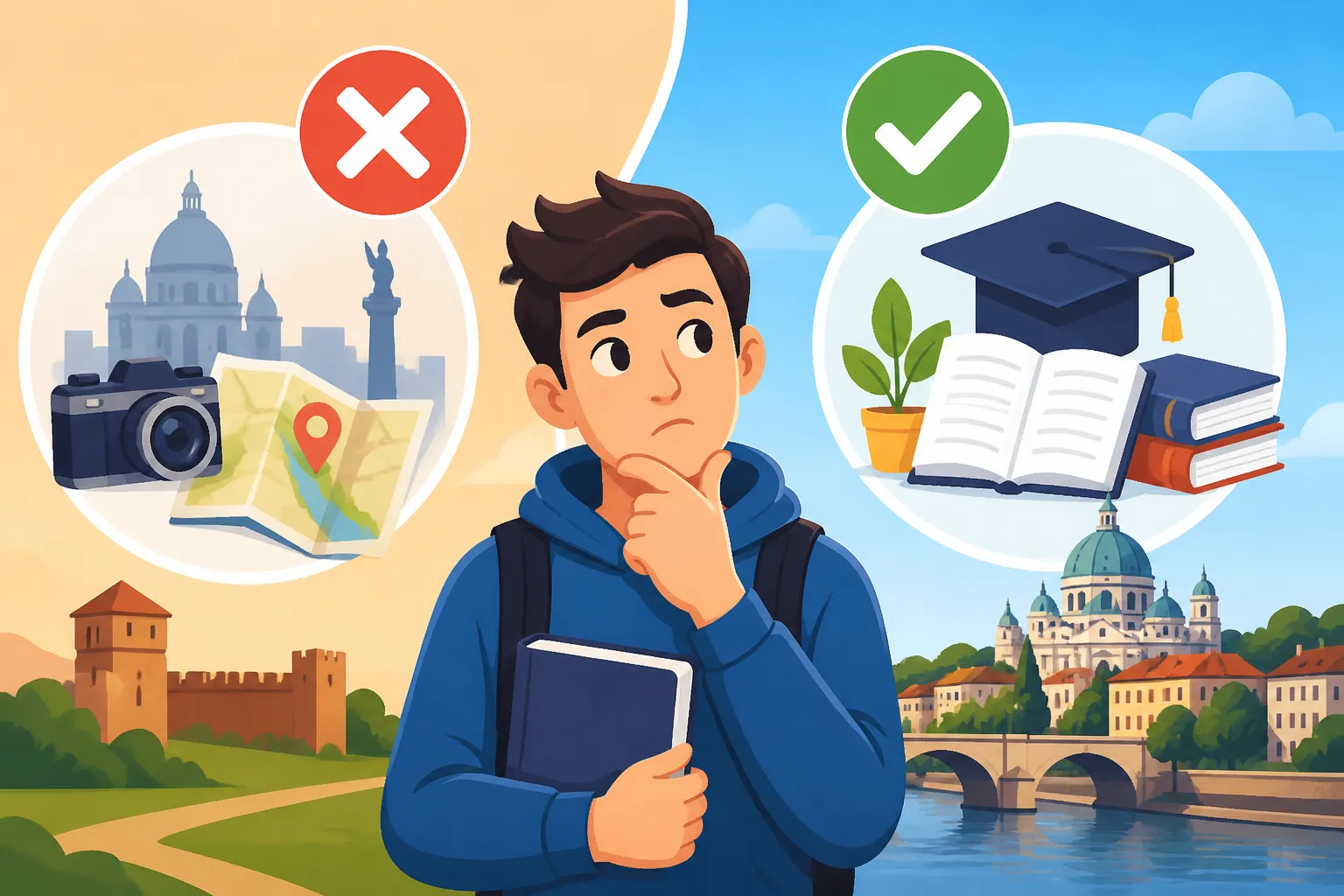
It’s a common daydream, isn’t it? You arrive in a beautiful, vibrant country like Serbia on what feels like a simple visit, fall in love with its charm, and then think, "Surely I can just stay and pursue that language course or even a full degree here, right?" Unfortunately, when it comes to formal education and visas, relying on a tourist visa for your academic aspirations in Serbia is a path fraught with misunderstandings and, frankly, impossible hurdles. This guide is here to clear up that confusion and show you the proper, legal way to achieve your dream of studying in Serbia.
The Clear Distinction: Tourist Visa vs. Student Residency in Serbia
Let’s get straight to the point: no, you absolutely cannot study in Serbia on a tourist visa. This is a crucial distinction that many newcomers often misunderstand, leading to complications and potential disappointment. A tourist visa, or indeed visa-free entry for many nationalities, is strictly for short-term leisure, sightseeing, visiting friends, or business meetings that don't involve long-term engagement or formal employment. It grants you the privilege of being a visitor, not a resident with entitlements to public services or extended stays for specific purposes like education.
What a Tourist Visa Allows (and Doesn't Allow)
When you enter Serbia on a tourist visa or under a visa-free regime (which allows citizens of many countries to stay for up to 90 days within any 180-day period), you are explicitly a visitor. Your purpose of stay is, by definition, tourism. This means you can explore Belgrade's bustling streets, visit the historical sites of Novi Sad, hike in Fruška Gora, and enjoy the incredible Serbian hospitality. You can even attend short workshops or language classes that don't lead to a formal degree or certificate recognized by the Ministry of Education.
However, this status comes with significant limitations. You are not permitted to engage in any form of paid employment, establish a business, or, critically, enroll in accredited educational programs. The moment you attempt to register for a university course or a long-term academic program with just your tourist stamp, you'll hit a brick wall. Serbian educational institutions require proof of appropriate residency status for international students, which a tourist visa simply doesn't provide. Trying to bypass this system could lead to serious issues, including being denied enrolment, facing fines, or even deportation for violating immigration laws. This is why understanding the nuances of your legal status here is so vital. It’s not just bureaucracy for bureaucracy’s sake; it’s about maintaining the integrity of the country’s immigration system.
The Problem of Misusing Your Visa Status
The temptation to arrive on a tourist visa and then "figure things out" can be strong, especially when you’re excited about a new chapter in Serbia. However, misusing your initial visa status is a risky game that rarely pays off. Imagine investing time and perhaps even money in applying to a Serbian university, getting an acceptance letter, only to find out you can't actually register because your current visa status is invalid for studying. It's a common frustration that many expats experience when navigating the labyrinthine administrative processes here.
Not having the correct visa means you cannot legally sign up for academic programs, access student benefits, or even open a long-term bank account as a student. Furthermore, any attempt to prolong your stay beyond the permitted tourist period without proper authorisation would result in an overstay, which carries penalties. These can range from significant fines upon departure to bans from re-entering Serbia for a certain period. The Serbian Ministry of Interior (MUP), which handles all residence matters, is quite diligent in enforcing these rules. Trust me, you don't want your Serbian adventure to begin with a black mark on your immigration record. It's always best to understand the legal framework from the outset to avoid future headaches.
The Correct Path: Type D Visa and Temporary Residence for Study
So, if a tourist visa is out, what’s the right way to come and study in Serbia? The proper legal route for international students involves a two-step process: first, obtaining a Type D (long-stay) visa for study from your home country (if required), and then, once you arrive in Serbia, applying for a temporary residence permit (privremeni boravak) based on your student status. This might sound like a lot, but breaking it down makes it much more manageable.
Step One: Obtaining a Type D Long-Stay Visa for Study (If Applicable)
For many non-EU/EEA citizens, the journey begins with a Type D visa. This isn't just a fancy tourist visa; it's specifically designed for individuals who intend to stay in Serbia for longer than 90 days for a defined purpose, such as work, family reunification, or – you guessed it – study. The key here is to apply for this visa before you even set foot in Serbia, usually at the Serbian embassy or consulate in your country of origin or legal residence.
The Type D visa itself doesn't grant you long-term residence directly. Instead, it serves as your legal entry ticket to Serbia, allowing you to stay for up to 90 or 180 days (depending on the visa) specifically to complete your application for a temporary residence permit. Think of it as the bridge that gets you across the border and into the administrative system without immediately overstaying your welcome. The documentation for this visa will heavily rely on your official acceptance letter from a recognized Serbian educational institution. Without that crucial document, proving your intent to study long-term is impossible, and your Type D visa application will be denied.
Step Two: Applying for a Temporary Residence Permit for Study
Once you've successfully entered Serbia with your Type D visa (or if you're from a visa-exempt country, you simply enter and proceed to this step), the next, and most important, stage is applying for your temporary residence permit. This permit is what truly allows you to live and study in Serbia for an extended period, usually for one year, renewable annually for the duration of your studies. The application is submitted to the Ministry of Interior (MUP), specifically at the Foreigners' Department (Uprava za strance) in your city of residence, typically Belgrade, Novi Sad, or Niš.
This is where the real administrative dance begins, and it can feel like a bit of a marathon. You'll need to gather a comprehensive set of documents, all translated into Serbian by a certified court translator and often apostilled, and present yourself for an interview. The MUP officials are generally helpful, but they operate by strict rules, and having all your paperwork in order is paramount. It’s also during this phase that you’ll need to prove you have sufficient funds to support yourself and that you have adequate health insurance coverage for the duration of your stay. Many expats find the sheer volume and precision required for document submission quite challenging, but it's a necessary step towards legally building your life here. You can find more detailed information on How to Get a Student Residence Permit and Study in Serbia: The Full Guide.
Essential Documents and Application Process for Student Residency
Navigating the paperwork for a Serbian student residence permit can feel like deciphering an ancient scroll, but with a clear checklist and some patience, it's entirely doable. Understanding the requirements upfront will save you countless trips back and forth to various offices, a frustration I know all too well from my own expat journey. The key is meticulous preparation.
Required Documents for Your Student Residence Permit
Here’s a breakdown of the typical documents you’ll need. Remember, always double-check with the specific Serbian embassy/consulate or the MUP website, as requirements can sometimes change.
- Valid Passport: Original and photocopies of all used pages. Ensure it’s valid for at least three months beyond your intended stay.
- Completed Application Form: Usually available online via the MUP portal (eUprava) or at the MUP office.
- Proof of Admission to a Serbian Educational Institution: This is your official letter of acceptance from a university, college, or language school accredited by the Ministry of Education. It must clearly state the program, duration, and that you have been accepted as a full-time student.
- Proof of Financial Means: You need to show you can support yourself without working illegally. This typically means a bank statement from a Serbian bank (or an international one, with a certified translation) showing sufficient funds. The amount generally required is around €250-€300 per month for your planned stay. Alternatively, a notarized statement of support from a parent or sponsor, along with their bank statements, can also work.
- Proof of Accommodation: A notarized rental agreement (overovljen ugovor o zakupu) for an apartment, or a statement from your student dormitory. If you're staying with friends or family, they'll need to provide a notarized statement (izjava) confirming they are hosting you and a copy of their property title. You will also need your "bela karta" (white card), which is your registered address with the police, obtained within 24 hours of your arrival. This is fundamental for almost all administrative tasks in Serbia.
- Health Insurance: This is mandatory. You’ll need valid health insurance covering your entire period of stay. While Serbia has public healthcare through the RFZO, as a student you’ll likely rely on private insurance initially. International providers like Cigna Global offer comprehensive plans tailored for expats and students abroad, which can be a lifeline for unexpected medical needs. Make sure your policy covers emergency medical treatment and repatriation. For more on this, you might want to look into Health Insurance in Serbia: RFZO, Private and International Options Explained.
- Two Passport-Sized Photos: Meeting Serbian photo requirements (usually 3.5 x 4.5 cm).
- Proof of Paid Administrative Fees: There are several fees associated with the application, including the application fee itself, a fee for the residence card, and a stamp duty. These are paid via bank slips (uplatnice) at a post office or bank.
- Certified Translations and Apostille: Any foreign-issued documents (like birth certificates if required, or sponsor statements) must be translated into Serbian by a certified court translator. Depending on your country of origin and Serbia's international agreements, some documents may also require an Apostille stamp. This can add time and cost to your application, so factor it in! Learning about Understanding Document and Translation Requirements for Serbia Immigration will be immensely helpful here.
Here's a simplified table to help you keep track:
| Document Category | Specific Document | Notes for Students |
|---|---|---|
| Personal ID | Valid Passport | Original & copies, valid for 3+ months beyond stay |
| Application | Completed Form | Obtain from MUP or eUprava portal |
| Education Proof | University/School Acceptance Letter | Must be from accredited Serbian institution |
| Financial Proof | Bank Statement / Sponsor Letter | ~€250-€300/month, notarized if sponsor |
| Accommodation | Notarized Rental Contract / Dorm Letter / Host Statement & Property Title | Plus your "bela karta" (registered address) |
| Health Coverage | Health Insurance Policy | Covering entire stay, international (e.g., Cigna Global) or local |
| Photos | Passport Photos (2 pcs) | 3.5 x 4.5 cm, recent |
| Fees | Proof of Paid Fees | Bank slips (uplatnice) for various administrative costs |
| Certification | Certified Translations & Apostille | For any foreign documents, into Serbian |
The Application Process: A Step-by-Step Walkthrough
- Gather Documents: As listed above, meticulously collect and prepare all necessary papers. Get translations and apostilles done before your MUP appointment.
- Register Your Address (Bela Karta): Within 24 hours of arriving in Serbia (or moving addresses), you must register your address with the local police station (MUP). This gives you your "bela karta," a crucial slip of paper confirming your registered address, which is required for almost everything else.
- Submit Your Application: Take all your documents to the Foreigners' Department of the MUP in your city. It's often recommended to go early in the morning, as wait times can be substantial. You may need to book an appointment in advance, depending on the MUP office and current regulations.
- Interview: An MUP officer will review your documents and may ask you a few questions about your purpose of stay, your studies, and your plans. This is usually straightforward if your documents are in order.
- Biometrics: You'll typically have your fingerprints and a digital photo taken for your residence card.
- Processing Time: This can vary, but generally, expect it to take anywhere from 2-4 weeks, sometimes longer during peak periods. You can sometimes check the status of your application online.
- Collection: Once approved, you'll be notified to pick up your residence card. This card is your proof of legal student residency in Serbia. Keep it safe!
The whole process can be a learning experience in Serbian patience and persistence. Don't be discouraged if you're asked for additional documents or clarifications; it's part of the routine. Preparing thoroughly and perhaps even hiring a local legal assistant or agency (if your budget allows) to help with translations and MUP appointments can significantly ease the burden. You can find more specific guidance in our guide on How to Apply for Temporary Residence (Privremeni Boravak) in Serbia.
Life as an International Student in Serbia: Beyond the Paperwork
Once you’ve successfully navigated the administrative hurdles and secured your student residence permit, the real adventure of studying in Serbia truly begins. It's more than just classes; it's about integrating into a new culture, making friends, and discovering everything this fascinating country has to offer.
Registering with Your University and Settling In
With your residence permit in hand, the final step in formalizing your student status is to complete your registration at your chosen university or educational institution. They will require a copy of your residence card to confirm your legal status. This is the moment you officially become an international student in Serbia, gaining access to all student facilities, libraries, and potentially, student discounts on public transport or cultural events.
Settling in also involves practicalities. Think about setting up your utilities if you're in a private rental – electricity (EPS), water, and central heating. For internet and mobile services, providers like Telekom Srbija or Yettel are popular choices. Moving your belongings can be a big task, and services like Sirelo can help you find reliable international movers who understand the logistics of relocating to Serbia. This ensures your transition into student life is as smooth as possible, letting you focus on your studies and new experiences rather than logistical nightmares. For a detailed rundown, check out The Expat Guide to Setting Up Utilities (Electricity, Water, Heating) in Serbia.
Exploring Opportunities: Work, Social Life, and Costs
As an international student, you might be wondering about working part-time to help with living expenses. The good news is that, yes, students with a valid temporary residence permit can often work in Serbia, but there are usually restrictions. Typically, you might be allowed to work up to 20 hours per week, but this isn't an automatic right with your student permit. You will generally need to apply for a separate work permit or specific authorization through your employer and the National Employment Service. This process needs careful attention, as working without the proper authorization can jeopardize your student residence status. Always verify the latest regulations, as these can be updated. Our guide on Can International Students Work Part-Time in Serbia? provides more insights.
Beyond academic and work life, Serbia offers a rich social and cultural experience. Whether you're in Belgrade, Novi Sad, or Niš, you'll find a vibrant student scene, affordable dining, and plenty of opportunities for cultural immersion. From exploring historical sites to enjoying the lively cafe culture and nightlife, there's always something to do. The cost of living in Serbia for students is generally considered quite affordable compared to many Western European countries, which makes it an attractive destination. Rent, groceries, and entertainment can be managed on a reasonable budget, though this, of course, varies depending on your lifestyle and city.
Renewing Your Student Residence Permit
Your temporary residence permit for study is typically valid for one year. As your studies progress, you will need to renew it annually. The renewal process is similar to the initial application but usually requires updated documents, such as a confirmation from your university that you are still an enrolled student in good standing, and renewed proof of funds and health insurance. It’s crucial not to let your permit expire, so start the renewal process well in advance, ideally 30-60 days before its expiration date. This proactive approach ensures continuous legal residency and avoids any complications that could interrupt your studies or your stay in Serbia. Remember, staying on top of your paperwork is a continuous commitment when living abroad! For comprehensive details, refer to How to Renew Your Temporary Residence in Serbia.
Disclaimer
The information provided in this guide is intended for general informational purposes only and does not constitute legal, financial, or immigration advice. While every effort has been made to ensure accuracy and timeliness, regulations in Serbia can change frequently. It is highly recommended to consult with the official Serbian authorities, such as the Ministry of Interior (MUP) or the relevant Serbian embassy/consulate, or to seek advice from a qualified legal professional for the most current and specific guidance regarding your individual situation. Reliance on any information in this guide is solely at your own risk.