What Is the Difference Between a Work Permit and Permanent Residence in Serbia?
Navigating the labyrinthine world of Serbian immigration can feel like a full-time job, especially when you're trying to figure out the exact difference between a "work permit" and "permanent residence." Many of us arrive here with dreams of a new life, only to quickly get tangled in the administrative jargon. This guide will meticulously break down these two distinct statuses, clarifying their purpose, requirements, and what they truly mean for your long-term life in Serbia.
Unpacking the Serbian Work Permit: More Than Just a Permit to Work
For many years, the system was a bit fragmented: you’d apply for temporary residence (often called boravak) and then separately apply for a work permit. However, Serbia, like many countries, has streamlined this process with the introduction of the Single Permit for Work and Residence. This means that what you might still hear referred to as a "work permit" is now typically integrated into a broader temporary residence permit, specifically issued on the grounds of employment. It's crucial to understand this distinction because it's not merely a piece of paper allowing you to earn a salary; it's intricately linked to your legal stay in the country.
What the Single Permit for Work and Residence Entails
When we talk about a "work permit" today, we're largely referring to the Single Permit for Work and Residence. This unified document is issued by the Ministry of Interior (MUP) and explicitly states that your grounds for temporary residence in Serbia are related to employment. It's essentially a temporary residence permit with the added explicit permission to work for a specific employer or as a self-employed individual. This is a significant change, simplifying the previous two-step bureaucratic dance into one application process.
The purpose of this permit is quite straightforward: it legalizes your stay in Serbia for a defined period based on your employment. Whether you've landed a fantastic job in Belgrade's thriving IT sector or you're setting up your own small business, this permit is your gateway to formal employment and legal residency. It directly addresses the problem many expats face: wanting to live and work in Serbia without having to constantly worry about separate applications or conflicting requirements. It's about establishing that foundational legal footing.
Who Needs It and How Long It Lasts
Virtually anyone who isn't a Serbian citizen or a national of a visa-exempt country with specific agreements allowing work needs this permit to engage in formal employment in Serbia. This includes employees hired by a Serbian company, individuals posted to Serbia by a foreign company, and self-employed entrepreneurs setting up shop here. Tourists, for example, cannot work on their visa-free entry or standard tourist visas. The legal framework is clear: if you’re earning income in Serbia, you need the appropriate documentation.
The validity of the Single Permit is directly tied to the length of your employment contract or the duration of your self-employment registration, usually for a period of up to one year. This means it’s a temporary solution, designed to be renewed annually as long as your employment status remains valid. Imagine the scenario: you've just started a new role at a tech company in Novi Sad, and your initial contract is for 12 months. Your Single Permit will reflect this, needing renewal before that year is up. This annual renewal process is a familiar ritual for many expats in Serbia and means you'll be interacting with the MUP regularly. If you want to learn more about the specifics, check out our guide on how to get a residence permit for work in Serbia.
Demystifying Permanent Residence in Serbia: The Long-Term Goal
Permanent residence (stalni boravak) is an entirely different beast from the temporary work and residence permit. While the latter is about facilitating your immediate professional life, permanent residence is about integrating you fully into Serbian society on a long-term basis, offering stability and a pathway to citizenship. It's the administrative equivalent of putting down deep roots, signaling a commitment to make Serbia your true home.
What Permanent Residence Truly Is
Permanent residence grants you a far more stable legal status in Serbia. Unlike the temporary permit tied to a specific job or purpose, permanent residence is generally not contingent on your employment or any single activity. It's a recognition by the state that you have established a significant and enduring connection to the country. With permanent residence, you gain many of the rights and obligations of Serbian citizens, short of carrying a Serbian passport or voting in national elections. It offers immense peace of mind, freeing you from the annual renewal anxieties that often plague those on temporary permits.
This status is particularly important for expats who envision a future in Serbia, perhaps raising a family, retiring here, or simply enjoying the stability of not having to re-prove their right to live here every year. It’s a foundational step towards full integration and removes many of the subtle barriers that temporary residents might still face, such as certain banking services or long-term financial planning options.
The Path to Eligibility and Its Benefits
The primary and most common route to obtaining permanent residence in Serbia is by accumulating three continuous years of temporary residence (privremeni boravak). This isn't just three random years, mind you; it's about maintaining an uninterrupted legal stay based on valid grounds, such as employment, family reunification, property ownership, or study. For most working expats, this means having renewed their Single Permit (or previous temporary residence permits) without any significant gaps. It's a critical criterion and often the biggest hurdle. You can dive deeper into this topic by reading about the 3-year requirement for permanent residence in Serbia.
However, there are other, less common paths, such as being of Serbian descent or having married a Serbian citizen and having maintained a continuous temporary residence for a certain period based on family reunification. Each route has its specific nuances and documentation requirements, which can be complex.
Once you achieve permanent residence, the benefits are substantial:
- No Annual Renewal: The biggest relief! You're free from the yearly MUP visits, document gathering, and fee payments. Your status is permanent, though you will need to renew your ID card periodically.
- Freedom of Employment: You are no longer tied to a specific employer or the need for a work permit. You can change jobs, start new businesses, or even take a break from work without jeopardizing your residency status.
- Enhanced Rights: Generally, you'll have access to more comprehensive public services, potentially easier access to loans or mortgages, and reduced administrative hurdles in various aspects of life.
- Path to Citizenship: Permanent residence is a prerequisite for applying for Serbian citizenship by naturalisation, which typically requires a further period of continuous residence (usually five years after obtaining permanent residence).
- Travel Flexibility: While you still use your home country's passport, your permanent residence status generally offers easier re-entry into Serbia and can simplify certain travel procedures within the region.
Consider an expat family who moved with children. After three years of managing the school runs and navigating local life, achieving permanent residence means their children's education and their own healthcare access become far more stable, without the looming deadline of permit expiry. For comprehensive information on how to apply for permanent residence in Serbia, we have a detailed guide available.
Key Differences and the Gradual Progression
The distinction between a work permit (as part of a temporary residence permit) and permanent residence isn't just semantic; it dictates your entire legal standing and future possibilities in Serbia. Think of it as climbing a ladder: the work permit gets you on the first rung, while permanent residence is a solid platform higher up, offering a much better view and stability.
Purpose, Duration, and Future Prospects
| Feature | Work Permit (as part of Temporary Residence) | Permanent Residence (Stalni Boravak) |
|---|---|---|
| Primary Purpose | Legalize temporary stay and employment for a specific activity. | Grant long-term, stable residency rights, path to full integration. |
| Duration | Typically up to 1 year, requires annual renewal. | Permanent, though the physical ID card needs renewal periodically (e.g., every 5-10 years). |
| Tied to Activity? | Yes, explicitly linked to employment, study, property, etc. | No, generally independent of specific activities. |
| Rights & Freedoms | Limited; often tied to your specific permit grounds. | Broader; similar to citizens in many non-political aspects. |
| Path to Citizenship | Indirect, only as a precursor to permanent residence. | Direct, a necessary step before applying for naturalisation. |
| Administrative Burden | Higher due to annual renewal process, document gathering. | Significantly lower once obtained, minimal interaction. |
The work permit is your ticket to start working and living legally in Serbia on a short-to-medium-term basis. It's a crucial first step for many. Without it, you cannot legally be employed or run a business in the country. It’s designed for those who have a specific, immediate reason to be in Serbia for a limited time.
Permanent residence, on the other hand, is the long-term commitment. It signifies that you've passed the initial probationary period, so to speak, and the Serbian state recognizes your enduring ties. It’s a status that offers stability and allows for deeper integration without constant administrative overheads.
The Standard Progression Path
For most expats, the journey involves a clear progression:
- Obtain a Type D Visa (if required): Depending on your nationality, you might first need a Type D visa to enter Serbia with the intention of applying for temporary residence. This is a long-stay visa, explicitly for purposes like work or study.
- Apply for Temporary Residence (Boravak) with a Work Component: Upon arrival (or even from abroad in some cases), you apply for your initial temporary residence permit. For those seeking employment, this will be the Single Permit for Work and Residence. This is where your employer plays a vital role in providing necessary documentation. If you're wondering how to apply for temporary residence (privremeni boravak) in Serbia, we've got you covered.
- Renew Temporary Residence Annually: For three consecutive years, you will need to renew your temporary residence, ensuring there are no gaps in your legal stay. This requires diligence in preparing documents, securing health insurance (many expats choose reputable international providers like Cigna Global to ensure comprehensive coverage, which is a requirement for any residence application), and meeting all requirements for renewal.
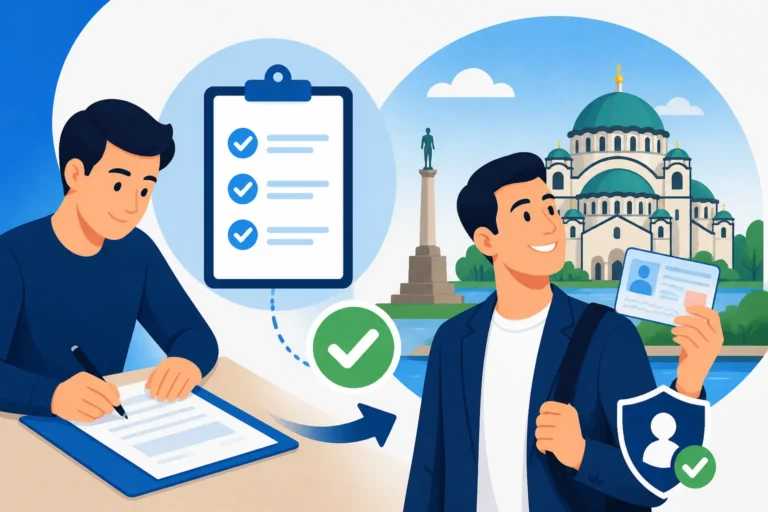
- Apply for Permanent Residence: After completing three years of continuous temporary residence, you become eligible to apply for permanent residence. This application is more rigorous, requiring proof of your continuous stay, financial stability, and integration into Serbian society. It's a significant milestone. You can find more details on how to move from temporary to permanent residence in Serbia in our dedicated article.
It's a step-by-step process, and each step builds upon the last. There's no jumping straight to permanent residence for most people unless they fall into very specific categories.
Practical Implications and Navigating the Bureaucracy
Regardless of whether you're dealing with a temporary work permit or aiming for permanent residence, navigating Serbian bureaucracy requires patience, preparation, and a healthy dose of persistence. It's a common expat experience to feel overwhelmed by the process, but understanding the system can help alleviate some stress.
The Ministry of Interior (MUP) and Document Preparation
The MUP is your main point of contact for all residence and permit applications. They handle everything from your initial temporary residence application to your final permanent residence approval. Their offices, particularly in larger cities like Belgrade, can be bustling, and procedures may vary slightly between departments or even individual officers. Patience is truly a virtue here.
A critical aspect of any application is document preparation. Serbia has a robust system of requiring official translations by a sworn court interpreter for any non-Serbian documents. Furthermore, certain documents, especially those issued abroad, may need to be apostilled or superlegalized to be recognized in Serbia. This often means planning weeks, if not months, in advance for documents like birth certificates, marriage certificates, or police clearance certificates from your home country. This can be a real headache, and it's a frustration shared by almost every expat. Our guide on understanding document and translation requirements for Serbia immigration can be incredibly helpful here.
Tracking Your Stay and Planning Ahead
For those on the path to permanent residence, meticulously tracking your temporary residence periods is paramount. Any significant gaps in your legal stay can reset the clock or complicate your application for permanent residence. Keep copies of all your approved residence permits, entry/exit stamps, and any other official documents related to your stay.
If you're planning a full move to Serbia, considering the long-term implications of your initial permit choice is wise. For example, if you know you intend to stay permanently, ensure your initial temporary residence is on grounds that easily transition into the three-year requirement. Many choose the employment route or property ownership for this reason.
Additionally, don't underestimate the logistics of moving internationally. Companies like Sirelo can be invaluable in helping you plan and execute the physical move of your belongings, allowing you to focus on the paperwork once you're on the ground. Also, ensure you have appropriate health insurance in Serbia: RFZO, private, and international options explained elsewhere on our blog will show you that good coverage is not just a convenience, but a critical requirement for every residence permit application.
Understanding the difference between a work permit (as part of your temporary residence) and permanent residence is fundamental to building a stable life in Serbia. While the former gets your foot in the door for work, the latter solidifies your long-term future in this wonderful country. Be prepared for the administrative journey, arm yourself with knowledge, and remember that countless expats have successfully navigated this path before you.
Disclaimer
The information provided in this guide is intended for general informational purposes only and does not constitute legal advice. Immigration laws and procedures in Serbia can change frequently. It is always recommended to consult with a qualified legal professional or the official Serbian Ministry of Interior (MUP) for the most accurate and up-to-date information regarding your specific situation.