How to Apply for the Single Permit for Work and Residence in Serbia
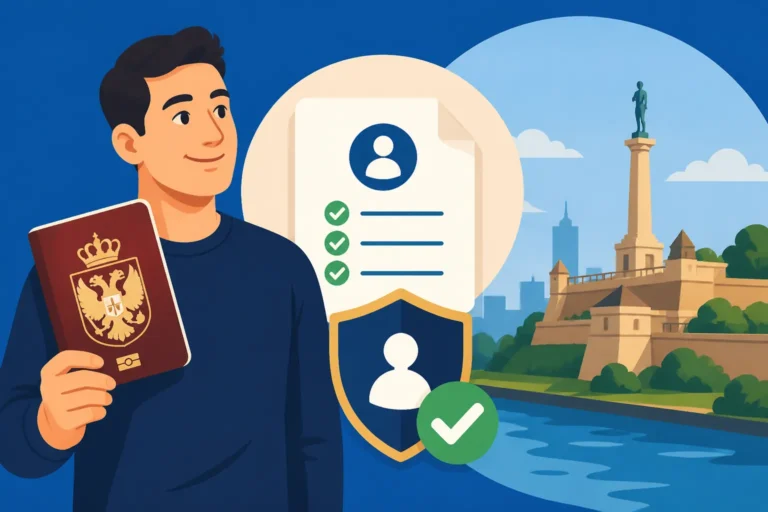
The administrative maze for foreigners in Serbia can feel like a never-ending labyrinth, especially when you're trying to figure out how to live and work here legally. For many of us, the old system of separate work and residence permits was a source of endless confusion and frustration. Thankfully, Serbia has streamlined the process with the introduction of the Single Permit for Work and Residence, a genuine game-changer that combines these two crucial documents into one application. This comprehensive guide will walk you through every twist and turn, demystifying the process so you can navigate it with confidence and finally settle into your Serbian adventure.
Understanding the Single Permit: What It Is and Why It Matters
Moving to a new country like Serbia often involves a significant amount of paperwork and bureaucratic hurdles. Before 2024, foreigners typically had to apply for a temporary residence permit (known as privremeni boravak) and then, separately, a work permit. This meant two applications, two sets of documents, two waiting periods, and often, two different government departments to deal with. It was a process that could test the patience of even the most seasoned expat.
The Evolution from Separate Permits
For years, the Serbian Ministry of Interior (MUP) handled residence permits, while the National Employment Service (NES) was in charge of work permits. While the intention was clear – ensuring that foreigners had both the right to reside and the right to work – the practical application was anything but. You’d often find yourself approved for one, only to hit a snag with the other, leading to delays and uncertainty. This disjointed approach created a lot of stress for individuals, families, and even employers trying to bring foreign talent into the country.
Recognising these pain points, the Serbian government introduced a new law that came into full effect in early 2024, bringing about the "Single Permit for Work and Residence." This landmark change consolidates both approvals into a single application process managed primarily by the MUP, albeit with input from the NES. The goal? To simplify bureaucracy, reduce processing times, and make Serbia a more attractive destination for foreign professionals, investors, and digital nomads. It's a genuine relief for many of us who remember the "good old days" of endless queues and conflicting information.
Key Benefits for Expats
The Single Permit isn't just a cosmetic change; it offers tangible advantages that significantly improve the expat experience. Firstly, the most obvious benefit is simplicity. Instead of juggling two separate applications, you now have one consolidated process. This means fewer forms, a single point of contact for enquiries, and a clearer overall picture of your application status. You’re no longer wondering if your residence will be approved before your work permit, or vice-versa.
Secondly, the new system aims for faster processing. While "faster" in Serbia can sometimes feel like "less slow" compared to other countries, the legislative intent is clear: to accelerate the approval process. The digital integration between the MUP and NES means that your application moves more seamlessly between departments. This is a huge plus, especially for those who need to start working quickly or have tight deadlines for their move.
Finally, the Single Permit offers greater clarity and predictability. When you receive your permit, it explicitly states both your right to reside and your right to work, removing any ambiguity. This makes it easier for you to plan your life, open bank accounts, register for healthcare, and generally feel more settled. It really signifies a big step forward in making Serbia more accessible and welcoming for the international community. If you’re curious about the specific types of residence permits available, you might find more details in our article on Understanding Serbian Residence Permits: Work, Study and Investment (2027).
Eligibility Criteria: Who Can Apply?
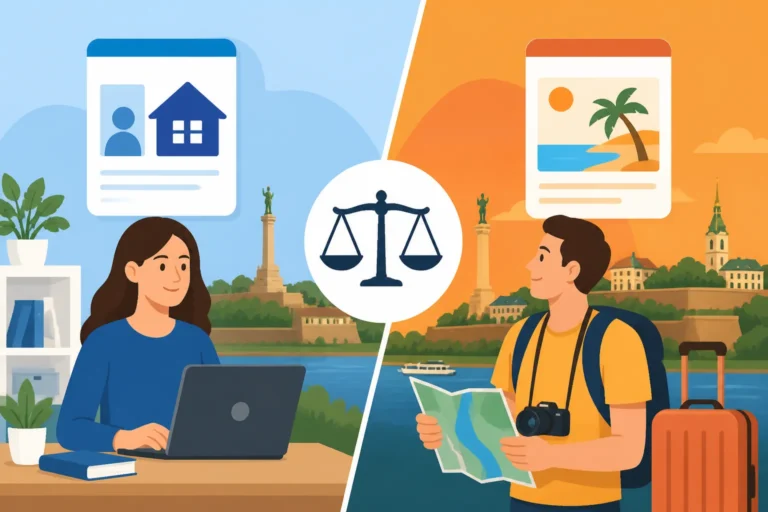
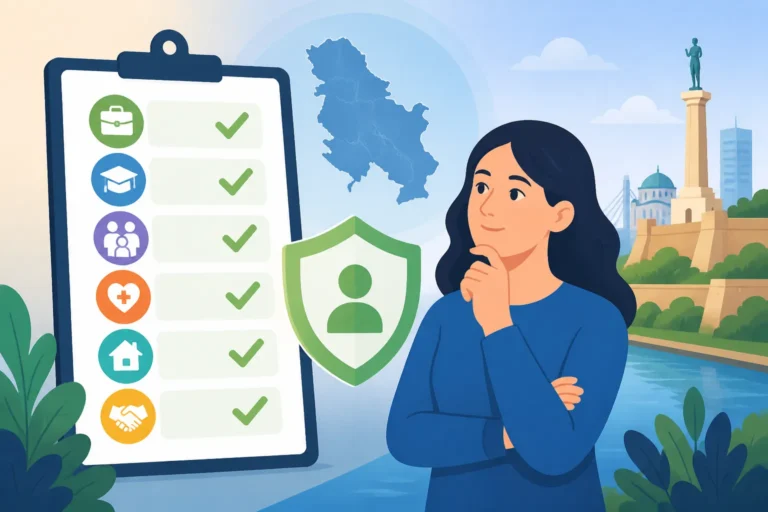
Navigating the eligibility requirements for the Single Permit can feel a bit like reading ancient hieroglyphs, but it’s crucial to get it right from the start. The permit is designed for various categories of foreigners seeking to legally work and reside in Serbia. Generally, it's aimed at individuals who have a clear purpose for their stay, whether that's employment, entrepreneurship, or other specific legal grounds.
General Requirements
At its core, the Single Permit requires you to meet certain fundamental conditions. These are pretty standard across most countries, but it’s always good to have them laid out clearly. First and foremost, you need a valid passport or other recognized travel document that will remain valid for at least three months beyond the intended duration of your stay. This might seem obvious, but you’d be surprised how many people overlook it until the last minute!
Secondly, you'll need proof of sufficient financial means to support yourself during your stay in Serbia. The exact amount isn't always explicitly stated in a single figure, but generally, authorities want to see that you won't become a burden on the state. This could be bank statements, proof of income, or a letter from your employer guaranteeing your salary. For those just starting their journey, you can get a better overview of the initial stages by reading Understanding How to Move to Serbia Legally from Abroad (2027).
You also need a clear purpose for your stay, which is where the "work" aspect comes in. This isn't a general residence permit for indefinite stays without a specific reason; it's intrinsically linked to your economic activity. Finally, you’ll need a valid address in Serbia, which you'll register once your permit is approved. This will be your prijava boravka, or registered address, which is fundamental to almost all aspects of life here.
Specific Cases: Employees, Entrepreneurs, Digital Nomads
The beauty of the Single Permit is its adaptability to different types of workers and professionals.
For employees, the process typically starts with a job offer from a Serbian employer. Your employer plays a crucial role here, as they often initiate parts of the application process, providing documentation related to your employment contract, job description, and proof that they’ve attempted to find a suitable Serbian candidate (though this latter requirement is often waived for highly skilled positions or for citizens of certain countries). The employment contract is vital, detailing your position, salary, and the duration of your employment, which usually dictates the length of your permit.
Entrepreneurs or those looking to set up their own business also fall under the Single Permit umbrella. If you’re planning to register as an entrepreneur (Preduzetnik) or establish a company (DOO), your business registration documents will be central to your application. This demonstrates your intent to engage in economic activity that benefits Serbia. The process for establishing a business can be quite specific, so a detailed look at How to Register as an Entrepreneur (Preduzetnik) in Serbia might be helpful.
And then we have the digital nomads. While Serbia doesn't have a specific "digital nomad visa" per se, the Single Permit can be obtained by registering as an entrepreneur (Pausalac is a popular option for its simplified tax regime) and proving your income from abroad. This route is incredibly popular and allows you to live and work in Serbia, benefiting from the lower cost of living and vibrant cultural scene, while serving international clients. You'll still need to show proof of sufficient funds and that your work can be performed remotely.
No matter your specific situation, the MUP’s objective is to ensure that your presence in Serbia is both legally sound and economically beneficial.
The Application Process: Step-by-Step Walkthrough
Alright, deep breaths! This is where the rubber meets the road. While the Single Permit system is designed to be simpler, it still involves a precise sequence of steps and a substantial pile of paperwork. Don't worry, we'll break it down so it feels less like a mountain and more like a manageable hill.
Gathering Your Documents: The Essential Checklist
The golden rule of Serbian bureaucracy is this: have all your documents ready, and then make a copy of everything. And then another copy. You’ll thank me later. The exact list can vary slightly depending on your specific grounds for application (employee, entrepreneur, etc.), but here's a general checklist of what you'll almost certainly need:
- Valid Passport: Original and photocopies of all relevant pages (photo, expiry, visa stamps). As mentioned, ensure it's valid for at least three months beyond your intended permit duration.
- Application Form: The official form provided by the MUP, filled out completely and signed. You can usually download this from the MUP website or get it at their office.
- Proof of Accommodation: A notarised rental contract for your apartment in Serbia, or a statement from the property owner if you're staying with friends/family. This is crucial for your prijava.
- Proof of Financial Means: Bank statements showing sufficient funds, a salary certificate, or an employment contract stating your income.
- Health Insurance: Proof of health insurance coverage for the duration of your stay. This could be a private insurance policy from an international provider like Cigna Global, or proof of registration with the Republic Health Insurance Fund (RFZO) if you're already employed and paying contributions. More on that later in our guide about The Complete Guide to Healthcare in Serbia for Expats (2027).
- Official Fees: Proof of payment for the administrative fees. These are paid via bank slip (uplatnica) at a post office or bank. The exact amounts can be found on the MUP website or requested at the MUP office.
- Photographs: Usually two passport-sized photos.
- Grounds for Work/Residence (Specific to your case):
- For Employees: Employment contract (original and copy), a letter from your employer detailing your position, salary, and the need for your specific skills. Sometimes, proof of qualification (diplomas, certificates) is required.
- For Entrepreneurs: Decision on the registration of your company/entrepreneurship, proof of tax registration (PIB), and sometimes a business plan or financial projections.
- For Others (e.g., family reunification): Marriage certificate, birth certificates, etc., all translated and apostilled as necessary.
Remember the cardinal rule: all foreign-issued documents (like birth certificates, marriage certificates, diplomas, or police clearance certificates) must be apostilled in your home country and then officially translated into Serbian by a certified court translator in Serbia. This step is often overlooked and can cause significant delays. Our article on Understanding Document and Translation Requirements for Serbia Immigration offers more in-depth advice on this.
Submitting Your Application: Where and How
The good news is that much of the Single Permit application process is now digital, primarily handled through the Ministry of Interior's e-government portal. This means you can often initiate and track your application online, saving you multiple trips to government offices. However, don't expect it to be entirely paperless – there's usually a point where original documents need to be physically presented or submitted.
You'll typically submit your application to the Directorate for Foreigners at the MUP. In Belgrade, this is usually at the Savska Street location or through regional MUP offices if you reside elsewhere. While the online portal allows for initial submission, you will almost certainly be called for an in-person interview or to present your original documents. This is where your preparedness truly pays off. They'll check every single document, so ensure everything is perfectly in order.
A common scenario: you upload all your documents online, thinking you’re done. Then you get an email or a call requesting you to come in, perhaps because a document wasn't clear, or they need to see the originals, or they just want to meet you. Be prepared for this. Always be polite, patient, and bring your best "smiley face" – it can go a long way in these interactions.
The Waiting Game: What to Expect After Submission
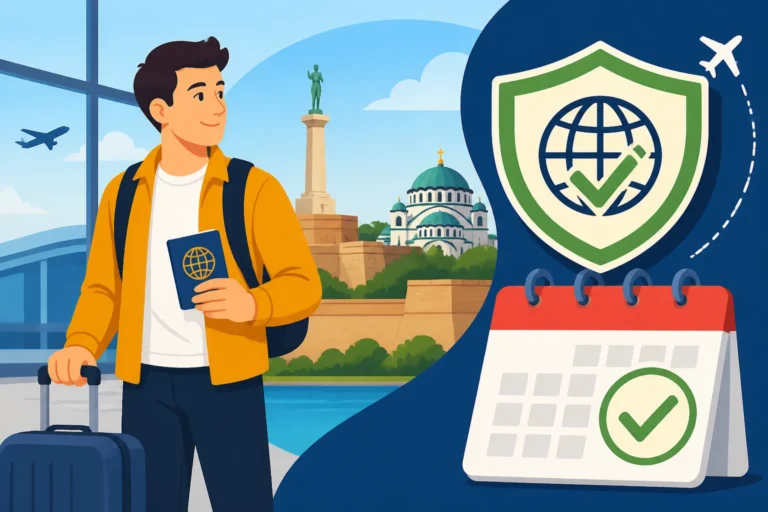
After you’ve submitted everything and had your initial meeting, the waiting begins. This can be the most nerve-wracking part of the process. The stated processing time for the Single Permit is typically around 15-30 days, but it’s realistic to expect it to take anywhere from one to two months, or even longer in complex cases or during peak periods. It's a bit like watching water boil, sometimes.
During this period, your application moves between the MUP and the National Employment Service. The MUP processes your residence aspect, while the NES assesses the work component. They communicate internally, which is where the "single" part of the permit comes into play. If there are any issues or missing documents, you'll usually be notified, giving you an opportunity to rectify them. This is why having your contact details absolutely correct on your application is vital.
Once your application is approved, you'll be notified to pick up your permit card. This card is your official identification in Serbia, serving as both your residence and work authorization. Keep it safe! With your permit in hand, you'll then need to proceed with other essential steps, like getting your local address registered with the police, which is often referred to as your beli karton or How to Register Your Address (Prijava) with the Police in Serbia. This crucial step often needs to be completed within 24-48 hours of receiving your permit or moving to a new address.
Here's a quick overview of the essential documents:
Document Category Specific Document Examples Notes ## Unravelling the Single Permit: Your Guide to Working and Living in Serbia
Let's be honest, trying to understand the nuances of immigration in any foreign country can be a total headache. For those of us who've been through the wringer with Serbian bureaucracy, the old system for getting both a residence permit (privremeni boravak) and a work permit was a double dose of stress. You’d juggle appointments at the Ministry of Interior (MUP) and the National Employment Service (NES), often feeling like one hand didn't know what the other was doing. This is precisely why the introduction of the Single Permit for Work and Residence is such a welcome change – it finally brings everything under one roof, simplifying your journey to live and work legally in Serbia. This guide will walk you through what the Single Permit means for you, how to apply, and what to expect along the way, helping you bypass some of the common pitfalls we expats have encountered.
The Single Permit: A Streamlined Approach to Serbian Bureaucracy
Before 2024, if you wanted to work in Serbia, you first needed to secure a temporary residence permit. Only after that was approved could you even begin the separate process of applying for a work permit. This sequential, often frustrating dance between two different government bodies, each with its own requirements and timelines, was a significant hurdle for many. You’d be cleared to reside, but then your work permit would drag, leaving you in limbo and unable to officially start your new job. It felt like an unnecessary complication, especially for employers trying to attract international talent.
How Serbia's Approach Has Evolved
The Serbian government, thankfully, recognised these inefficiencies. The new Law on Foreigners, which fully came into effect at the beginning of 2024, introduced the concept of the Single Permit. This means that instead of two separate applications, you now submit just one. The MUP becomes the central point for this application, coordinating directly with the National Employment Service to review both your residence and work aspects simultaneously. This move is a big deal, aiming to cut down on processing times, reduce administrative burdens, and make Serbia a more attractive and accessible destination for foreign workers and entrepreneurs. From personal experience, anything that consolidates paperwork is a win in my book!
The Practical Benefits for Expats
So, what does this actually mean for you on the ground? The most immediate benefit is a much simpler application process. One application form, one set of primary documents, and ideally, one point of contact at the MUP. This reduces the chances of miscommunication between government departments and gives you a clearer path forward. No more wondering if your residence approval will expire before your work permit even gets looked at!
Another significant advantage is the potential for faster processing times. While "fast" is a relative term in any bureaucratic system, the intent of the Single Permit is to streamline internal communications between the MUP and NES. This integrated approach should, in theory, lead to quicker decisions and less time spent in a state of administrative uncertainty. For those who are trying to plan a move and potentially need to ship their belongings, knowing your permit status sooner can be incredibly helpful – perhaps coordinating with international movers like Sirelo becomes less stressful when you have a firm timeline.
Finally, the Single Permit provides much-needed clarity. Your permit card will explicitly state your right to both reside and work, eliminating any ambiguity that sometimes arose from holding two separate documents. This makes everything from opening a bank account to registering for healthcare much smoother. It really helps you feel more settled and secure in your new life here. If you're looking for more details on general temporary residence, our guide How to Apply for Temporary Residence (Privremeni Boravak) in Serbia might offer some additional context, though remember the Single Permit now encompasses work-related residence.
Who Is Eligible: Understanding the Criteria for Application
Before you even start gathering your documents, it's crucial to understand if you qualify for the Single Permit. This isn't a free pass for anyone to move to Serbia; it's specifically designed for individuals who have a legitimate reason to contribute to the Serbian economy through work or entrepreneurship.
The Core Requirements for All Applicants
Regardless of your specific employment status, there are several foundational requirements that apply to almost everyone seeking a Single Permit:
- Valid Travel Document: You absolutely must have a passport that is valid for at least three months beyond the intended duration of your Single Permit. So, if you're applying for a one-year permit, your passport should be valid for at least 15 months from the application date. Always check this first!
- Proof of Sufficient Funds: The Serbian authorities want to see that you can support yourself without becoming a public burden. This usually means providing recent bank statements, a formal salary certificate from your employer, or proof of income from your business if you're an entrepreneur. While there's no fixed, publicly advertised minimum amount, having enough to cover your living expenses comfortably for several months is generally a good benchmark.
- Accommodation in Serbia: You need to demonstrate that you have a place to live. This typically involves a notarised rental agreement. If you're staying with a friend or family member, they will need to provide a notarised statement confirming your residence at their address. This is a critical piece of the puzzle for your address registration later on.
- Health Insurance: You must have valid health insurance coverage for the entire period of your requested permit. This is where options come in: you can either opt for a private international health insurance plan (many expats use providers like Cigna Global for comprehensive worldwide coverage) or, if you're employed by a Serbian company, you will be registered with the state-run Republic Health Insurance Fund (RFZO) through your employer's contributions. We've covered this extensively in Health Insurance in Serbia: RFZO, Private and International Options Explained.
- Clean Record: While not always explicitly requested upfront, the MUP can (and often does) conduct background checks. It’s expected that you don't have a serious criminal record.
Specific Scenarios: Employees, Entrepreneurs, and the Remote Workforce
The Single Permit is designed to be versatile, covering various professional situations:
- For Employees: If you've landed a job with a Serbian company, your employer is your biggest ally here. They will need to provide a formal job offer, an employment contract (or a pre-contract), and details about your role and salary. Crucially, the Serbian Labour Law usually requires employers to demonstrate that there was no suitable local candidate for the position. However, this is often a formality, particularly for highly specialized roles or certain nationalities. Your employer will also need to attest to your qualifications, so be prepared to provide copies of diplomas or certificates.
- For Entrepreneurs/Business Owners: This category is broad and very popular among expats. If you’re establishing your own company (DOO) or registering as an entrepreneur (preduzetnik), your business registration documents from the Serbian Business Registers Agency (APR) will be central. You’ll need to show that your business is legitimate and has the potential to generate income. Many digital nomads and freelancers choose the 'Pausal' regime as a simplified way to operate. If this sounds like you, then diving into How to Register as an Entrepreneur (Preduzetnik) in Serbia will be invaluable.
- For Digital Nomads (The "Entrepreneur" Route): While Serbia doesn't have a distinct "digital nomad visa," the most common and effective route for digital nomads is to register as a self-employed entrepreneur (often under the Pausal lump-sum tax regime). You’ll then apply for the Single Permit based on your status as an entrepreneur working remotely for international clients. You'll still need to demonstrate your ability to support yourself through contracts or invoices with foreign clients.
Understanding these distinctions is key because the specific supporting documents you provide will hinge on your category. Getting this wrong can lead to delays or outright rejection.
The Application Journey: Your Step-by-Step Guide
Alright, now that you know if you're eligible, let's get down to the nitty-gritty: the actual application process. This part can feel daunting, but breaking it down into manageable steps makes it much less intimidating. Remember, patience and meticulousness are your best friends here.
Document Preparation: Your Essential Checklist
As an expat who's been through this more than once, I can't stress enough how important it is to have your documents in impeccable order. Gather everything, make digital copies, make physical copies, and keep them organised. Here’s a more detailed breakdown:
- Application Form: The official form from the MUP website. Fill it out clearly, preferably typed, and sign it. Any errors can cause delays.
- Passport Photos: Two recent passport-sized photos (usually 3.5cm x 4.5cm) with a white background. Make sure they meet standard biometric requirements.
- Proof of Paid Fees: This is often a two-part payment. You'll pay an administrative fee for the application itself and another fee for the permit card production. These are paid at a post office or bank using a specific uplatnica (payment slip) with predefined payment codes. The amounts can change, so always check the latest MUP guidelines or ask at the MUP office.
- Notarised Rental Agreement: An original copy of your rental contract (or statement from the homeowner) with official notary stamps. This proves your address for your prijava boravka.
- Bank Statements: Recent statements (usually for the last 3-6 months) from your bank, showing sufficient funds to cover your living expenses. If your funds are in a foreign bank, ensure they are easily convertible to Serbian Dinars (RSD).
- Health Insurance Certificate: As mentioned, either proof of your private international insurance (like a policy document from Cigna Global) or, if employed, a document confirming your employer will register you with RFZO.
- Employment-Specific Documents (if applicable):
- For Employees: Your original employment contract, a copy certified by a notary, and a detailed job description letter from your Serbian employer. Your employer might also need to submit a form to the NES confirming your employment.
- For Entrepreneurs: Your Decision on Registration from the APR (Serbian Business Registers Agency), proof of your Tax Identification Number (PIB), and potentially a brief description of your business activities. If you're a Pausalac, you'll also need proof of your Pausal registration.
A critical point: any documents not originally issued in Serbia (e.g., birth certificates, marriage certificates, university diplomas, police clearance certificates from your home country) must be apostilled in your country of origin (if your country is a signatory to the Hague Apostille Convention) and then officially translated into Serbian by a certified court translator in Serbia. This is one of the most common stumbling blocks. Don't skip it! You can learn more about Understanding Document and Translation Requirements for Serbia Immigration.
Submitting Your Application: The Digital and In-Person Dance
The modern system primarily uses the MUP's e-Government portal. Here's a general flow:
- Online Portal Initiation: You or your employer (if applicable) will likely start the process by creating an account on the e-Government portal and initiating your Single Permit application. This is where you upload digital copies of all your prepared documents.
- MUP Review & Potential Interview: After online submission, the MUP will review your digital application. You will almost certainly receive an invitation to appear in person at the Directorate for Foreigners (in Belgrade, this is typically the MUP building on Savska Street 35c, but check for updated locations or regional offices). This is where you bring all your original documents for verification and possibly undergo a brief interview. Be prepared to answer questions about your purpose for staying in Serbia, your job, and your plans.
- NES Involvement: Behind the scenes, the MUP will forward the relevant parts of your application to the National Employment Service for their assessment of the work component. This is the streamlined part of the "Single Permit" – you don't typically interact directly with the NES.
It’s crucial to be polite and patient during any in-person interactions. The staff are usually doing their best, even if the process feels slow. Showing respect and having all your documents perfectly organised can really help smooth things over.
The Waiting Period: What Happens Next?
Once you’ve submitted your application and presented your original documents, you enter the "waiting game." This period can vary significantly. While the official timeframe aims for around 15-30 days, real-world experience suggests it can often stretch to 4-8 weeks, sometimes longer depending on the complexity of your case or how busy the MUP is.
During this time, your application is being processed internally. If there are any issues or missing information, the MUP will usually contact you (via email, phone, or the e-Government portal) to request clarification or additional documents. Be diligent about checking your communication channels. If you don't respond promptly, your application could be delayed or even rejected.
Upon approval, you'll receive notification to pick up your Single Permit card. This is a plastic ID card, similar to a local's ID card, featuring your photo, personal details, and clearly stating your right to both reside and work in Serbia. This card is your official proof of legal status here. Once you have it, you can officially exhale and celebrate!
Overcoming Common Obstacles and Ensuring Smooth Sailing
Even with the streamlined Single Permit, the journey isn't always perfectly smooth. There are common hurdles that many expats face, and being prepared for them can save you a lot of grief.
The Perils of Document Translation and Notarisation
This is probably the biggest recurring headache for most newcomers. As I mentioned, foreign documents need to be apostilled (if applicable) and then translated by a certified court translator in Serbia. It's not enough to just use any translator; it must be an official court translator, stamped and sealed. You can find lists of these translators online or ask for recommendations in expat groups.
A common mistake is getting documents translated before arriving in Serbia by a non-certified translator, or not getting them apostilled in the first place. This will lead to rejection. Another tip: some documents, like your employment contract, may need to be notarised in Serbia even if they are in Serbian, just to verify signatures. Always clarify with the MUP or your legal representative exactly which documents require which level of verification. It's an extra layer of expense and time, but it's non-negotiable.
Navigating the MUP Bureaucracy: Patience is a Virtue
While the MUP staff are generally helpful, the system can still feel opaque. Queues can be long, processes can sometimes seem illogical, and communication might not always be in English. Here's how to navigate it:
- Go Early: If you need to visit the MUP in person, try to go as early as possible in the morning, right when they open.
- Be Over-Prepared: Bring all originals and multiple copies of everything. It's better to have too much than too little.
- Be Polite and Patient: A smile and a calm demeanour go a long way. Getting frustrated rarely speeds things up.
- Consider Professional Help: Especially for initial applications or complex cases (like if you have dependents or a non-standard situation), hiring a local lawyer or agency specialising in expat immigration can be a lifesaver. They know the system, the specific nuances, and can often anticipate issues before they arise. This can significantly reduce your stress and the chances of rejection.
Maintaining Your Permit: Renewals and Changes
Your Single Permit won't last forever. It's typically issued for a period matching your employment contract or business registration (usually 6 months to 1 year, renewable).
- Renewals: You should start the renewal process at least 30 days before your current permit expires. The process is similar to the initial application but usually requires updated documents (new bank statements, updated employment contract, proof of continued health insurance, etc.). Don't leave it to the last minute! Letting your permit expire can lead to fines and complications.
- Changes in Circumstances: If you change employers, move addresses, or your personal circumstances change (e.g., marriage, birth of a child), you must notify the MUP. Sometimes, a change of employer will require a completely new Single Permit application. Always check with the MUP or your legal advisor on how to proceed. Failing to notify the authorities can lead to problems down the line, including invalidating your permit.
Costs and Timelines: Budgeting for Your Permit
Understanding the financial and time commitments is crucial for planning your move to Serbia. The Single Permit, while streamlining the process, still incurs costs and requires a realistic expectation of processing times.
Official Fees and Administrative Costs
The direct government fees for the Single Permit are generally quite reasonable compared to many Western countries. These typically include:
- Administrative Fee for the Application: This covers the processing of your request.
- Fee for the Permit Card: This covers the cost of printing your actual physical permit card.
These fees are paid via uplatnica at any post office or commercial bank in Serbia. The exact amounts can fluctuate slightly due to governmental adjustments, so always double-check the latest figures on the MUP's official website or inquire at the Directorate for Foreigners. For example, as of recent checks, the combined fees might range somewhere around 15,000 to 20,000 RSD, but this is a rough estimate and you should confirm current rates.
Beyond these official government fees, you need to budget for several other administrative costs:
- Certified Translations: This can be a significant expense, especially if you have many foreign documents. Court translators typically charge per page or per word, and fees can range from 1,000 RSD to 3,000 RSD per standard page, sometimes more for urgent requests.
- Notarisation: Having rental agreements or other local documents notarised will incur small fees, usually a few hundred RSD.
- Apostille: If your original documents need apostilling, this is done in your home country and will have its own associated costs.
- Health Insurance: If you opt for private health insurance, factor in the annual premium. Providers like Cigna Global offer various plans, and costs will depend on coverage levels and your age.
- Professional Assistance: If you decide to hire a lawyer or a relocation agency to assist with your application, this will be an additional cost, but often a worthwhile investment for peace of mind and efficiency.
Realistic Processing Times
As frustrating as it sounds, official processing times are often a best-case scenario. While the law aims for 15-30 days, from my experience and talking to countless expats, it's more realistic to expect the following:
- Initial Application Review (Online): A few days to a week.
- Invitation for In-Person Submission/Interview: This can take 1-2 weeks after online submission.
- Full Processing After In-Person Meeting: Expect anywhere from 4 to 8 weeks. During peak times, it could even extend beyond that.
The key takeaway here is to apply well in advance of when you need your permit, especially if you're already in Serbia on a visa-free stay and approaching the 90-day limit. Starting the application process early provides a buffer against unforeseen delays. Serbia is working to digitalise and speed up processes, but it’s still best to prepare for the unexpected.
Life After the Single Permit: Your Next Steps
Congratulations! You've navigated the application, endured the wait, and now hold your Single Permit for Work and Residence. This is a huge milestone, but it’s not quite the end of your administrative journey. There are a few crucial follow-up steps to ensure you’re fully integrated and compliant with Serbian regulations.
Registering Your Address (Beli Karton)
This is perhaps the most immediate and critical step after receiving your permit. Within 24-48 hours of getting your permit card (or moving to a new address), you must register your address with the local police. This is known as your prijava boravka, often informally referred to as your beli karton (white card), although the actual document is usually a digital entry or a printout, not a physical white card anymore.
Your landlord is typically responsible for helping you with this, or you can do it yourself at the local police station (the policijska uprava). You'll need your Single Permit, your passport, and your notarised rental agreement. This registration is fundamental because it's linked to virtually everything else you'll do in Serbia, from opening a bank account to accessing public services. Failing to register your address promptly can lead to fines or complications, so don't overlook it! For a more detailed guide, see How to Register Your Address (Prijava) with the Police in Serbia.
Integrating with Healthcare and Banking
With your Single Permit and registered address, you can now fully access essential services.
- Healthcare: If your Single Permit is based on employment with a Serbian company, your employer will register you with the Republic Health Insurance Fund (RFZO). This grants you access to Serbia’s public healthcare system. Make sure you get your health insurance card (zdravstvena knjižica) as soon as possible. If you're an entrepreneur (especially Pausalac) or otherwise not covered by an employer, you'll need to pay your mandatory health contributions directly to the RFZO to activate your public health coverage. Alternatively, if you prefer private care or comprehensive international coverage, you'll rely on your private insurance policy, perhaps from a provider like Cigna Global. Understanding Mandatory Health Insurance Contributions in Serbia can provide more clarity here.
- Banking: Opening a bank account in Serbia becomes much easier once you have your Single Permit and registered address. You'll typically need your passport, permit card, and proof of address. Most major Serbian banks like Banca Intesa, Raiffeisen Bank, or NLB Komercijalna banka are expat-friendly. This step is essential for managing your finances, receiving salaries, and paying bills. For detailed advice, check out How to Open a Bank Account at a Serbian Bank as a Foreigner.
- Tax Registration: As a working resident, you’ll also need to understand your tax obligations. If you're employed, your employer handles your payroll taxes. If you're an entrepreneur, you'll need to report your income to the Tax Administration (Poreska Uprava). This is an ongoing obligation, so familiarise yourself with the system; our guide How Much Income Tax Will I Pay in Serbia in 2026? can be a good starting point.
The Single Permit is a fantastic improvement, consolidating what was once a disjointed and often confusing process into a much clearer path. It signifies that you are officially a part of the vibrant expat community here in Serbia, ready to embrace everything this wonderful country has to offer. Just remember to keep those documents organised, maintain your patience, and don't hesitate to seek local professional help if you find yourself overwhelmed. Welcome to Serbia!
Disclaimer
The information provided in this guide is intended for general informational purposes only and does not constitute legal, financial, or immigration advice. While we strive to provide accurate and up-to-date information based on our experience and publicly available data, laws and procedures in Serbia can change frequently. It is essential to consult with the official Serbian authorities (such as the Ministry of Interior or the National Employment Service) or seek professional legal counsel for advice tailored to your specific situation. Reliance on any information in this guide is solely at your own risk.