How Specialist and Hospital Referrals Work in Serbia
Navigating the Serbian healthcare system can feel like deciphering an ancient scroll, especially when you're not just popping into a local pharmacy for a headache. One of the biggest hurdles expats face is understanding how to see a specialist or get admitted to a hospital. This comprehensive guide will demystify the referral process, helping you understand each step, from your initial GP visit to accessing advanced medical care in Serbia.
The Gatekeeper Role of Your GP: The First Step
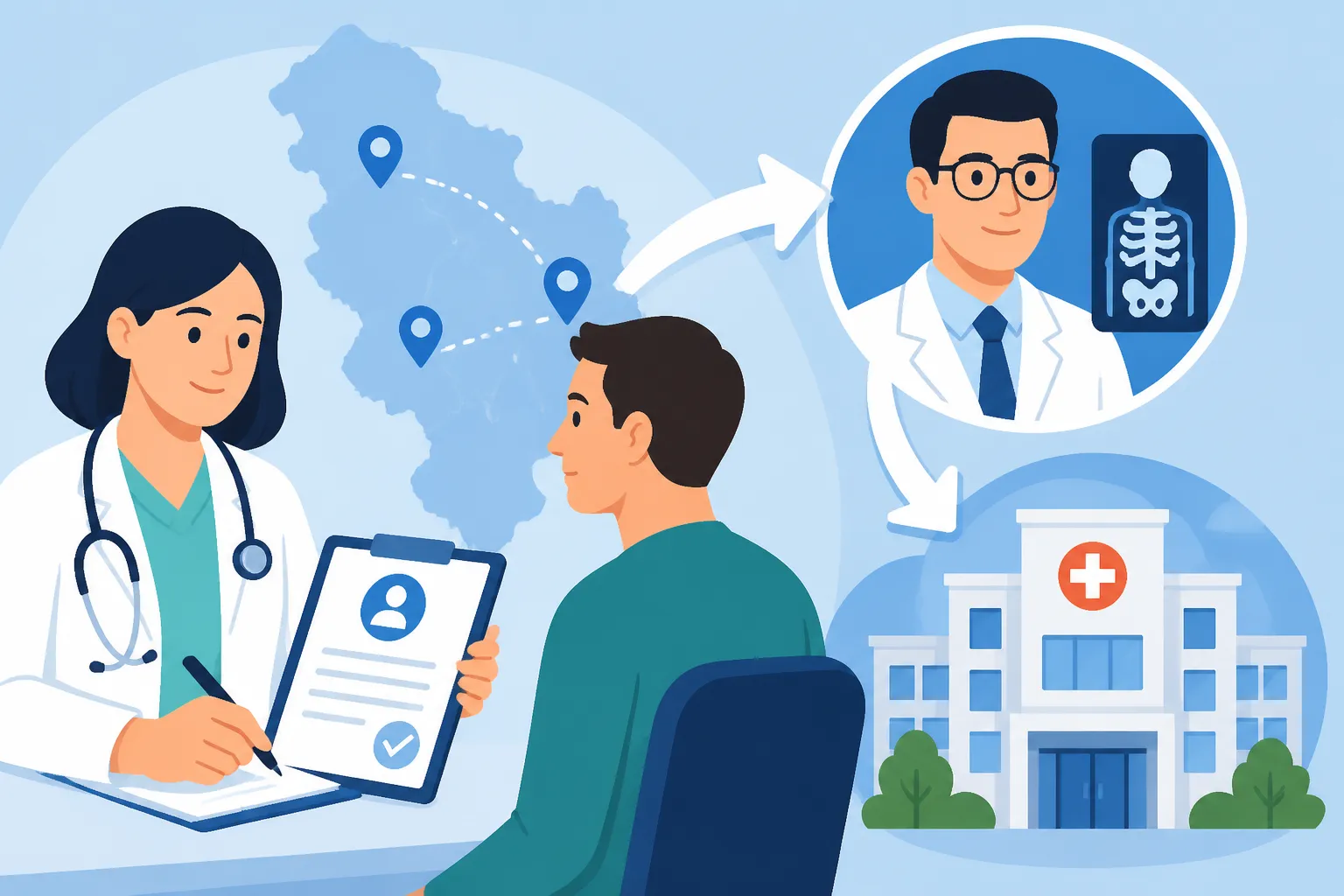
When you first arrive in Serbia and get settled, one of the most crucial things you'll do is register with a local doctor, your izabrani lekar (chosen doctor). This isn't just a suggestion; it's practically a requirement for navigating the public healthcare system. Think of your izabrani lekar as your primary point of contact and, more importantly, your gatekeeper to almost all specialist and hospital services. Without their referral, getting further medical attention in the public system is often an uphill battle, if not impossible.
Why You Need a Referral for Specialists
In Serbia's public health system, direct access to specialists is rare. Whether you need to see a dermatologist for a nagging rash, an orthopedist for a sports injury, or a cardiologist for heart concerns, your journey almost invariably starts with your izabrani lekar. They are responsible for your general health, initial diagnosis, and deciding if your condition warrants specialist intervention. This system helps manage patient flow, ensuring that specialists see only those who genuinely need their expertise, preventing the system from being overwhelmed by minor ailments that a GP can handle.
Many expats find this system a bit frustrating, especially if they come from countries where self-referral or direct booking with specialists is common. It can feel like an extra layer of bureaucracy when all you want is to see the "right" doctor. However, it's how the system is designed to function, and understanding this fundamental aspect will save you a lot of time and potential headaches.
Choosing Your Izabrani Lekar
Selecting your izabrani lekar is a personal decision, but it's a critical one. This doctor will be your advocate within the Serbian public health system. You'll typically choose from the general practitioners available at your local dom zdravlja (health center). It’s wise to ask around your expat community for recommendations or visit a few centers to get a feel for the environment and staff. While fluency in English might not be a guarantee, some younger doctors or those who have worked with international patients might have a good command of the language.
When you're trying to figure out how to choose a GP (Izabrani Lekar) at a Dom Zdravlja in Serbia, remember that this relationship is key. A good izabrani lekar who understands your needs and can communicate effectively will make the entire referral process significantly smoother. If you find yourself struggling with language barriers, consider seeking out a doctor who is known to speak some English, or be prepared to bring a Serbian-speaking friend or translator to your appointments.
The Initial Consultation Process
Your journey to a specialist begins with an appointment with your izabrani lekar. During this consultation, you'll explain your symptoms and medical history. Be as thorough as possible, providing all relevant details. Your GP will conduct an examination, and perhaps order some initial blood tests or basic diagnostics available at the dom zdravlja. Based on their assessment, if they determine that your condition requires a specialist's opinion or advanced treatment, they will issue a referral.
It’s important to remember that your GP might try to treat the condition themselves first, especially if it’s a common ailment. Don't be surprised if you have a follow-up appointment or two before a referral is considered. This is part of their role to manage primary care. If you feel strongly that you need a specialist, politely but firmly express your concerns and ask for the referral, explaining why you believe it's necessary. This initial step is fundamental for understanding the role of the RFZO and your GP in Serbia.
Understanding the Referral Slip (Uput): Your Golden Ticket
Once your izabrani lekar agrees that you need specialist care, they will issue an official referral document, known as an uput (pronounced oo-poot). This piece of paper is incredibly important—it's essentially your authorization to access higher levels of medical care within the public system. Without it, you simply won't be able to book an appointment with a specialist or be admitted to a public hospital for a non-emergency.
What Information an Uput Contains
An uput is more than just a note; it's a detailed document that contains essential information about your health and the requested referral. It will typically include your personal details, your unique health insurance number (from the RFZO), your izabrani lekar's details, and most importantly, the specific reason for the referral. This includes your diagnosis, a summary of your symptoms, any preliminary tests or treatments you’ve received, and the exact type of specialist you need to see (e.g., "Referral to a Cardiologist").
It also often specifies the particular institution or hospital where you should seek care, especially in larger cities like Belgrade or Novi Sad, where there are multiple public hospitals or clinics specializing in different areas. Ensure all the information, especially your personal details, is correct before you leave your GP's office. Any discrepancies could lead to delays or issues when trying to book your specialist appointment.
Validity and Types of Referrals
The uput usually has a limited validity period. For most specialist consultations, it's typically valid for 30 days from the date of issue. This means you need to schedule and attend your appointment within that timeframe. If you miss the deadline, you’ll have to go back to your izabrani lekar to get a new uput, which can be frustrating and cause further delays. For some more complex diagnostic procedures or hospital admissions, the uput might have a longer validity, but it's always best to clarify this with your GP.
There are different types of uput depending on the service needed: one for a specialist consultation, another for specific diagnostic procedures (like an MRI or endoscopy), and a separate one for hospital admission. It’s crucial that your GP issues the correct type of uput for your needs. For instance, an uput for a simple consultation won't get you admitted to a hospital ward, even if the specialist you see decides you need to stay overnight. In such cases, the specialist themselves would then issue a separate hospital admission uput.
The Frustration of Multiple Referrals
Sometimes, your initial referral might not be enough. For example, your GP refers you to a general internist, who then decides you need to see a more specific sub-specialist like a gastroenterologist or endocrinologist. In the public system, you will often need another uput from your izabrani lekar for this second specialist, even if the first specialist already recommended it. This can be one of the most infuriating aspects for expats. It means more trips back to the dom zdravlja, more waiting, and more potential delays in getting the care you need.
It feels like an unnecessary run-around, and honestly, it often is. My advice? Try to clarify with your izabrani lekar upfront if there's any way to get a broader referral or if they can anticipate subsequent referrals if the first specialist points to another. While not always possible, sometimes a very specific initial uput can be avoided if the GP provides a more general one for complex cases. This system certainly highlights the intricacies of how specialist and hospital referrals work in Serbia.
Navigating Specialist Appointments
Once you have your uput in hand, the next step is to actually book and attend your specialist appointment. This part of the process can vary significantly depending on whether you're sticking to the public system or opting for private care. Each path has its own set of advantages and challenges, particularly regarding wait times and costs.
Public System Specialist Appointments and Wait Times
Booking a specialist appointment in the public system typically involves contacting the specific hospital or clinic mentioned on your uput. You'll usually need to call their central appointment desk or visit in person. Be prepared for potential language barriers here; having a Serbian speaker help you can be invaluable. This is also where you might encounter the notorious wait times. For routine specialist appointments, it's not uncommon to wait several weeks, sometimes even months, particularly for highly sought-after specialists or for certain diagnostic procedures like an MRI scan.
For instance, getting an appointment with a public hospital orthopedist in Belgrade for a non-urgent knee issue might mean a two-month wait. If you need a specific type of imaging, like an MRI, the wait could be even longer, sometimes half a year or more. These long waits are a common complaint, even among Serbians, and they can be particularly stressful for expats who might be used to faster access to care. It's crucial to factor these potential delays into your planning if you're relying solely on the public system. For a full breakdown, check out How Long Are Wait Times to See a Specialist in Serbia?.
Private Clinics as an Alternative
Given the potential for long waits in the public system, many expats (and Serbians who can afford it) choose to visit private clinics for specialist consultations. The private sector in Serbia is robust, with numerous modern clinics offering a wide range of specialist services, often with English-speaking staff. You typically don't need an uput from your GP to see a specialist in a private clinic; you can simply call and book an appointment directly. The wait times are significantly shorter, often just a few days, or even same-day for urgent cases.
Of course, the convenience of private care comes with a cost. While generally more affordable than in Western Europe or North America, private specialist consultations in Serbia can still add up. If you have private health insurance, it might cover these costs. Some expat insurance providers, like SafetyWing, offer flexible plans that could cover consultations and treatments in private clinics, making this a much more viable option for many. It's worth researching How Much Does a Specialist Consultation Cost in Serbia? and your insurance options to see what makes sense for your situation.
Preparing for Your Specialist Visit
Whether you're going public or private, preparing for your specialist appointment can make a big difference. Gather all relevant documents: your uput (if public), previous test results, imaging scans, and a list of any medications you're currently taking. If there's a language barrier, bring a Serbian-speaking friend, a professional translator, or at least have key phrases and questions written down.
Be prepared to clearly articulate your symptoms, medical history, and what you hope to achieve from the consultation. Don't be shy about asking questions about your diagnosis, treatment options, and any follow-up care. Remember, you are your own best advocate, especially in a foreign healthcare system. This preparation is key, as understanding What Documents Do I Need to See a Doctor in Serbia? will streamline your visit.
Hospital Referrals and Admissions
Sometimes, a specialist consultation isn't enough, and you might require hospitalization. This is another area where the referral system is paramount, particularly for planned admissions within the public healthcare framework.
When a Hospital Referral Becomes Necessary
A hospital referral, again in the form of an uput, is typically issued by your izabrani lekar or, more commonly, by a specialist whom your GP initially referred you to. If a specialist examines you and determines that you require inpatient care, surgery, or extensive diagnostic procedures that can only be performed in a hospital setting, they will issue the necessary uput for admission. This referral will specify the hospital department and the reason for admission.
For example, if you're seeing a gastroenterologist for a chronic stomach issue and they decide you need a colonoscopy that requires sedation and observation, they will issue the uput for hospital admission. Similarly, if you require a surgical procedure, the surgeon you consult with will provide the uput once the decision for surgery has been made and scheduled. This process ensures that hospital beds and resources are used appropriately and that patients arrive with a clear medical history and plan. For more on this, check out Understanding Hospital Admission and Billing in Serbia.
Emergency vs. Planned Admissions
It's crucial to distinguish between planned hospital admissions and emergency situations. In a genuine medical emergency where your life or health is immediately at risk, you do not need an uput. You or someone with you should call 194 for an ambulance, or head directly to the nearest urgent care center (Urgentni Centar) or hospital emergency room. In such cases, the priority is immediate medical attention, and the referral process is bypassed.
However, for any non-urgent, planned admission – such as elective surgery, scheduled diagnostic tests requiring inpatient stay, or long-term observation – an uput is absolutely mandatory for public hospitals. You simply cannot walk into a public hospital and demand admission without this document. For expats, knowing What Should I Do in a Medical Emergency in Belgrade? is vital. Even if you're covered by a comprehensive travel health insurance like SafetyWing, it's wise to understand the local emergency numbers.
The Public Hospital Experience
Public hospitals in Serbia, especially in major cities like Belgrade, are generally well-equipped for most common medical conditions and surgeries. However, they can be crowded, and facilities might appear older compared to modern private clinics. Patient rooms often have multiple beds, and amenities might be basic. Language can again be a significant barrier, as not all medical staff will be fluent in English.
For planned admissions, you'll typically be given a date and time to arrive. You'll go through an administrative process, presenting your uput and your health insurance card. It’s highly recommended to have a Serbian speaker with you during this process, especially if you anticipate any complex communication needs. Remember, while the public system is covered by your RFZO contributions, there might still be small co-payments for certain services.
Challenges and Tips for Expats
Navigating any foreign healthcare system presents unique challenges, and Serbia is no exception. As an expat, you're not just dealing with medical conditions but also cultural differences, language barriers, and often, bureaucratic hurdles that can test your patience.
Language Barriers and Translation Services
This is arguably the biggest hurdle for many expats in Serbia. While younger generations and professionals in international companies might speak English, it's not a universal guarantee, especially among older medical staff in public institutions. A simple misunderstanding can have serious implications for your health.
- Bring a friend: If you have a trusted Serbian-speaking friend, ask them to accompany you to appointments, especially for initial consultations or when receiving important diagnoses.
- Professional translators: For more complex or sensitive medical issues, consider hiring a professional medical translator. It's an investment in your health and peace of mind.
- Translation apps: While not perfect, apps can help with basic communication. Have them ready on your phone.
- Key phrases: Learn a few key medical phrases in Serbian. It shows effort and can sometimes bridge small communication gaps. If you're looking for someone specific, finding an English-speaking doctor in Serbia is becoming easier in private practices.
The Paperwork Trail and Bureaucracy
The Serbian system, like many in the region, is still quite paper-heavy. Don't be surprised if you're given physical printouts for referrals, test results, and prescriptions. Keep all these documents organized and in a safe place. You might be asked to present them multiple times, even for the same issue, as different departments or institutions don't always have interconnected digital systems.
Tips for managing paperwork:
- Keep a dedicated folder: Have a physical folder for all your medical documents.
- Scan important papers: Create digital copies of all essential referrals, reports, and prescriptions.
- Ask for copies: Don't hesitate to ask for copies of any reports or test results for your personal records.
- Patience is a virtue: Bureaucracy can be slow. Embrace a patient mindset, and factor in extra time for administrative tasks.
Insurance Considerations
Understanding your health insurance is paramount when accessing healthcare in Serbia. If you are formally employed in Serbia, you will be registered with the Republic Health Insurance Fund (RFZO), which provides public healthcare coverage. However, many expats choose to supplement this with private health insurance for faster access, more comfortable facilities, and wider coverage options.
- RFZO coverage: Your RFZO card covers most services in the public system, but it relies heavily on the referral chain we've discussed. You'll likely need to know Understanding Mandatory Health Insurance Contributions in Serbia to ensure you're covered.
- Private health insurance: This allows you to bypass the public referral system for private clinics and can significantly reduce wait times. Some policies might also cover a portion of public hospital costs if you opt for a private room, though this is less common. For those not yet fully integrated into the Serbian system, or for those who travel frequently, a global health insurance provider like SafetyWing can offer essential coverage for unexpected medical needs, providing a safety net that complements local options.
- Travel insurance: For tourists or new arrivals not yet integrated into the RFZO, travel insurance is vital. In an emergency, it can cover costs that could otherwise be prohibitive. Even for established expats, having an additional travel insurance plan for trips outside Serbia can be beneficial.
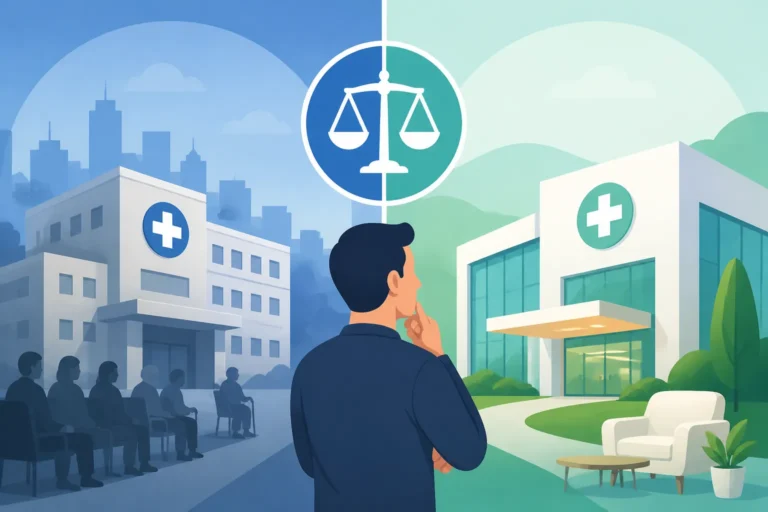
A Comparative Look: Public vs. Private Referrals
To summarize the key differences in how referrals work, here’s a table that might help clarify your options:
| Feature | Public Healthcare System (RFZO) | Private Healthcare System |
|---|---|---|
| Initial Contact | Always your izabrani lekar (GP) at a dom zdravlja. | Direct with specialist/clinic or GP (often private), no gatekeeper. |
| Referral Needed? | Yes, an uput is mandatory for specialists & non-emergency hospitals. | Generally no; you can book directly. |
| Wait Times | Can be long (weeks to months) for specialists and procedures. | Significantly shorter (days to a week), often same-day. |
| Cost | Covered by RFZO contributions, small co-payments may apply. | Paid out-of-pocket or covered by private insurance (e.g., SafetyWing). |
| Language Support | Variable; often limited English, bringing a translator advised. | Higher likelihood of English-speaking staff. |
| Facilities | Functional, may appear older, multi-bed rooms common. | Modern, comfortable, often single-patient rooms, advanced equipment. |
| Flexibility | Less flexible, tied to dom zdravlja and specific hospitals. | High flexibility in choosing doctors, clinics, and appointment times. |
| Emergency Care | Direct access without referral for life-threatening emergencies. | Direct access for emergencies (private urgent care centres). |
Understanding these differences is crucial for expats deciding between public and private options. Often, a hybrid approach works best: using the public system for routine GP care and chronic conditions, while leveraging private clinics for quicker access to specialists, second opinions, or procedures with long public wait times, especially if you have an international health plan like SafetyWing. You can learn more about Public vs Private Healthcare in Serbia: What Expats Need to Know.
Final Thoughts on Navigating Referrals
The referral system in Serbia, particularly within the public healthcare sector, can definitely take some getting used to. It requires patience, good organizational skills, and often, a willingness to be proactive in managing your own care. While it might seem overly bureaucratic at times, understanding its structure is the first step to successfully navigating it.
Remember, your izabrani lekar is your primary guide, and the uput is your key to unlocking further medical attention. Don't be afraid to ask questions, seek clarification, and if necessary, explore private options or leverage your private health insurance when the public system's waits become unmanageable. With a bit of preparation and perseverance, you'll find that you can access quality healthcare in Serbia, even for specialized needs.
Disclaimer
The information provided in this guide is intended for general informational purposes only and does not constitute medical, legal, or professional advice. While we strive to provide accurate and up-to-date information, healthcare regulations and practices in Serbia can change. Always consult with a qualified healthcare professional or legal expert for advice tailored to your specific situation. Reliance on any information presented here is solely at your own risk.