Understanding the Belgrade Bus, Tram and Trolleybus Networks
Oh, the Belgrade public transport system! If you're new here, you've likely already experienced a mix of bewilderment, mild frustration, and perhaps a touch of awe at how it all sort of works. Trying to figure out the sprawling network of buses, trams, and trolleybuses in this vibrant city can feel like a rite of passage for every expat and tourist. This guide is here to untangle the complexities, validate your inevitable moments of confusion, and equip you with the knowledge to navigate Belgrade like a seasoned local.
Navigating Belgrade's Public Transport: A First Look for Newcomers
Stepping onto a Belgrade bus for the first time can be a whirlwind. You're trying to figure out where to tap your card, where the stop is, and why everyone seems to know exactly what they're doing while you're standing there, phone in hand, praying Google Maps doesn't betray you. It's a fundamental part of daily life here, connecting neighbourhoods from Zemun to Konjarnik, and mastering it is key to truly feeling at home.
The City's Lifelines: Buses, Trams, and Trolleybuses
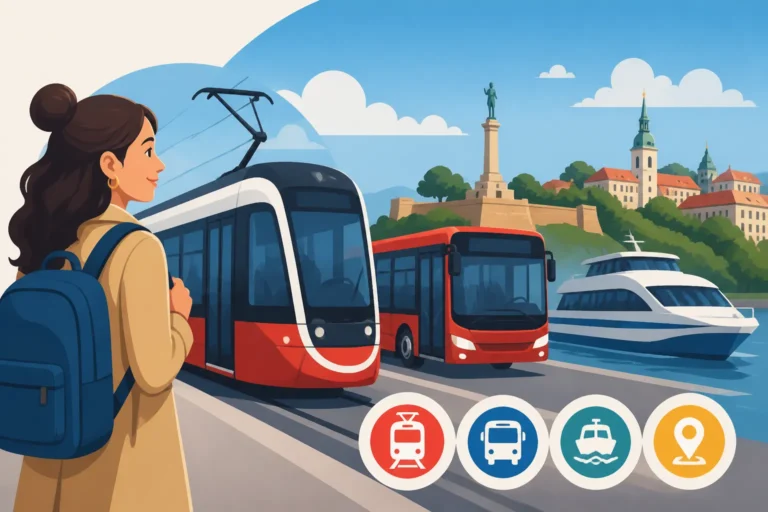
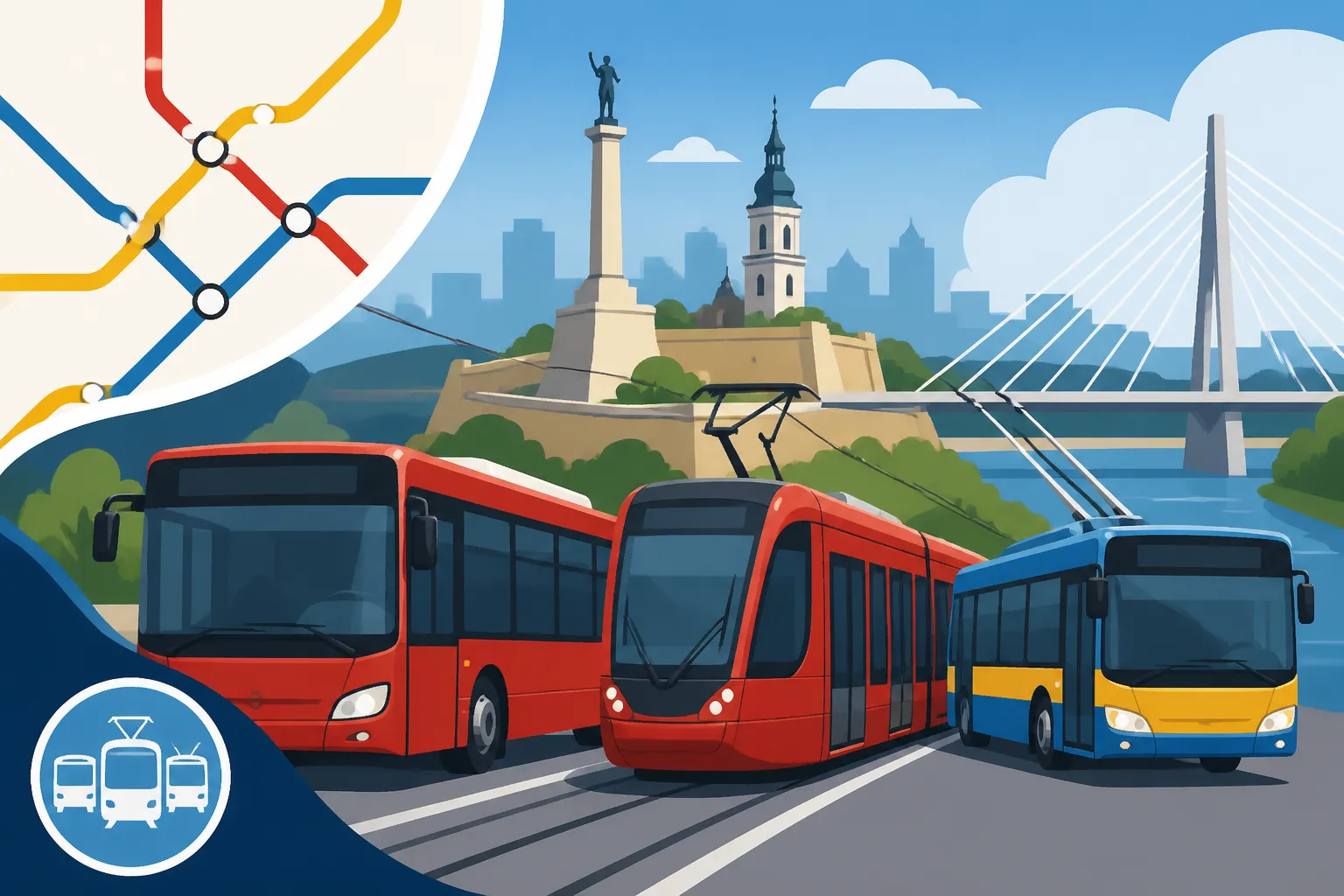
Belgrade's public transport is primarily managed by GSP Beograd, the city's public transport company, alongside a few private operators who run services under the same system. The network is vast, covering almost every corner of the city, making it incredibly comprehensive if you know how to use it. You'll find three main types of vehicles: the ubiquitous buses, which are the backbone of the system; the charmingly retro (and sometimes quite modern) trams, often found crisscrossing the city centre and linking major points; and the quieter, electric trolleybuses, which follow specific, less widespread routes, typically in the central areas.
Each mode of transport has its own character and advantages. Buses are generally faster for longer distances, especially when they stick to main arteries, but can get seriously bogged down in traffic. Trams offer a more scenic, if sometimes slower, journey through the heart of Belgrade, often feeling like you're stepping back in time. Trolleybuses provide a smoother, more environmentally friendly ride, limited to their overhead electric lines, making them perfect for specific routes like those heading towards Dedinje or Zvezdara. Understanding this basic division is your first step to making sense of the chaos.
Why Public Transport Can Feel Overwhelming
Let's be honest, it's not always the most intuitive system, especially for those of us coming from places with highly digital or perfectly punctual services. The sheer number of lines, the sometimes-unclear signage, and the often-packed vehicles can be a lot to take in. Plus, Belgrade traffic is a beast, so what looks like a quick five-stop journey on a map can easily turn into a 30-minute crawl during peak hours. You'll quickly learn that patience is not just a virtue, but a necessity when commuting here.
Another common source of stress for newcomers is the ticketing. When you're used to contactless payments being universally accepted or simply buying a ticket on board without a second thought, the Serbian system can throw you for a loop. There's a learning curve to figuring out where to buy cards, how to top them up, and the proper way to validate your ride to avoid fines. But don't worry, once you get the hang of it, it becomes second nature, and you'll soon be confidently navigating the city like a true Belgrader. It's all part of the unique experience of living in Serbia.
Understanding the Ticketing System: Belgrade's BusPlus
For a long time, the ticketing system in Belgrade was a bit of a mystery, even to locals. It's evolved over the years, from paper tickets you could buy on board to a more digitized system, but it still has its quirks. The current system, primarily known as BusPlus, aims to streamline things, but there are still nuances you need to grasp to avoid an awkward encounter with a ticket inspector.
The Evolution of BusPlus: Cards and Apps
The BusPlus system operates primarily through dedicated transport cards. These come in a few forms: a personalized card (plastificirana kartica), an unpersonalized card (nepersonalizovana kartica), and single-ride paper tickets. The personalized card is usually for residents, students, or pensioners and has your photo on it. The unpersonalized card is what most tourists and short-term expats will use – it's anonymous and can be topped up with credit or monthly passes. Then there are the new digital options and QR codes, which are becoming increasingly prevalent, allowing you to pay directly via your smartphone.
Getting one of these cards is usually your first step. You can purchase the unpersonalized BusPlus card at kiosks (called trafika) all over the city. Look for the distinctive BusPlus logo. They usually cost a small initial fee for the card itself, then you can top it up with however much credit you need. For longer stays, or if you plan to use public transport extensively, it's generally more economical to get a monthly pass loaded onto your personalized or unpersonalized card. This offers unlimited rides within a set period and zone, saving you from worrying about individual top-ups.
Buying and Validating Your Ticket: The Essentials
Once you have your BusPlus card, topping it up is easy – just ask at any trafika for "dopuna BusPlus" and tell them how much money you want to add or if you want a monthly pass. What's crucial, and often missed by newcomers, is the validation process. Every time you board a bus, tram, or trolleybus, you must tap your card on one of the validators located near the doors. This is a small, electronic device, usually yellow or orange. You'll hear a beep, and a green light will flash, indicating your ride has been successfully registered. If it flashes red, there's a problem – usually insufficient funds or a faulty card.
Failing to validate is considered fare evasion, even if your card is loaded. Ticket inspectors (known as kontrola) frequently board vehicles, especially on popular routes or during busy times, and they don't take kindly to non-validated cards. If you're planning a move to Serbia, understanding these small but important details like validating your transport card is just one of many steps in your initial phase, akin to finding an apartment or navigating other everyday processes.
Fares and Penalties: What You Need to Know
The fare structure is relatively straightforward. A single ride typically has a fixed price, and if you've topped up your unpersonalized card, this amount will be deducted upon validation. Monthly passes, as mentioned, offer unlimited travel. There are different zones in Belgrade, though most expats and tourists will spend 99% of their time in Zone 1, which covers the vast majority of urban Belgrade. Always make sure your pass or credit covers the zone you're travelling in.
Now, about those penalties. If you're caught without a validated ticket or a valid card, inspectors have the authority to issue a fine. This fine can be quite substantial. They might ask for your ID, and if you're a foreigner, they may even involve the police. It's a situation you absolutely want to avoid. The inspectors are usually quite firm, and pleading ignorance won't get you far. The best advice is always to make sure your card is topped up and to always validate it as soon as you step on board. It might feel like a hassle at first, but it saves a lot of potential headaches later.
| BusPlus Card Type | Who It's For | How to Get It | Top-Up/Validity | Key Features |
|---|---|---|---|---|
| Personalized | Residents, Students, Pensioners | BusPlus office, specific documents | Monthly passes, credit | Your photo, registered to you, lost cards can be blocked. |
| Unpersonalized | Tourists, Short-term Expats | Kiosks (trafika) | Credit (single rides), monthly passes | Anonymous, easily reloadable, cannot be blocked if lost. |
| Single Paper Ticket | Infrequent users, emergencies | Kiosks (trafika) | Single ride only | Tap on validator once, then discard. |
| Digital (QR Code) | Tech-savvy users | BusPlus app | Credit (single rides) | Pay via phone, generates QR code to scan on validator. |
The Bus Network: Your Main Mode of Commuting
When you think of Belgrade public transport, you're most likely thinking of its extensive bus network. These green, red, or blue giants are everywhere, rumbling down every street and connecting every neighbourhood. For many expats living in Serbia, especially outside the immediate city centre, buses will become your primary mode of transport.
Unraveling the Extensive Bus Routes
Belgrade's bus network is incredibly comprehensive, boasting hundreds of lines that crisscross the city. Each line has a number, and often a letter (like E for express lines, or A for airport line), indicating its route. Understanding which bus goes where requires a bit of research and familiarisation. Major hubs like Slavija Square, Zeleni Venac, and Vukov Spomenik serve as crucial transfer points where multiple bus, tram, and trolleybus lines converge. If you're looking for an apartment, paying attention to nearby bus stops and their routes can be just as important as the amenities inside.
You'll find that routes can vary slightly between weekdays, weekends, and public holidays, though major lines usually maintain a consistent schedule. Information at bus stops themselves can sometimes be minimal – often just a list of stops. This is where relying on digital tools becomes invaluable. Apps like Moovit or Google Maps are lifesavers for navigating the labyrinthine routes, offering real-time tracking and journey planning. Having a reliable internet connection for these apps is crucial, so consider services like Airalo for easy eSIM data, especially when you're first getting oriented.
Navigating Popular Destinations by Bus
For expats, certain bus lines become particularly important for daily life. For instance, if you're living in New Belgrade and working in the old city, lines like 16, 67, or 68 will become your best friends. If you're heading to the Kalemegdan Fortress for a leisurely stroll, many buses will take you to Studentski Trg or Zeleni Venac, from where it's a short walk. Belgrade Nikola Tesla Airport (BEG) is well-connected by the A1 MiniBus (a bit pricier, express service) and local bus line 72, which offers a more economical, though longer, journey to Zeleni Venac.
The key to mastering these routes is to start simple. Pick a few key destinations you frequent – perhaps your workplace, the local market, or a favourite café – and learn the specific bus lines that get you there. Don't be afraid to ask locals for directions; Serbians are generally very helpful, even if there's a language barrier. A simple "Koji autobus ide do…" (Which bus goes to…) followed by your destination, often prompts a helpful pointing gesture or a quick explanation. This kind of local interaction is what makes living in Serbia so rewarding.
The Night Bus Network: Your Late-Night Lifesaver
Belgrade doesn't truly sleep, and neither does its bus network entirely. For those late nights out, whether you're enjoying the vibrant nightlife in Savamala or a quiet drink in Dorćol, the night bus network is an absolute lifesaver. These special lines, designated by 'N' after their number (e.g., 26N, 31N), run from roughly midnight until 4 or 5 AM, connecting major parts of the city.
The routes for night buses often deviate from their daytime counterparts, sometimes consolidating several daytime lines into one longer, less frequent route. This means your usual daytime bus might not be the one you need after dark, so always double-check your journey planner. Night buses also operate on a slightly different fare system; often, you need to buy a specific night-time ticket from the driver, which can be a bit more expensive than a regular daytime fare. Keep some small change handy for this. While taxis and ride-sharing apps like CarGo are readily available, the night bus offers a cost-effective and authentic way to get home after a fun evening, adding to the allure of Belgrade's urban mobility.
Trams and Trolleybuses: The Eco-Friendly Alternatives
While buses handle the heavy lifting, Belgrade's trams and trolleybuses offer distinct advantages and charming routes, particularly in the central areas. They might be fewer in number, but they are an integral part of the city's transport fabric.
The Charm of Belgrade's Tram Lines
Belgrade's trams are iconic, rattling their way through the city's arteries. They're often less susceptible to general traffic jams than buses because many run on dedicated tracks, especially in the central business districts and along major boulevards. Lines like the famous Tram 2, known as "Krug dvojke" (Circle of Two), effectively loops around the old city centre, passing by many significant landmarks. It's almost a mini-sightseeing tour in itself! Other popular lines, such as Tram 7 and Tram 9, connect New Belgrade with the old city, crossing the Sava River via Brankov Most.
Trams offer a different perspective of Belgrade, slower and more intimate than a bus, allowing you to take in the architecture and street life. For those seeking to explore central neighbourhoods like Vračar, Stari Grad, or Dorćol, trams are often the most convenient and pleasant option. Like buses, you use your BusPlus card to validate your ride, and the same rules apply regarding fines. If you're considering the cost of living in Serbia, factoring in these transport options is important, as they can significantly impact your daily budget and quality of life compared to relying solely on taxis.
Trolleybuses: A Niche but Essential Service
Trolleybuses in Belgrade are less numerous than buses or trams but play a vital role on specific routes, particularly those that demand an eco-friendlier, quieter option or traverse hilly terrain where trams might struggle. They run on electricity drawn from overhead lines, giving them a distinct advantage in terms of emissions and noise reduction. You'll typically find them serving routes that connect the city centre with residential areas like Dedinje, Banjica, or Kalenić pijaca.
Lines such as Trolleybus 28 or 40 are key for reaching areas known for their embassies, quieter residential streets, and the famous Kalenić market. While their network isn't as expansive as the bus lines, they offer a smooth and reliable service on their dedicated paths. For expats settling into these specific neighbourhoods, understanding the trolleybus routes becomes as important as knowing the local bus lines. They offer a unique aspect of urban mobility and contribute to the diverse ways you can get around Belgrade without a car, which is great when you're still figuring out how to get a Serbian driver's licence.
Practical Tips for Expats: Making Your Daily Commute Smoother
Navigating public transport in a new city always comes with a learning curve. Belgrade is no exception. Here are some seasoned expat tips to help you master the system and make your daily commute less stressful.
Essential Apps and Digital Tools for Commuting
In today's digital age, your smartphone is your best friend when it comes to Belgrade public transport. Forget trying to decipher faded paper maps at bus stops; these apps offer real-time information, which is invaluable given the city's unpredictable traffic.
- Google Maps: Universally useful, Google Maps provides excellent public transport routing in Belgrade, including estimated travel times, bus numbers, and often real-time tracking of vehicles. It's usually quite accurate for arrival times.
- Moovit: Many locals swear by Moovit, an app specifically designed for public transport navigation. It often provides more granular detail, including line changes, service alerts, and step-by-step guidance.
- BusPlus App: The official BusPlus app allows you to purchase digital tickets via QR code (though validation still requires scanning the QR code on the physical validator on board). It's also useful for checking your card balance, though you'll still need to top up at kiosks.
- Wi-Fi and Data: Remember that these apps rely on an internet connection. When you're first arriving, consider options like Airalo for an eSIM, which provides instant mobile data access without needing a local SIM card immediately. This can be a lifesaver for navigation during those crucial first few days or weeks. For long-term stays, you'll want to explore options for setting up internet and mobile service in Serbia.
Having these tools at your fingertips can significantly reduce anxiety and help you feel more confident about getting around. They transform an overwhelming network into a manageable one.
Safety, Etiquette, and Language on Serbian Public Transport
While generally safe, public transport in any large city requires common sense. Pickpocketing can occur, especially on crowded buses and trams, so always keep an eye on your belongings. Keep your bags zipped and close to your body. During peak hours, vehicles can be extremely packed, so be prepared for a very close quarter experience.
In terms of etiquette, Serbians are generally polite. Offer your seat to the elderly, pregnant women, or those with small children – it's a deeply ingrained cultural norm. Don't block the doors, and try to move further into the vehicle to allow others to board. While not mandatory, learning a few basic Serbian phrases can go a long way. "Hvala" (thank you), "Molim" (please/you're welcome), and "Izvinite" (excuse me) are very useful. If you need to ask for directions, try "Gde je…" (Where is…) or "Koji autobus ide do…" (Which bus goes to…). People appreciate the effort, even if your pronunciation is far from perfect. It truly helps you integrate and understand the local way of life.
Dealing with Common Challenges and Finding Information
Expect delays. Belgrade traffic is notorious, and buses, in particular, can get stuck for extended periods. Factor this into your journey planning, especially if you have a tight schedule. "Srpsko vreme" (Serbian time) is a real phenomenon, and while public transport aims for punctuality, it often falls victim to the urban sprawl. Don't get too stressed about it; just build in buffer time.
Another challenge can be finding up-to-date information when things go wrong. Unexpected diversions or line cancellations due to construction or events happen. Usually, these are announced on the GSP Beograd website (gsp.rs) or local news, but if you don't speak Serbian, this can be tricky. This is where those apps come in handy again, as they often update with real-time route changes. If you’re just moving to Serbia, remember that patience and adaptability are your greatest assets, not just for public transport, but for pretty much everything. If you've chosen a reliable moving company through services like Sirelo to bring your belongings, then you've already handled one big challenge – now it's time to tackle the daily logistics! If you’re ever unsure, don't hesitate to ask a fellow passenger. Most people are happy to help a confused foreigner.
Disclaimer
The information provided in this guide is for general informational purposes only and is subject to change. While we strive to keep the content up-to-date and accurate, public transport routes, schedules, fares, and regulations in Serbia can change without prior notice. Always consult official sources, such as the GSP Beograd website or the BusPlus information portal, for the most current details. It is also advisable to cross-reference information with reliable public transport apps for real-time updates. We are not responsible for any inaccuracies or inconveniences that may arise from reliance on this information.