How to Set Up Streaming and TV Service in Serbia
Oh, the sweet relief of finally getting settled in Serbia! You’ve navigated the labyrinth of Serbian bureaucracy, maybe even signed a rental contract and paid a deposit, and now the dust is settling. But then comes the crucial question: how do you actually relax and unwind? You want to stream your favourite shows, catch up on news from back home, or perhaps even dive into some local Serbian content. It’s not always as straightforward as it is in your home country, but trust me, with a little know-how, you’ll have your digital entertainment hub up and running in no time. This guide will walk you through everything you need to know about setting up TV and streaming services here, from internet basics to navigating local providers and international platforms.
The Essential First Step: Securing Reliable Internet in Serbia
Before you can even think about binging your favourite series or catching live sports, you absolutely need a stable and fast internet connection. This is the bedrock of your entire entertainment setup. Without it, you're back to dial-up speeds and endless buffering, which nobody wants after a long day of expat life.
Choosing Your Internet Service Provider ISP
When it comes to internet providers in Serbia, there are a few big players you’ll encounter: Telekom Srbija, SBB, and Yettel. Each has its own strengths and weaknesses, and what works best for one expat might not be ideal for another. It really depends on your location, your budget, and your specific needs.
Telekom Srbija, historically the national telecommunications company, offers services under the brand Supernova for internet and TV. They have a vast infrastructure, often reaching areas where other providers might not. Their fibre optic network is expanding, offering competitive speeds, but older buildings might still be stuck with slower ADSL. SBB, on the other hand, is generally considered the market leader for fibre optic and cable internet, especially in urban areas like Belgrade and Novi Sad. Their EON platform for TV and streaming is very popular and user-friendly, often bundled with internet packages. Yettel, primarily known for mobile services, also offers home internet solutions, often leveraging their mobile network for home internet, which can be a good option if you’re in an area with excellent 4G/5G coverage but no fibre. For a deeper dive into connectivity, you might want to read our guide on how to choose a mobile and internet provider in Serbia.
When you’re making your choice, consider checking with neighbours or local expat groups about signal strength and customer service in your specific building or neighbourhood. Sometimes, a provider that’s excellent in one part of the city can be patchy just a few blocks away. Don't be afraid to visit their physical stores, which you'll find in most shopping centres, to get details directly and compare offers. Be prepared for potential language barriers, but many representatives, especially in Belgrade, will speak some English.
Navigating the Installation and Activation Process
Once you’ve picked an ISP, the next step is installation, and this is where patience becomes your best friend. The process typically involves a technician visiting your home to set up the router and, if applicable, the cable TV box. You'll need to provide your passport and your residence permit (or at least proof of application for temporary residence (Boravak)), as well as your local address.
Installation appointments can sometimes be a bit of a moving target, so it’s wise to set aside a generous window of time. I’ve heard countless stories, and experienced a few myself, where a technician says they'll arrive between 10 AM and 2 PM, and then shows up at 5 PM. It’s just how things sometimes roll here, so try not to get too frustrated. The good news is, once they're there, the actual setup is usually quite quick. They'll install the necessary hardware, connect you, and make sure everything is working. Make sure to test the speed and Wi-Fi signal before they leave, especially in all the rooms you plan to use it. You can find more practical advice in our guide on how to set up internet and mobile service in Serbia.
Diving into Serbian TV: Local Channels and IPTV Options
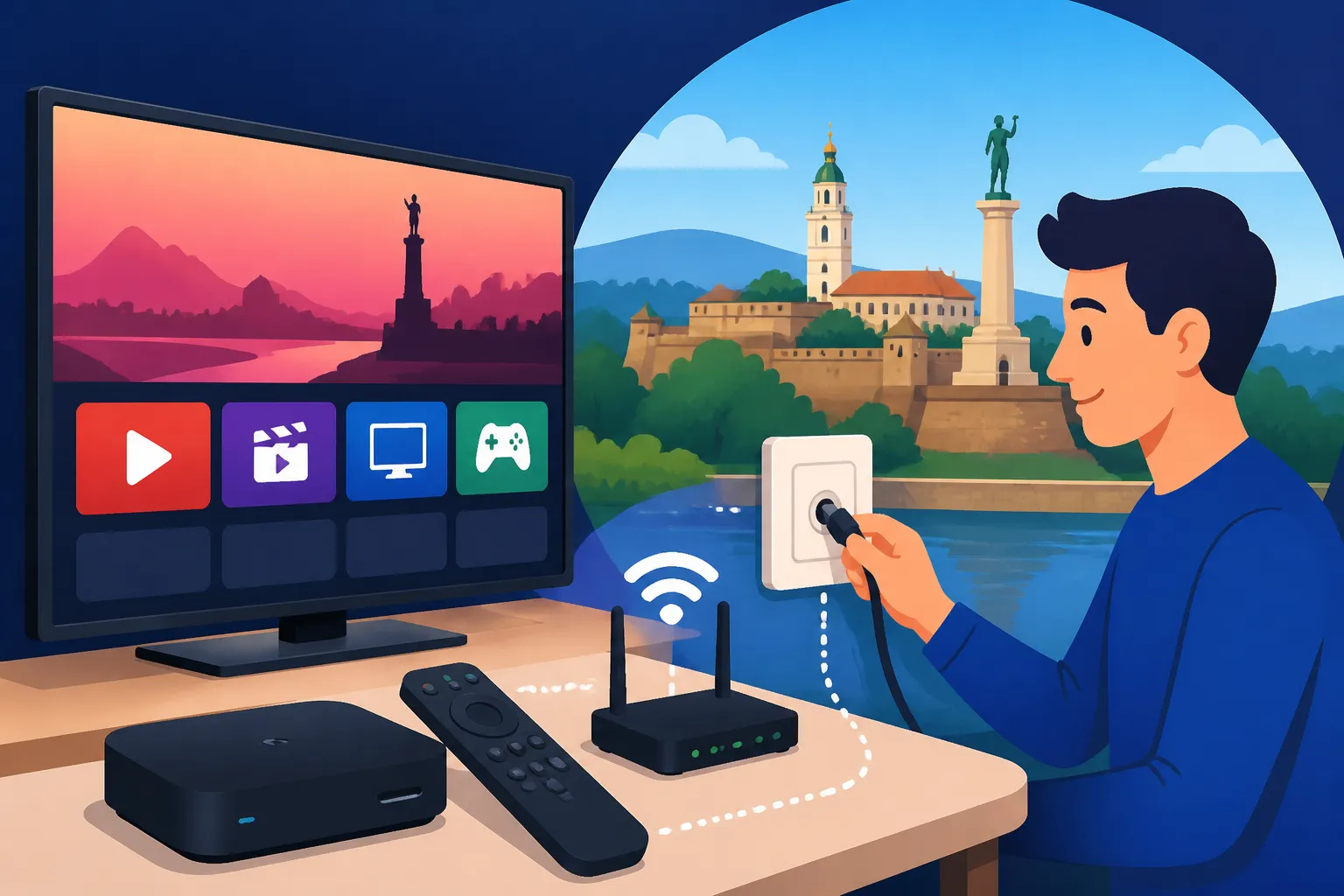
Now that you've got your internet humming along, let's talk about getting some actual TV channels. Serbia has a mix of traditional broadcasting, cable, and modern IPTV services. For most expats, a robust IPTV package will be the most comprehensive option, offering a blend of local and international content.
Traditional Cable and IPTV Providers
The two dominant players in this space are SBB (with their EON platform) and Telekom Srbija (with Supernova). Both offer extensive channel lineups, including local Serbian channels, regional Balkan channels, and a selection of international news, movie, and sports channels.
SBB’s EON platform is particularly popular for its user-friendly interface and advanced features. You get access to a huge video-on-demand library, the ability to catch up on shows you missed (up to 7 days back), and recording options. They also have dedicated apps for smart TVs, phones, and tablets, so you can watch your subscription content on various devices, whether you're at home or on the go. Channels like Sport Klub, CineStar, and various news channels from around the world are typically included. Telekom Srbija's Supernova also offers a competitive array of channels and similar features, often with attractive bundled deals if you combine it with their internet services. They also have their own apps for mobile streaming. The availability of English language channels will vary, but most packages include major international news channels like CNN, BBC, Euronews, and often a few movie channels with original audio options.
Deciding between SBB and Telekom often comes down to personal preference, specific package deals available at the time, and the quality of their internet service in your area, as these packages are almost always bundled. Many expats appreciate the modern feel of SBB's EON, but Telekom is continuously improving its offerings.
Free-to-Air Digital Terrestrial Television (DTT)
While not the go-to for most expats, it's worth mentioning that Serbia uses the DVB-T2 standard for digital terrestrial television. This means you can pick up a handful of national channels like RTS 1, RTS 2, Prva, B92, and Happy TV with a simple antenna connected to your TV, provided your TV has a DVB-T2 tuner (most modern TVs do).
These channels are entirely in Serbian, and primarily feature local news, talk shows, Serbian movies, and some foreign content dubbed into Serbian. For someone trying to learn the language or wanting to immerse themselves in local culture, it’s a free and easy way to get some exposure. However, if your main goal is English-language entertainment or a wide variety of content, DTT alone won't cut it. Think of it more as a bonus than your primary source of TV entertainment. It might be useful if you're just moving to Serbia and waiting for your internet and cable to be installed, but it’s certainly not a long-term solution for diverse viewing needs.
Your Global Entertainment Hub: International Streaming Services
Beyond local offerings, the world of international streaming has also found its way to Serbia. While the selection might not be identical to what you’re used to back home, many major platforms are available, though sometimes with geo-restricted libraries.
Availability and Content Libraries
Most of the big names in streaming are readily available in Serbia. Netflix, HBO Max (often referred to locally as HBO Max Europe), Disney+, and Amazon Prime Video all operate here. Signing up is straightforward using your international credit card or local Serbian card.
However, a crucial point for expats is that the content libraries on these platforms can differ significantly from country to country. What's available on Netflix in the US or UK might not be on Netflix Serbia, and vice-versa. This is due to licensing agreements. You might find yourself searching for a specific show only to discover it's not available in the Serbian library. For example, some movies or older seasons of popular TV shows that you once watched religiously might simply be missing. HBO Max tends to have a more consistent library across Europe, but even then, don't expect it to be a perfect mirror of its US counterpart. Disney+ generally offers a solid range, especially for its first-party content like Marvel, Star Wars, and Pixar, but third-party content can be more variable. Amazon Prime Video’s offering in Serbia is usually quite limited compared to other regions, so temper your expectations there.
The VPN Lifeline for Geo-Restrictions
This is where many expats turn when faced with the frustrating reality of geo-restrictions. A Virtual Private Network (VPN) allows you to connect to servers in other countries, effectively making it appear as if you are browsing from that location. This can unlock content libraries from other regions on your streaming services.
For instance, if you want to access the US Netflix library, you can connect to a US VPN server. This can be a game-changer for accessing content from your home country or simply a wider selection of shows and movies. However, it’s not always a perfect solution. Streaming services are increasingly getting smarter at detecting and blocking VPN usage, so you might find that some VPN servers work for a while and then stop. It often turns into a cat-and-mouse game. Reliable VPNs like NordVPN, ExpressVPN, or ProtonVPN are often recommended by expats for their speed and ability to bypass some geo-blocks. Just remember that using a VPN might be against the terms of service of some streaming platforms, so proceed with caution. It's a tool that grants you more freedom, but also requires a bit of understanding about its limitations and ethical use.
Tailoring Your Experience: Devices, Apps, and Customization
Getting the content is one thing, but how you watch it and where is equally important. In Serbia, you’ll find most modern viewing habits are supported, from smart TVs to mobile devices, just like anywhere else.
Smart TVs, Streaming Devices, and Casting
If you have a modern Smart TV (Samsung, LG, Sony, etc.), it's likely that the pre-installed apps for Netflix, HBO Max, and Disney+ will work perfectly fine. You simply download them from your TV's app store, log in, and you're good to go. Most Serbian-bought Smart TVs will automatically detect your region and adjust the app store accordingly.
For those with older TVs or who prefer a dedicated streaming experience, devices like Amazon Fire Sticks, Roku, Apple TV, or Google Chromecast are excellent options. Most of these devices work seamlessly in Serbia. A Fire Stick or Roku will allow you to download all the available streaming apps, while a Chromecast is fantastic for casting content from your phone or laptop directly to your TV. These devices are widely available in electronics stores across Serbia, or you can order them online. Just ensure that the device's region settings are compatible, or be prepared to create an account for a region where the device is officially supported, if you bought it abroad. For example, if you brought your Fire Stick from the US, you might need a US Amazon account to download apps.
Mobile Streaming and Data Considerations
Life on the go doesn't mean leaving your entertainment behind. All major Serbian IPTV providers (SBB EON, Supernova) and international streaming services have dedicated mobile apps. This means you can catch up on your shows during your commute on public transport or while waiting for an appointment.
However, if you're streaming over mobile data, be mindful of your data plan. Unlimited data plans are becoming more common in Serbia, but many expats start with more basic plans that have data caps. Streaming video, especially in high definition, consumes a significant amount of data very quickly. If you plan to stream extensively outside of Wi-Fi, investing in a generous mobile data package is a must. And if you're like me, you don't want to miss your shows just because you're out and about, or even traveling within the region. Reliable mobile data is a must for seamless streaming on the go. Many expats swear by eSIM services like Airalo for flexible data plans, especially when hopping between Balkan countries or just needing a quick data boost without a local SIM commitment for shorter stays. It’s a convenient way to manage your connectivity without juggling physical SIM cards.
Costs and Considerations: Making Your Budget Stretch
One of the pleasant surprises of living in Serbia can be the relatively lower cost of living, and this often extends to utilities and entertainment too. However, it's still essential to understand what you're paying for and what to expect.
Subscription Costs and Bundles
Local internet and TV packages from SBB or Telekom Srbija typically offer good value, especially when bundled together. For a decent fibre internet connection (100-200 Mbps) and a comprehensive TV package, you can expect to pay anywhere from 3,500 to 6,000 RSD per month, depending on the speed, number of channels, and any promotional offers. These often include a landline phone service, which many expats rarely use but comes as part of the deal.
International streaming services like Netflix and HBO Max have tiered pricing, similar to other countries. A standard Netflix plan might cost around 9-13 Euros per month, while HBO Max is often slightly less. Disney+ falls in a similar range. Keep an eye out for seasonal promotions or bundles with mobile providers, as these can sometimes offer discounts. Compared to Western European or North American prices, these costs are generally quite reasonable.
Here's a quick overview of approximate monthly costs:
| Service Category | Typical Monthly Cost (RSD) | Typical Monthly Cost (EUR) | Notes |
|---|---|---|---|
| Internet + TV Bundle (Local) | 3,500 – 6,000 | 30 – 50 | Fibre optic internet (100-200 Mbps) + comprehensive local/regional TV channels. Prices vary greatly by speed, channel count, and current promotions. Often includes a landline. SBB and Telekom Srbija are main providers. |
| Netflix | 1,050 – 1,500 | 9 – 13 | Standard and Premium plans. Content library varies by region. |
| HBO Max | 950 – 1,200 | 8 – 10 | Consistent library across European regions. |
| Disney+ | 1,050 – 1,300 | 9 – 11 | Strong for first-party content. |
| Amazon Prime Video | 600 – 800 | 5 – 7 | Usually has a more limited library in Serbia compared to other regions. Often bundled with Amazon Prime (if you use it for shipping elsewhere), but local benefits are minimal. |
| VPN Service | 500 – 1,200 | 4 – 10 | (Optional) For accessing geo-restricted content. Prices vary widely based on provider, subscription length (cheaper annually), and features. |
| Total Estimated (Mid-Range) | 6,000 – 9,000 | 50 – 75 | This is if you get a decent internet/TV bundle and subscribe to 2-3 international streaming services, plus an optional VPN. This does not include mobile data. Costs are indicative and subject to change based on provider offers and exchange rates. |
Note: All prices are approximate monthly costs in Serbian Dinars (RSD) and Euros (EUR), as of early 2024. Exchange rates fluctuate.
Hidden Fees and Contract Terms
When signing up for local internet and TV services, be very careful to read the contract terms, or have a Serbian-speaking friend help you. Standard contract lengths are typically 12 or 24 months. Early termination fees can be substantial, so if you're not sure about your long-term stay or if you anticipate needing to move, a shorter contract might be preferable, even if it's slightly more expensive per month.
Also, inquire about equipment rental fees. Usually, the router and TV box are included in the monthly price, but sometimes there can be activation fees or specific charges for premium equipment. For example, if you want an additional TV box for another room, there might be a small monthly charge. It's always best to clarify these details upfront to avoid any surprises down the line. Sometimes, promotional prices are only valid for the first 6 or 12 months, and then the price jumps significantly. Be aware of these "trap" clauses, as they can quickly add up to a higher cost of healthcare or overall living expense than you initially budgeted for.
Troubleshooting and Tips: Navigating the Digital Wild West
Even with the best preparation, expat life in Serbia will inevitably throw some curveballs your way, and your TV and internet setup are no exception. Knowing how to troubleshoot common issues and optimize your experience can save you a lot of headaches.
Language Barriers and Customer Support
Calling customer service in Serbia can sometimes feel like an Olympic sport, especially if your Serbian isn't quite fluent yet. While some of the larger providers like SBB and Telekom Srbija might have English-speaking agents available, it's not always guaranteed, and you might have to navigate through automated menus in Serbian first.
My advice is to prepare what you want to say beforehand, clearly and concisely. If possible, have a Serbian friend or colleague on standby to help you translate key phrases or even make the call for you. Visiting a physical store can often be more effective for complex issues, as you can communicate face-to-face and use translation apps if needed. Be patient and polite, but firm. The customer service culture might be different from what you're used to, but persistent and clear communication usually gets results. Remember, they want to help you, but the language barrier can be a significant hurdle for both sides.
Optimizing Your Setup for Best Performance
Once everything is installed, a few simple tweaks can drastically improve your streaming experience:
- Router Placement: Don’t hide your Wi-Fi router in a cupboard. Place it centrally in your apartment, away from large metal objects and other electronics that might interfere with the signal. Higher up is generally better.
- Wi-Fi Extenders/Mesh Systems: If you have a larger apartment or thick walls (common in older Serbian buildings), you might encounter Wi-Fi dead zones. A Wi-Fi extender or, even better, a mesh Wi-Fi system, can significantly improve coverage and signal strength throughout your home.
- Ethernet Cables: For your main streaming devices (Smart TV, gaming console, desktop PC), connecting them directly to the router with an Ethernet cable will always provide the most stable and fastest connection, bypassing any Wi-Fi interference.
- Restart Regularly: A classic IT solution that still works wonders. If your internet or TV box is acting up, a simple restart of the router and/or TV box (unplugging for 30 seconds and plugging back in) can often resolve minor glitches.
- Check Your Speed: Use online speed tests (like Speedtest.net) regularly to ensure you’re getting the speeds you’re paying for. If you consistently get lower speeds, it’s a good point to bring up with your ISP.
Getting your TV and streaming sorted is a vital part of making your new place in Serbia feel like home. After all the effort of moving your belongings with Sirelo and settling in, being able to kick back with your favourite show is a well-deserved comfort. It might require a little patience and persistence, but the reward of uninterrupted entertainment is well worth it.
Disclaimer
The information provided in this guide is for general informational purposes only and does not constitute professional advice. While we strive to keep the information up-to-date and accurate, details regarding services, pricing, and regulations in Serbia can change frequently. Always verify current offers and terms directly with service providers and consult with relevant professionals for specific situations.