What Is the Best Multi-Currency Account in Serbia?
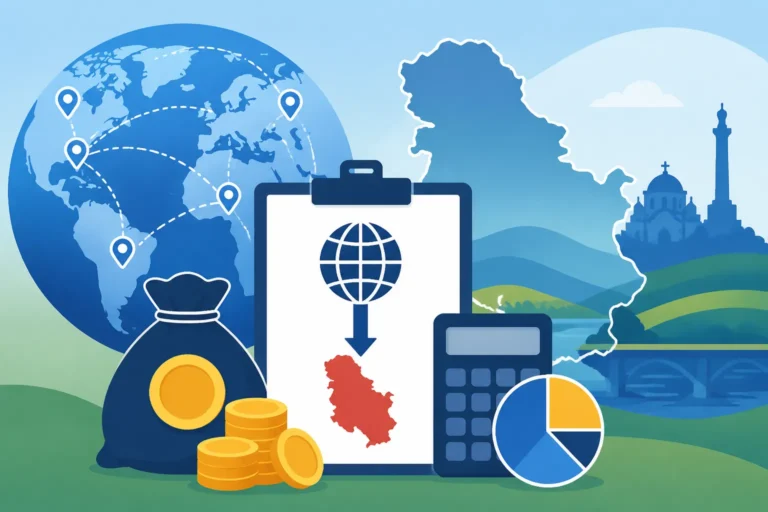
Moving to Serbia as an expat often throws a financial curveball you might not have anticipated: how do you manage your money when you're dealing with multiple currencies? You've got your home currency, the Serbian Dinar (RSD), and quite possibly Euros, US Dollars, or British Pounds coming in or going out. This guide is here to walk you through the options for multi-currency accounts in Serbia, helping you cut through the confusion and find the best fit for your unique expat life.
The Multi-Currency Conundrum for Expats in Serbia
Life abroad, especially in a country like Serbia, often means juggling finances from various sources and in different denominations. While the Dinar is your everyday currency here, many of us still have commitments, income, or family back home that operate in another currency. This isn't just about convenience; it's about minimizing losses from unfavorable exchange rates and avoiding a headache every time you need to move money.
Why a Single Dinar Account Just Won't Cut It
When you first arrive, opening a basic Dinar account with a local bank seems like the logical first step. And it is, for your day-to-day expenses, grocery shopping, and paying local bills. However, the moment your salary arrives from an international employer in Euros, or you need to send money back home in USD, that Dinar-only account becomes a bottleneck.
Imagine this common scenario: your remote job pays you in EUR. It lands in your Serbian Dinar account, and the bank automatically converts it. You then need to pay your rent, which might be advertised in EUR but payable in RSD at the current mid-market rate. Then, you want to send some savings back to your family in GBP. Each conversion chips away at your hard-earned money. Suddenly, you're losing a chunk of your funds to conversion fees and less-than-ideal exchange rates. A single Dinar account simply isn't designed for the multi-faceted financial reality of an expat, leaving you vulnerable to unnecessary costs and constant calculation headaches. You can find more general information about local banking in our The Expat Guide to Opening a Bank Account in Serbia article.
Common Frustrations: Exchange Rates and Hidden Fees
The biggest pain point for many expats, myself included, is the opaque world of exchange rates and hidden fees. Banks, bless their hearts, aren't always upfront about the spread they apply to currency conversions. You might see an "attractive" exchange rate advertised, but by the time your money hits the account, it's been silently shaved down. These small deductions, often just a percentage point or two, add up significantly over time.
Then there are the transfer fees. Sending money internationally can incur both a sending fee from your bank, and a receiving fee from the recipient's bank. Swift fees, intermediary bank charges, a flat percentage – it's a labyrinth of costs that can make simply moving your own money feel like a tax. And let's not even start on the time it takes for international transfers to clear, often leaving you in limbo for days. This friction, the feeling of losing money and time just to manage your finances, is precisely why a robust multi-currency solution is so vital. Understanding these challenges is the first step toward finding a more efficient way to handle your money, as explored further in How to Transfer Money Into and Out of Serbia as an Expat.
Navigating Serbian Banks for Foreign Currency
When you first look into multi-currency options here, your local Serbian bank will likely be your initial point of contact. Many traditional banks do offer accounts in foreign currencies, but the specifics and ease of use can vary wildly.
Traditional Serbian Banks and Their Multi-Currency Offerings
Most major Serbian banks, such as Banca Intesa, Raiffeisen Bank, UniCredit Bank, and OTP Bank, do offer foreign currency accounts. These usually come in popular denominations like EUR, USD, and sometimes GBP or CHF. The idea is simple: you can deposit or receive money directly into these foreign currency accounts, keeping it in its original currency without immediate conversion to RSD. This is a huge step up from a Dinar-only account for those receiving international payments.
For example, if you get paid in EUR, it can land directly in your EUR account. When you need to spend in RSD, you can then transfer it internally to your Dinar account, initiating the conversion yourself. This gives you more control over when the conversion happens, theoretically allowing you to wait for a more favorable exchange rate. Some banks even offer multi-currency cards tied to these accounts, allowing you to spend directly in supported foreign currencies without conversion if the merchant's POS system supports it, or to make online purchases. However, it's crucial to understand the nuances of these offerings, as we discussed in our guide on Understanding the Dinar (RSD) and Foreign Currency Accounts in Serbia.
The Application Process for Foreigners: Red Tape Realities
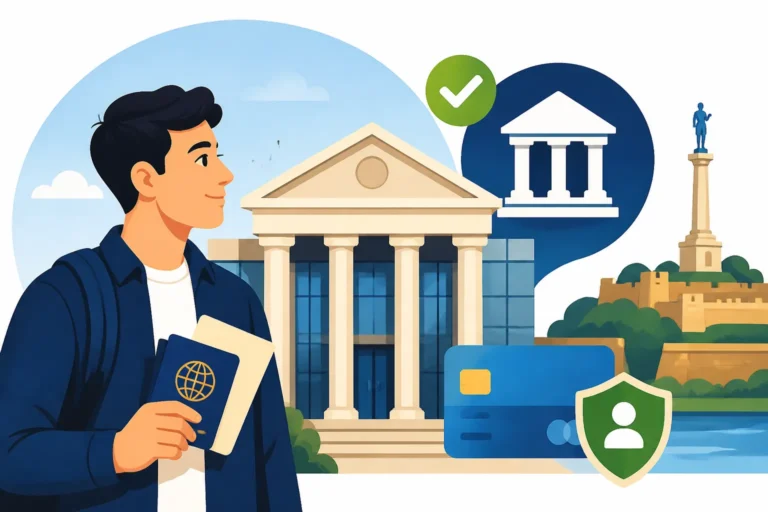
Opening any bank account in Serbia as a foreigner can be a bit of a bureaucratic dance. For a multi-currency account, you'll generally need:
- Valid Passport: Your primary form of identification.
- White Card (Beli Karton): Proof of your registered address in Serbia, typically obtained from your landlord or hotel within 24 hours of arrival.
- Temporary Residence Permit (Boravak): This is usually mandatory for opening a full account with foreign currency options. Without it, you might be limited to a basic Dinar account. Our guide on How to Apply for Temporary Residence (Privremeni Boravak) in Serbia can help you prepare.
- Proof of Income/Employment: Banks often require this to ensure you have a legitimate reason for the account and a source of funds. This could be an employment contract, a certificate from your employer, or even proof of self-employment registration.
- Tax Identification Number (PIB): While not always required for individuals opening personal accounts, it's increasingly common for banks to request it, especially if you plan to receive significant foreign income. You can learn more about this in How to Get a Tax ID (PIB) as a Foreigner in Serbia.
The process can involve multiple visits to the bank, waiting times, and sometimes a bit of confusion if you encounter staff who aren't fluent in English. Each bank has its own internal rules, and what's acceptable at one might not be at another. Don't be surprised if you're asked for additional documentation or if the process takes longer than anticipated. It's the reality of dealing with a system that's still adapting to a growing expat population. For more details on the general banking landscape, check out Banking in Serbia: A Complete Guide for Foreigners (2027).
International Digital Solutions: A Game-Changer
While Serbian banks offer traditional multi-currency accounts, the digital age has brought forth solutions that often outshine them in terms of flexibility, fees, and user experience for expats.
The Rise of Fintech for Expats
Fintech companies have truly revolutionized how expats manage their money across borders. These platforms are designed from the ground up to address the pain points of international banking: high fees, poor exchange rates, and slow transfers. They leverage technology to offer services that are typically faster, cheaper, and more transparent than traditional banks.
Take Wise (formerly TransferWise) as a prime example. They offer a "borderless account" which is, in essence, a multi-currency account. You get local bank details for several major currencies (like EUR, USD, GBP, AUD, CAD, etc.), allowing you to receive money into these accounts as if you had a local bank account in those countries. This means no international transfer fees when someone pays you in a supported currency. When you need to convert money between currencies, Wise uses the real mid-market exchange rate, charging a small, upfront conversion fee. This transparency is a breath of fresh air compared to the hidden spreads of traditional banks.
Another benefit is the speed of transfers. Transfers with Wise are often instant or complete within hours, rather than days. They also offer debit cards linked to your multi-currency balance, enabling you to spend directly in any currency you hold, or automatically convert at the mid-market rate when you spend in a currency you don't hold. This convenience for international travel or online shopping is invaluable.
However, it's important to understand that while services like Wise are incredibly powerful for managing foreign currencies and making international transfers, they are not full-fledged Serbian bank accounts. You can't, for instance, use them to set up direct debits for local Serbian utilities, or easily receive payments in RSD from a Serbian bank account without a local transfer initiating it. They are best used in conjunction with a local Dinar account, acting as your international financial hub.
Benefits and Limitations of Digital Multi-Currency Platforms in Serbia
Let's weigh the pros and cons of these digital solutions for expats in Serbia:
Benefits:
- Real Mid-Market Exchange Rates: This is arguably the biggest advantage. You get the actual exchange rate you see on Google, with transparent, low fees. This saves you a significant amount compared to bank spreads.
- Lower Transfer Fees: Sending and receiving international payments is considerably cheaper, often just a small percentage or flat fee.
- Multiple Currency Balances: Hold and manage money in dozens of currencies simultaneously, often with local bank details for many of them. This is perfect for remote workers, freelancers, or those with financial ties in multiple countries.
- Speed: Transfers are generally much faster, often arriving within minutes or hours.
- Convenient Debit Cards: Spend directly from your multi-currency balances worldwide, avoiding foreign transaction fees.
- User-Friendly Apps: Modern, intuitive apps make managing your money effortless, a stark contrast to some clunkier traditional banking interfaces.
- Accessibility for Non-Residents: Some platforms might allow you to open an account even before obtaining Serbian temporary residence, though full functionality might still require a verified address.
Limitations:
- Not a Local Serbian Bank Account: This is the key distinction. You won't get an RSD bank account number for direct debits or local Serbian transfers. You'll still need a traditional Serbian bank account for day-to-day life.
- Deposit and Withdrawal Challenges: While you can receive money, physically depositing cash in RSD or withdrawing large sums in RSD might require transferring funds to your local Serbian bank first, which then incurs a local transfer fee.
- Regulatory Nuances: As with all financial services, it's important to understand the terms and conditions and how they interact with Serbian tax laws. For example, if you're receiving income into a Wise account while being a Serbian tax resident, you still have tax obligations. This is where resources like Taxes for Expats can be incredibly helpful in navigating your obligations. You can also explore Is My Foreign Income Taxed in Serbia? for more information.
- No Physical Branches: Everything is online, which is great for convenience but offers no in-person support for complex issues.
Making Your Choice: What to Consider
Deciding on the "best" multi-currency account in Serbia really boils down to your personal financial habits, income sources, and where your money needs to go. There's no one-size-fits-all answer, but by asking yourself the right questions, you can tailor your decision.
Key Factors: Fees, Exchange Rates, and Accessibility
When evaluating your options, these three pillars should guide your decision-making:
- Fees: Look beyond just the headline "free account" banners. Scrutinize monthly maintenance fees, international transfer fees (both sending and receiving), ATM withdrawal fees (especially abroad), and any charges for inactivity. Traditional banks might have higher monthly fees or transaction charges, while digital platforms often have transparent, per-transaction fees. Consider how often you'll be transferring money and in what amounts. A small percentage fee on a large transfer can quickly outweigh a slightly higher flat fee.
- Exchange Rates: This is crucial. Banks typically use a "tourist" or "commercial" exchange rate that includes a hidden markup, which means you get less Dinar for your Euro (or vice versa). Digital services like Wise pride themselves on using the "mid-market rate" (the one you see on Google), only adding a small, explicit conversion fee. Over time, these differences can save you hundreds, if not thousands, of Euros. Always compare the actual amount that would land in your account after all conversions and fees.
- Accessibility: How easy is it to open the account? What documents do you need? Can you manage it entirely from your phone? What kind of customer support is available, and in what languages? For local Serbian banks, you'll need to be in Serbia with residence documents. For digital platforms, the process might be quicker and more streamlined, but remember their limitations for local Serbian functionalities. Consider your comfort level with digital-only banking versus the option of walking into a physical branch.
Here's a simplified comparison to help you visualize:
| Feature | Traditional Serbian Bank (Multi-Currency Account) | Digital Multi-Currency Platform (e.g., Wise) |
|---|---|---|
| Account Opening | In-person, requires Serbian residence, more docs | Online, often faster, may have fewer initial requirements |
| Local Dinar Account | Yes, integrated | No, typically separate (requires a local bank) |
| Exchange Rates | Bank's own rate (with markup/spread) | Mid-market rate (with transparent, low fee) |
| International Transfer Fees | Variable, often higher (SWIFT, intermediary) | Low, transparent, often cheaper |
| Receiving International Payments | SWIFT transfers, may incur fees | Local bank details for many currencies, often free |
| Debit Card | Yes, linked to Dinar/FX accounts, local spending | Yes, linked to all balances, international spending |
| Physical Branches | Yes | No |
| Local Utility Payments | Yes, direct debits | No, usually requires transfer to local RSD account |
| Supported Currencies | Typically EUR, USD, limited others | 40+ currencies, local details for 10+ |
Practical Tips for Managing Your Finances Across Borders
Once you've chosen your multi-currency account(s), here are some seasoned expat tips for making your financial life in Serbia smoother:
- Run a Hybrid System: For most expats, the "best" solution isn't one or the other, but a combination. Use a local Serbian bank for your Dinar account to handle local bills, rent, and everyday spending. Pair this with a digital multi-currency account like Wise for receiving international income, holding foreign currencies, and making international transfers. This gives you the best of both worlds – local functionality and international efficiency.
- Time Your Conversions: If you have funds in a foreign currency account with your Serbian bank, monitor the exchange rates. Convert to RSD when the rate is more favorable, especially for larger sums like rent or a big purchase. Digital platforms often have rate alerts you can set up.
- Understand Your Tax Obligations: If you're receiving income in multiple currencies and potentially holding it abroad, ensure you understand your tax residency status in Serbia and how to report foreign income. Serbia has a progressive tax system, and it's essential to comply. Companies like Taxes for Expats specialize in helping foreigners navigate complex tax situations. It’s also wise to read up on The Complete Guide to Taxes in Serbia for Expats (2027).
- Keep Records: Maintain clear records of all international transfers, conversions, and income sources. This will be invaluable for tax purposes and simply for keeping track of your finances.
- Utilize Budgeting Tools: Whether it's a simple spreadsheet or a dedicated app, tracking your spending in both Dinar and foreign currencies helps you stay on top of your finances and identify where your money is going.
- Emergency Funds: Consider keeping a portion of your emergency fund in a stable, easily accessible foreign currency (like EUR or USD) in your digital multi-currency account. This provides a safety net that's somewhat insulated from local economic fluctuations and is readily available should you need to travel unexpectedly.
Managing your finances as an expat in Serbia can seem daunting at first, but with the right tools and a bit of savvy, it becomes manageable. By strategically combining local banking with innovative digital solutions, you can optimize your multi-currency management, saving money and headaches along the way.
Disclaimer
The information provided in this article is for general informational purposes only and does not constitute financial, legal, or tax advice. While we strive to provide accurate and up-to-date information, circumstances can change. It is strongly recommended to consult with a qualified financial advisor, tax professional, or legal expert for advice tailored to your specific situation, especially regarding banking, investments, and tax obligations in Serbia.