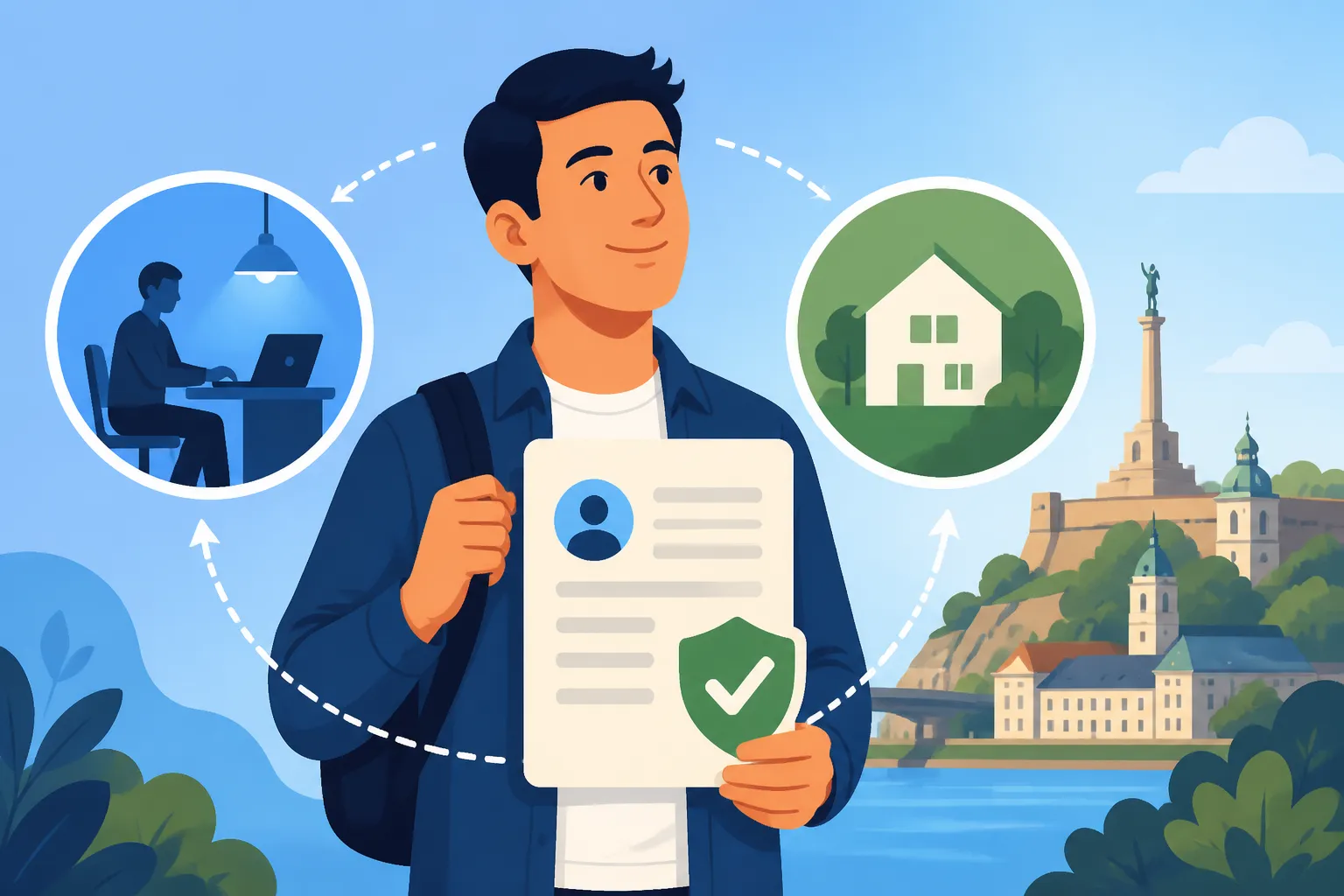
How the Single Permit for Work and Residence Works in Serbia
Navigating the labyrinthine world of Serbian immigration and work permits used to be a fragmented and often frustrating experience for foreigners. Many expats struggled with multiple applications, endless paperwork, and a system that felt like it was designed to confuse more than assist. Thankfully, the introduction of the Single Permit for Work and Residence in Serbia has streamlined this process significantly, offering a much-needed breath of fresh air for those looking to build a life here. This guide will meticulously break down how this unified permit works, what you need to know, and how to navigate the system with greater ease.
Understanding the Single Permit for Work and Residence
Before 2024, if you wanted to work and live in Serbia, you’d be dealing with two separate applications: one for a residence permit (boravak) and another for a work permit (radna dozvola). It was a dance between different government departments, often leading to delays, inconsistencies, and a mountain of duplicated paperwork. The sheer administrative burden was enough to make even the most determined expat consider a different destination. The Single Permit changed all that, aiming to create a more efficient and user-friendly experience.
The Evolution of Permits in Serbia
For years, the system involved applying for a temporary residence permit at the Ministry of Interior (MUP) and then, once approved, turning to the National Employment Service (Nacionalna služba za zapošljavanje or NSZ) for the work permit. Imagine the back and forth: submitting similar documents, waiting for two different decisions, and praying that one didn't expire before the other was issued. This dual-track approach was a major source of anxiety and practical challenges for employers and foreign workers alike. It meant more appointments, more travel, and more opportunities for small errors to derail your entire relocation plan.
The old process was a relic, not suited for the increasing number of foreign professionals and entrepreneurs Serbia was attracting. It often led to situations where a person had legal residence but couldn't work, or had a job offer but was stuck in residence permit limbo. This wasn't just inconvenient; it was economically inefficient and a barrier to skilled individuals contributing to the Serbian economy.
Key Advantages of the Unified Approach
The Single Permit consolidates these two processes into one, significantly reducing bureaucratic hurdles. Now, you apply for both work and residence simultaneously through a single portal and with a single set of documents, typically at the Ministry of Interior. This means fewer points of contact, a more transparent process, and hopefully, quicker processing times. It’s a welcome change that aligns Serbia more closely with modern immigration practices seen across Europe.
One of the biggest advantages is the clarity it brings. Instead of deciphering which document goes where and when, you now have a clear path. The application is submitted electronically, which is a massive step forward, although certain in-person visits for biometrics are still part of the process. For employers, this is also a huge relief, as it simplifies the onboarding of foreign talent. No more juggling different timelines or wondering which permit they need to chase next. It truly makes the entire endeavor of Working in Serbia as a Foreigner a much smoother journey.
Eligibility for the Single Permit
While the Single Permit simplifies the process, it doesn’t fundamentally change who is eligible. The grounds for applying for residence and work remain largely the same. It's still about proving your purpose for being in Serbia, whether that's employment, self-employment, education, or other legally recognized reasons. The key is to clearly establish your basis for applying and gather all corresponding documentation meticulously.
Employment-Based Applicants
The most common category for the Single Permit is employment. If you’ve secured a job offer from a Serbian company, this is your route. Your employer plays a crucial role here, as they often initiate the application on your behalf or provide the necessary documentation. This typically involves a valid employment contract or a pre-contract agreement, detailing your role, salary, and terms of employment. The employer also needs to prove that there isn't a suitable Serbian or EU candidate for the position, although this is more of an internal process for the National Employment Service to verify.
It’s not enough just to have a job offer; the job needs to be legitimate and the employer must be registered and compliant with Serbian labour laws. They'll need to provide their company registration documents, details about the position, and potentially a statement justifying your employment. Remember, the MUP is looking for concrete evidence that you will be a productive member of the Serbian workforce, not just someone looking for an easy way to stay. This is particularly true for roles that might seem less specialized or easily filled by local candidates.
Self-Employment and Entrepreneurship
Serbia has become an increasingly attractive hub for entrepreneurs and freelancers, partly due to favorable tax regimes like the pausal system. If you plan to start your own business or work as a freelancer in Serbia, the Single Permit covers you too. Instead of an employment contract, you’ll need to demonstrate that you've established or are in the process of establishing a legal entity, such as an entrepreneurship (preduzetnik) or a limited liability company (DOO). This involves registering with the Serbian Business Registers Agency (APR).
For self-employed individuals, the application will require documents related to your business registration, a business plan, evidence of financial means to support yourself (and your business), and proof of your qualifications or experience relevant to your venture. The Serbian government is keen to attract foreign investment and entrepreneurial spirit, but they also want to ensure that these ventures are genuine and sustainable. Understanding How to Register as an Entrepreneur (Preduzetnik) in Serbia is a crucial first step for many in this category. Be prepared to show your intent and capability.
Other Grounds for Application
Beyond traditional employment and self-employment, there are other categories under which you can apply for the Single Permit. These include highly skilled workers, individuals engaged in professional training or specialization, scientific research, or even investment. Each category has its own specific set of requirements, but the underlying principle remains the same: you must demonstrate a clear and legitimate purpose for your extended stay and work in Serbia.
For example, highly skilled professionals might need to provide evidence of advanced degrees, specialized certifications, and significant professional experience. Those coming for scientific research would present letters of invitation from institutions or research agreements. Even if your initial purpose is not work-related, such as studying, you might later transition to a work-based Single Permit if you find employment after graduation. The key is to understand your specific category and gather the appropriate supporting documentation, often including a type D Long-Stay Visa for Serbia if you are applying from outside the country.
The Application Process for the Single Permit
Alright, let’s get down to the nitty-gritty: how do you actually apply for this thing? While the goal is simplification, there are still steps and specific requirements you need to follow diligently. The process has largely moved online, but don't be surprised if some in-person interactions are still needed.
Gathering Required Documents
This is where the real legwork begins, and it’s critical to get it right. Missing or incorrect documents are the number one cause of delays and rejections. While the exact list can vary slightly depending on your specific situation (employment, self-employment, etc.), here’s a general overview of what you’ll likely need:
Document Category Specific Documents (Examples) to prove your status, such as a passport, your Serbian residence ID card (if you already have one from a previous status), and potentially your birth certificate. Ensure all your foreign documents are properly translated and apostilled or officially verified according to international standards. This is often the step that trips people up, especially with documents like a police certificate for Serbia Residence.
Submitting Your Application
The current system for the Single Permit leverages an online portal. Your employer or your designated representative will likely submit the bulk of the application electronically. This is a significant improvement over the old paper-based submissions. Once the initial application is submitted and reviewed, you will typically receive a notification to visit the MUP (Ministry of Interior) to submit your biometrics (fingerprints and photo). This is where the digital meets the physical, so be prepared for that in-person appointment.
When you go for your biometrics, remember to bring the originals of all documents you submitted online, just in case they need to verify anything. The MUP office, often called an "Uprava za strance" (Department for Foreigners), in larger cities like Belgrade or Novi Sad, will be where you complete this step. The officials there will compare your face to your passport photo, take your fingerprints, and essentially confirm that you are indeed the person applying. This is also a good opportunity to ask any clarifying questions about your application status, though be prepared for potential language barriers.
Waiting for Approval and Biometrics
After your biometrics appointment, it's a waiting game. The processing times can vary widely, from a few weeks to a couple of months, depending on the complexity of your case, the volume of applications, and the time of year. During this period, it’s best to avoid making travel plans that require you to leave Serbia, as your passport might be held by the MUP, or you may need to be present for further inquiries.
If approved, you’ll receive notification to pick up your Single Permit card. This card effectively serves as both your residence and work permit, featuring your personal details, photo, and the validity period. This plastic card is your official proof of legal residence and employment in Serbia, so treat it carefully! This permit allows you to legally reside and be employed in Serbia, but don't forget your other obligations, like registering with the Tax Administration (Poreska Uprava) in Serbia and figuring out your tax residency. Platforms like Taxes for Expats can be incredibly helpful in understanding your financial obligations and ensuring compliance, preventing any nasty surprises down the line.
Life with the Single Permit
Once you have that shiny new Single Permit card in hand, you're officially part of the expat community in Serbia. But getting the permit is just the beginning. There are rights, responsibilities, and procedures you’ll need to understand to maintain your legal status and fully integrate into life here.
Your Rights and Obligations
As a holder of the Single Permit, you have the right to legally reside and work in Serbia according to the terms specified on your permit. This includes access to the public healthcare system once you're registered with the Republic Health Insurance Fund (RFZO), provided your contributions are being paid. You'll also have the right to open bank accounts, sign contracts, and generally participate in civil life here. However, with these rights come obligations.
You are expected to respect Serbian laws and regulations. You must also maintain the conditions under which your permit was granted. For example, if your permit is based on employment, you must remain employed. If your employment ceases, you must understand the implications for your permit and take appropriate action. Furthermore, you are obligated to register your address (Prijava) with the police within 24 hours of arrival or changing residence, which is a crucial step often overlooked by newcomers. This is your official address and where you'll receive any official correspondence from government bodies, so it's vital to keep it updated.
Renewal Procedures
The Single Permit is not forever; it’s typically issued for a period of one year, although longer durations are possible for specific categories or after initial renewals. Approaching the expiry date, you’ll need to apply for a renewal. The process for renewal is similar to the initial application but often smoother, as the authorities already have your information on file. You'll need to demonstrate that the conditions under which your initial permit was granted still exist. For employment-based permits, this means continuing employment with your current or a new employer.
It’s crucial to initiate the renewal process well in advance of your permit’s expiry, ideally at least 30-60 days before. The MUP understands that processing takes time, and applying late can put you in a precarious legal position. They usually allow you to remain in Serbia while your renewal is pending, as long as you submitted the application on time. Always keep copies of your submission receipts and any communication with the MUP. This proactive approach ensures you avoid any gaps in your legal status, which can lead to significant problems down the road.
Navigating Job Changes and Employer Transfers
What happens if you want to change jobs while holding a Single Permit? This is a common question and a situation that needs careful handling. Your Single Permit is tied to the specific grounds it was issued under, which often includes a particular employer. If you change employers, even if it's within the same field, you will generally need to apply for a new Single Permit or at least update your existing one to reflect the change.
This usually involves your new employer initiating a new application for you, submitting a new employment contract, and following a process akin to the initial application. It’s essential to communicate clearly with both your old and new employers, and potentially consult with a legal professional specializing in immigration, to ensure a smooth transition. Do not simply resign from one job and start another without addressing your permit status, as this could jeopardize your legal right to work and reside in Serbia. Understanding the rules for foreign workers in Serbia is key to avoiding missteps.
Common Challenges and Tips
While the Single Permit streamlines the process, living and working in a foreign country always comes with its unique set of challenges. Serbia is no different, and being prepared for potential hurdles can make your experience much smoother.
Language Barriers and Document Translation
One of the most significant challenges for many expats is the language barrier. Serbian is a Slavic language, and while many people in Belgrade and other major cities speak English, especially younger generations and those in the tech sector, daily life and administrative tasks often require Serbian. Documents submitted for your Single Permit, if not originally in Serbian or English, will absolutely need to be officially translated and often apostilled.
Finding reliable, certified translators is crucial. Look for translators accredited by the Serbian Ministry of Justice. Don't be tempted to use unofficial translations; they will be rejected. Beyond official documents, learning even basic Serbian phrases can drastically improve your day-to-day life and interactions. Services like iTalki can be a fantastic resource for connecting with Serbian language tutors online, allowing you to practice conversational skills from the comfort of your home. A little effort goes a long way in making you feel more at home and navigating local services with confidence.
Dealing with Bureaucracy and Delays
Despite the improvements brought by the Single Permit, bureaucracy is still a part of life in Serbia. Forms can be complex, queues can be long, and processing times can sometimes be unpredictable. Patience is not just a virtue here; it's a necessity. Expect that things might not always happen as quickly as you're used to, and prepare for potential requests for additional documents or clarifications.
My personal advice? Always make copies of everything you submit, keep a clear record of dates, and get names if possible. While the digital portal is a huge leap forward, there can still be situations where a human touch (or lack thereof) can influence the speed of your application. Don't be afraid to follow up politely, but avoid being overly pushy, as this can sometimes backfire. Having a local contact, a Serbian friend, or a lawyer who can help you navigate these waters can be invaluable.
Essential Local Resources
Beyond the MUP and the Tax Administration, there are several other resources that can make your life as a Single Permit holder easier. Online expat groups for Belgrade, Novi Sad, or Serbia in general are fantastic for peer advice and shared experiences. These communities often have up-to-date information on administrative changes, recommendations for services, and a supportive network.
Additionally, consider connecting with local legal or accounting professionals who specialize in foreign nationals. While they come at a cost, their expertise can save you a lot of time, stress, and potential mistakes, particularly when dealing with the intricacies of income tax and social contributions for employees in Serbia or if you're managing complex financial affairs. For those looking to set up their own business, a good accountant is practically a lifeline, helping you with everything from registration to understanding the pausal (lump-sum) tax regime in Serbia.
Beyond the Single Permit
The Single Permit is a powerful tool for establishing your initial legal foundation in Serbia, but it's often a stepping stone. Many expats eventually consider longer-term residency or bringing their families over, and the Single Permit can pave the way for these next stages.
Pathways to Permanent Residence
After a certain period of continuous temporary residence in Serbia, often five years, you may become eligible to apply for permanent residence (stalni boravak). This is a significant milestone, granting you a much more stable and long-term status in the country. The Single Permit period typically counts towards this five-year requirement, as long as your temporary residence has been continuous and based on a valid ground, such as employment.
To qualify for permanent residence, you’ll need to prove stable financial means, good conduct (e.g., no criminal record), and evidence of your continued integration into Serbian society. This might include proof of tax payments, health insurance, and maintaining a registered address. The process is more rigorous than renewing a temporary permit, so it's wise to start preparing and gathering documents well in advance of reaching the eligibility threshold. This is an important consideration for anyone planning to make Serbia their long-term home.
Family Reunification Under the Single Permit
One of the great reliefs for expats is the ability to bring their loved ones. If you are a Single Permit holder, you can generally sponsor your immediate family members (spouse and minor children) for temporary residence based on family reunification. This means your Single Permit acts as the primary anchor for their applications.
Your family members will need to apply for their own temporary residence permits, providing documents that prove your relationship (marriage certificate, birth certificates) and your ability to support them financially. While their permits are dependent on yours, they will receive their own individual residence cards. This allows families to stay together and build a life in Serbia. The process for family reunification residence in Serbia is designed to keep families united, reflecting the importance of family in Serbian culture. Just remember, as with all things bureaucratic, clear documentation and patience are your best friends.
Disclaimer
The information provided in this guide is intended for general informational purposes only and does not constitute legal, financial, or immigration advice. While we strive to keep the information up-to-date and accurate, laws and procedures in Serbia can change frequently. It is highly recommended that you consult with official sources, such as the Serbian Ministry of Interior, or seek advice from a qualified legal or immigration professional for your specific situation. Reliance on any information provided in this guide is solely at your own risk.