How Do I Get a Long-Stay Visa (Type D) for Serbia?
Navigating the Serbian immigration system can feel like trying to solve a Rubik's Cube in the dark, especially when you’re looking to stay longer than a short holiday. Many expats arrive here, fall in love with the country, and then face the daunting task of figuring out how to extend their stay legally beyond the initial 90-day visa-free period. This guide is here to demystify the Type D Long-Stay Visa, which is often your essential first step towards a longer life in Serbia.
Understanding the Serbian Type D Long-Stay Visa
Let's cut through the jargon: the Type D visa isn't your final residence permit, but rather your crucial entry ticket to Serbia when you intend to apply for temporary residence ( privremeni boravak) once you're on the ground. Think of it as a special permission slip that signals to Serbian authorities that you're coming with a legitimate purpose, not just for a quick visit. Without it, many nationalities can only stay for 90 days out of any 180-day period, a rule that catches many newcomers off guard when they realize their plans require more time.
This visa is specifically designed for individuals who have a clear, long-term intention for being in Serbia. It allows you to enter the country and then, crucially, proceed with your application for temporary residence without having to leave Serbia. This is a massive relief for anyone who's had to consider inconvenient "visa runs" to neighboring countries just to reset their stay. It’s a multi-entry visa, typically valid for 90 to 180 days, giving you ample time to sort out your boravak application with the Ministry of Interior (MUP) once you've arrived and settled in a bit.
The process often starts at a Serbian embassy or consulate in your home country or country of legal residence. It’s important to understand that the Type D visa is not granted inside Serbia in most cases. You generally need to apply for it before you travel. This distinction is vital, as it dictates your entire timeline and preparation. Don't wait until you're here and your 90 days are almost up; that’s a recipe for stress and potential disappointment.
Who Needs a Type D Long-Stay Visa for Serbia?
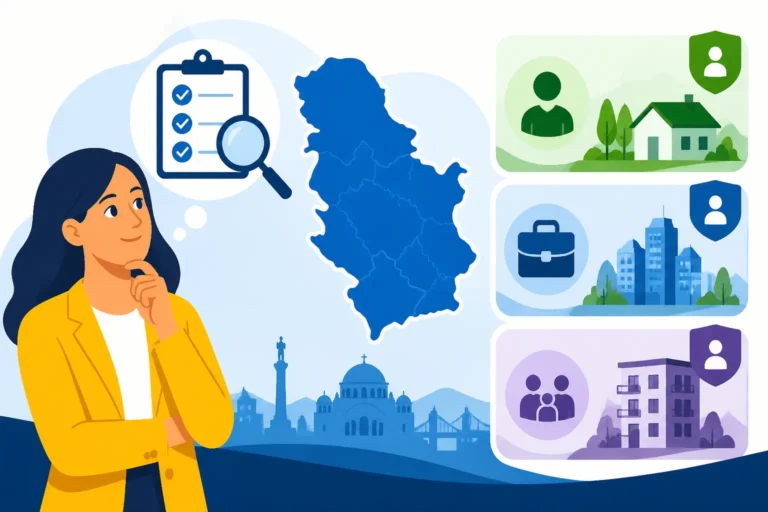
The Type D visa is essentially for anyone who plans to move beyond being a tourist and intends to live, work, study, or establish a more permanent connection with Serbia. It covers a broad range of scenarios, each with its own specific requirements and supporting documentation. If your nationality allows you to enter Serbia visa-free for up to 90 days, but your plans extend beyond that, this visa is almost certainly your next step.
For Employment Purposes
If you’ve landed a job offer from a Serbian company, congratulations! This is one of the most common reasons expats seek a Type D visa. Your future employer will typically be instrumental in this process, providing the necessary documentation to support your application. This often includes a formal employment contract, a work permit issued by the National Employment Service of Serbia (if applicable), and other letters confirming your engagement. The Serbian government has streamlined some of this through the single permit system, making it easier to combine work and residence applications, but the Type D visa is still the entry point. You can find more details on this process in The Expat Guide to the Single Permit for Work and Residence in Serbia (2026).
It's not just for traditional employment either. If you're planning to work remotely for a foreign company, or even come to Serbia as a highly skilled professional with a view to finding a job once here, you’ll typically still need a Type D visa that aligns with your intended purpose. The authorities want to see a clear plan.
For Study at Serbian Educational Institutions
Serbia's universities, especially in Belgrade and Novi Sad, are becoming increasingly popular for international students. If you’re accepted into a Serbian university or other accredited educational institution, you'll need a Type D visa to enter the country and then apply for your student residence permit. The main documents here will be your letter of acceptance from the university, proof of financial means to support your studies and living expenses, and evidence of accommodation.
The duration of your Type D visa will usually be linked to the length of your study program. It’s not uncommon for students to get a visa that covers their first semester or year, allowing them to process their full residence permit without interruption. Always ensure you have enough funds to cover your tuition and living costs – Serbian authorities are quite strict about ensuring students won't become a burden on the state. Check out How to Apply for a Student Residence Permit in Serbia for a deeper dive.
For Family Reunification
For those who have a spouse, parent, or child already legally residing in Serbia, the Type D visa is the gateway to joining them. This is often an emotionally driven move, and while the bureaucracy can be frustrating, the system is designed to facilitate family unity. You'll need to prove your familial relationship through marriage certificates, birth certificates, or other official documents. The person you're joining (your sponsor) will also need to provide proof of their Serbian residence, stable income, and adequate accommodation for you.
Bringing your loved ones to Serbia can be a complex journey, and the authorities will scrutinize the legitimacy of your relationship. Patience and meticulous documentation are key. For more information on this, explore Family and Dependent Residence in Serbia: Bringing Your Loved Ones (2026). It's a common scenario that families rely on this visa to start their new lives together here.
For Property Ownership
Interestingly, Serbia offers a path to temporary residence for foreigners who own property in the country. If you've purchased a house or apartment, this can be a valid ground for a Type D visa application. The idea is that property ownership demonstrates a significant investment and a clear intention to reside in Serbia long-term. You'll need to provide the property title deed (list nepokretnosti) and proof that you are indeed the owner.
While property ownership can be a strong basis, it's not a golden ticket. You'll still need to show proof of sufficient financial means to live in Serbia without working, unless you combine this ground with another, such as being a self-employed individual. The property itself indicates a commitment, but not necessarily self-sufficiency, which is a key requirement for boravak.
For Self-Employment or Business Activities
Many expats are drawn to Serbia for its burgeoning startup scene and relatively low cost of doing business, especially when considering the paušal regime for entrepreneurs. If you plan to register as an entrepreneur ( preduzetnik) or establish a company (DOO), you’ll need a Type D visa on the grounds of conducting business activities. You'll submit a business plan, proof of initial capital, and documentation showing your intent to register your company or entrepreneurship after arrival.
This route can be particularly appealing, but it requires thorough preparation of your business idea and demonstrating its viability. The authorities want to see a genuine business, not just a shell company to obtain residence. For detailed steps on how to set up your business, check out How to Register as an Entrepreneur (Preduzetnik) in Serbia.
The Application Process: A Step-by-Step Guide
The Type D visa application, like most bureaucratic processes in Serbia, requires precision, patience, and a healthy dose of persistence. It's usually handled at a Serbian embassy or consulate in your country of origin or legal residence. Remember, you generally cannot apply for this within Serbia.
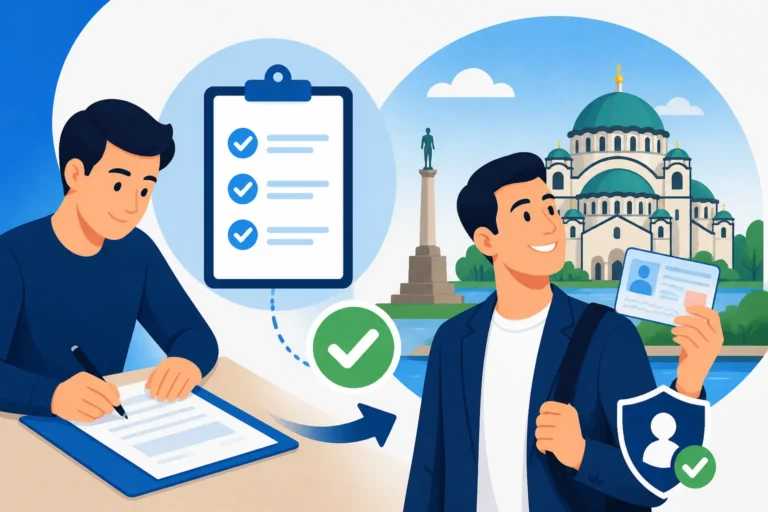
Step 1: Determine Your Visa Ground and Gather Documents
Before you even think about filling out a form, you need to clearly define the ground for your long-stay in Serbia. Is it work, study, family, property, or starting a business? This is paramount, as the specific list of required documents will hinge entirely on this.
Common documents you’ll need regardless of your ground include:
- Valid Passport: Must be valid for at least 90 days beyond your intended departure from Serbia, with at least two blank pages.
- Completed Visa Application Form: Downloadable from your local Serbian embassy/consulate website. Fill it out completely and accurately.
- Passport-Sized Photos: Usually two, conforming to standard biometric requirements.
- Proof of Accommodation: This could be a rental agreement, a property title deed, or a certified invitation letter from a host in Serbia.
- Proof of Sufficient Funds: Bank statements, salary slips, scholarship letters, or other official documents proving you can financially support yourself during your stay. The amount required can vary, but generally, expect to show evidence of at least 50 euros per day for your intended stay.
- Health Insurance: A valid international travel or private health insurance policy for the duration of your Type D visa. This is crucial. Providers like Cigna Global offer comprehensive plans that are recognized in Serbia and can cover you from the moment you step foot in the country. This can save you a lot of hassle and ensure you meet the legal requirements for entry and temporary residence. For more on healthcare, see The Complete Guide to Healthcare in Serbia for Expats (2026).
- Return Ticket or Itinerary: Proof of planned travel to Serbia.
- Criminal Record Check: A certificate from your country of residence stating you have no criminal record. This is a non-negotiable item for pretty much all long-term stays.
- Invitation Letter (if applicable): If you're coming for work, a letter from your employer; if for study, from your university; if for family reunification, from your family member in Serbia.
- Marriage/Birth Certificates (if applicable): For family reunification.
- Official Translations: Any documents not in Serbian or English (sometimes other major languages are accepted, but Serbian is safest) must be officially translated by a sworn court translator in Serbia or by an authorized translator in your country whose signature is apostilled/legalized. This leads us to the next crucial point.
Step 2: Legalization and Authentication of Documents (Apostille)
This is where many expats get tripped up. Most official documents issued in your home country will need to be apostilled or super-legalized. An apostille is a certificate that authenticates the origin of a public document, verifying its validity for international use under the Hague Convention. If your home country is part of the Hague Convention, an apostille is usually sufficient. If not, your documents will require a more complex "super-legalization" process, which often involves multiple layers of authentication by different government bodies.
Always check with the specific Serbian embassy or consulate you're applying through, as requirements can slightly vary. Do not skip this step, or your entire application could be rejected. For more detailed information, consult How to Get Your Documents Apostilled for Serbia Immigration. This process can take time, so factor it into your planning, especially if you're coordinating a larger move with services like Sirelo to bring your belongings.
Step 3: Submitting Your Application and Interview
Once you have all your documents ready, translated, and legalized, you'll typically need to schedule an appointment at the Serbian embassy or consulate. Be prepared for an interview, where the consular officer will ask about your intentions for staying in Serbia, your financial situation, and your ties to your home country. Be honest, clear, and confident in your answers.
Pay attention to all fees. There's usually a non-refundable application fee. The processing time can vary greatly depending on the embassy and the time of year, from a few weeks to a couple of months. Apply well in advance of your intended travel date to avoid any last-minute panic.
Here's a quick overview of typical Type D Visa Requirements:
| Category | Key Documents for Type D Visa | Typical Initial Validity |
|---|---|---|
| Employment | Job offer/contract, work permit (if issued), company invitation | 90-180 days |
| Study | University acceptance letter, proof of funds, accommodation | 90-180 days |
| Family Reunification | Marriage/birth certificates, sponsor's residence/financial proof | 90-180 days |
| Property Ownership | Property title deed, proof of funds, accommodation | 90-180 days |
| Self-Employment/Business | Business plan, proof of capital, company registration intent | 90-180 days |
| All Categories | Valid passport, application form, photos, health insurance, criminal record check, proof of funds, proof of accommodation |
Remember this table is a general guide; always confirm the exact requirements with the specific Serbian diplomatic mission where you plan to apply.
Navigating Post-Arrival Requirements and Common Pitfalls
Getting your Type D visa is a huge step, but the journey doesn't end there. Once you arrive in Serbia, there are a few critical steps you must take to finalize your temporary residence. Missing these can jeopardize your entire long-term stay, so pay close attention.
Registering Your Address (Beli Karton)
The very first thing you need to do upon arrival, within 24 hours (or at least the first working day), is register your address with the local police, known as obtaining your "Beli Karton." This white card is proof of your temporary residence. If you're staying in a hotel, they usually handle this automatically. If you're renting an apartment, your landlord is legally responsible for registering you, but it’s your responsibility to ensure it gets done. Don't assume anything; be proactive. You’ll need to do this even before you apply for your temporary residence permit. Neglecting this step can lead to fines and complications down the line. Learn more about How to Register Your Address (Prijava) with the Police in Serbia.
Applying for Temporary Residence (Privremeni Boravak)
Your Type D visa allows you to enter and start the process for temporary residence, but it doesn't grant you residence itself. Within the validity period of your Type D visa (typically 90 or 180 days), you must submit a full application for temporary residence (privremeni boravak) at the local Ministry of Interior (MUP) office. The documents required for this step will largely mirror those you submitted for your Type D visa, but may include additional Serbian-specific forms and potentially an interview.
It’s crucial to initiate this application well before your Type D visa expires. The MUP processes can sometimes take several weeks or even months, so don't leave it to the last minute. Keep all original documents and multiple copies. For a deeper dive into this, read How to Apply for Temporary Residence (Privremeni Boravak) in Serbia.
Maintaining Proof of Funds and Health Insurance
Throughout your stay, you must maintain proof of sufficient financial means and valid health insurance. Serbian authorities take this seriously. Your bank statements and your Cigna Global or other comprehensive health insurance policy are not just for the visa application; they are ongoing requirements for your legal stay. If your circumstances change, ensure you can still demonstrate your financial stability.
It’s a good idea to keep digital copies and a physical binder of all your immigration documents, financial statements, and insurance policies, as you might need to present them at various points or during renewal. When you're considering a move, especially an international one, companies like Sirelo can help with the logistics of transporting your life, but the paperwork is all on you!
Dealing with Language Barriers and Bureaucracy
Serbia's administrative processes are notorious for their reliance on paperwork and, at times, a lack of consistent information. While MUP officials in larger cities like Belgrade and Novi Sad may have some English speakers, it's not guaranteed. Having a Serbian friend, a local agent, or a sworn court translator accompany you can be invaluable. Even small errors in forms or missing stamps can cause significant delays.
Be prepared for multiple visits to different offices, potentially long waits, and the need to present original documents and their photocopies at every turn. Stay polite, be patient, and always double-check requirements directly with the authorities, as regulations can change. Understanding How to Move to Serbia Legally from Abroad (2026) can give you a broader perspective on what to expect.
Disclaimer
The information provided in this article is intended for general guidance only and does not constitute legal advice. Visa and immigration regulations in Serbia can change frequently. It is imperative to consult with the official Serbian Ministry of Foreign Affairs website, the Serbian embassy or consulate in your country of residence, or a qualified immigration lawyer in Serbia for the most accurate and up-to-date information pertaining to your specific situation. Reliance on any information provided here is solely at your own risk.