Can I Apply for Permanent Residence After 3 Years in Serbia?
One of the most common questions I hear from fellow expats in Serbia, especially after a few years of settling in, is about making things more permanent. You've gotten through the initial hurdles of How to Get Temporary Residence (Boravak) in Serbia (2027) and now you're wondering if you're halfway to something more stable. Specifically, many of you ask, "Can I apply for permanent residence after just 3 years in Serbia?" It’s a completely natural question, and the answer, like many things here, isn’t always a simple yes or no. This guide will meticulously break down the standard rules, illuminate the rare exceptions where three years might indeed be enough, and walk you through the entire process, offering a realistic view of what to expect.
The Standard Path to Permanent Residence: The 5-Year Rule
Let's cut right to the chase for most of us: the standard requirement for obtaining permanent residence ( stalni boravak ) in Serbia is five years of continuous temporary residence ( privremeni boravak ). I know, I know, that might not be the answer you were hoping for if you've only been here for three years, but it's the reality for the vast majority of foreigners. This five-year period is designed to show a sustained commitment to living in Serbia, integrating into the community, and contributing to the country.
Understanding Continuous Temporary Residence
When the Serbian Ministry of Interior (MUP) talks about "continuous temporary residence," they're not just throwing around fancy legal terms. They mean that you need to have held valid temporary residence permits, one after another, for an uninterrupted period of five years. This means you can't have significant gaps where you didn't have a valid permit.
For instance, if you've been working here, you've likely been renewing your work-based temporary residence annually. Each time you go through that often-frustrating process of gathering documents, submitting your application, and waiting for approval, you're adding another year to your tally. These annual renewals, whether they’re based on employment, owning property, family reunification, or even studying, all count towards that five-year total. The key is that each permit needs to transition smoothly into the next, without lengthy periods where you were essentially without legal residency. A short break of a few days or weeks between permits might be tolerated, especially if the delay was due to MUP processing times, but a gap of several months or a year will likely reset your count. This is a critical point that many expats overlook, and it can throw a real wrench in your long-term plans. Make sure you’re always on top of your renewals, understanding the specific documentation required and the deadlines involved for How to Renew Your Temporary Residence in Serbia.
Why the 5-Year Requirement Exists
You might be wondering why Serbia insists on five years when some other countries might have shorter pathways. The five-year rule reflects a policy aimed at ensuring a certain level of integration and stability. It demonstrates that you're not just passing through, but you're genuinely building a life here. This period allows the authorities to see a consistent pattern of legal residency, tax contributions (if you're working), and adherence to local laws.
It’s also about differentiating temporary stays from a more permanent commitment. When you first move here, even if you intend to stay forever, your initial residence permits are, by definition, temporary. They're tied to a specific purpose – your job, your studies, your family. Permanent residence, on the other hand, grants you a much broader set of rights and freedoms, essentially making you almost indistinguishable from a citizen in terms of daily life, without the right to vote or hold public office. It’s a significant step, and the five-year period is seen as a reasonable timeframe to earn that level of commitment and trust. It also lines up with many international standards for long-term residency.
When 3 Years Might Be Enough: Key Exceptions
While the five-year rule is standard, there are specific circumstances where you might indeed be able to apply for permanent residence after a shorter period, sometimes even three years or less. These are significant exceptions and usually apply to individuals with strong ties to Serbia or those in very specific categories. This is the crux of the question, Understanding the 3-Year Requirement for Permanent Residence in Serbia.
Residence Based on Marriage to a Serbian Citizen
This is arguably the most common and clear-cut exception to the five-year rule. If you are married to a citizen of Serbia, you can generally apply for permanent residence after three years of continuous temporary residence based on family reunification. But here's the catch: it's not just about getting married and hitting the three-year mark. The MUP will be looking for a genuine, ongoing marriage and shared life.
They'll want proof of cohabitation, shared finances, and a life together. This could include shared utility bills, joint bank accounts, or even witness statements from neighbours or friends. Don't underestimate the scrutiny; they're very good at identifying marriages of convenience. If your temporary residence has been based on Family and Dependent Residence in Serbia: Bringing Your Loved Ones, then after three years, you become eligible. The process still involves a meticulous application, and you'll need your marriage certificate (often apostilled and translated), your spouse's Serbian ID, and all the usual documents for yourself. It’s a well-trodden path, but one that requires diligence and transparency.
Serbian Origin or Descent
Another significant exception applies if you can prove your Serbian origin or descent. This pathway often allows individuals to apply for permanent residence without needing to fulfill the same temporary residence period requirements as others. If you have a grandparent, parent, or even sometimes great-grandparent who was ethnically Serbian, you might be eligible.
The key here is documentation. You'll need to provide official documents like birth certificates, marriage certificates, and other records that clearly establish your lineage to a Serbian ancestor. These documents often need to be translated into Serbian by a certified court translator and sometimes apostilled, depending on the country of origin. This can be a lengthy process to gather all the necessary papers, especially if your family history is spread across different countries or generations. However, for those with verifiable ties, it's a powerful route to permanent residency and can significantly shorten your waiting time. For families looking into this, consulting with a specialized lawyer in Serbia who handles these types of cases is highly advisable.
Other Less Common Exceptions
Beyond marriage and origin, there are a few other, much rarer, pathways that might allow for a shorter timeframe, though often not specifically three years.
- Highly Skilled Professionals: In exceptional cases, individuals deemed to be of particular scientific, cultural, or economic importance to Serbia might be granted permanent residence under special provisions, potentially after a shorter period. This is highly discretionary and usually involves a direct application or recommendation from a relevant Serbian institution. Think of top-tier researchers, artists, or investors bringing significant capital and innovation. It’s not something you can generally plan for unless you are already an internationally recognized figure in your field.
- Refugee Status: Individuals granted refugee status in Serbia have a different legal framework for obtaining long-term residency, which can sometimes lead to permanent residence after a few years, but this is a humanitarian path distinct from economic migration.
- Childhood Residency: If a child obtains temporary residence and continues to live in Serbia until they reach adulthood, they might have specific provisions for obtaining permanent residence that don't strictly adhere to the five-year adult rule.
It's crucial to understand that these exceptions are not loopholes. They are specific legal provisions for specific situations. If you don't fit into one of these categories, planning for the five-year temporary residence period is your most realistic strategy.
Navigating the Application Process for Permanent Residence
So, you've figured out if you qualify for the 5-year track or one of the shorter exceptions. Now comes the actual application – and trust me, it’s a marathon, not a sprint. While the specific documents can vary slightly depending on your grounds for application (marriage, work, origin), there's a common core of what you'll need.
Required Documents and Preparation
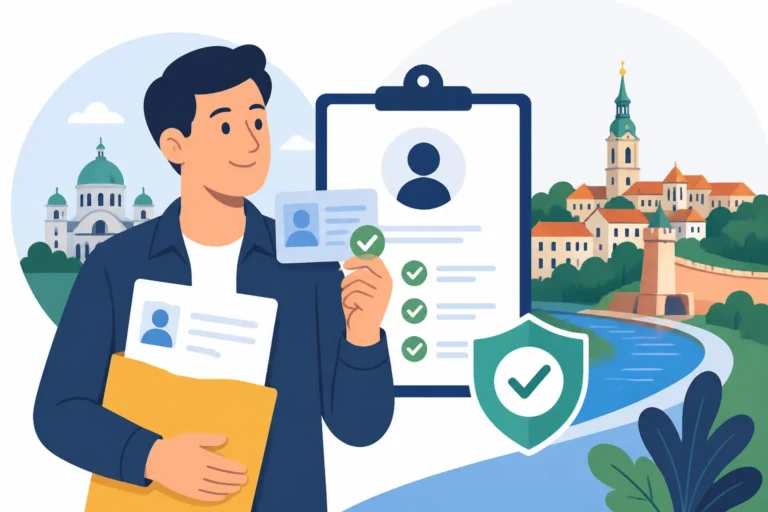
Gathering your documents is often the longest and most painstaking part of the process. You'll need to present a comprehensive portfolio to the MUP, proving your eligibility and your stability in Serbia. Here’s a typical list of what you can expect to need:
- Valid Passport: Your current passport with a valid period beyond your intended permanent residence application.
- Temporary Residence Card: Your current privremeni boravak card, along with copies of all previous temporary residence approvals, demonstrating your continuous residency.
- Application Form: The official application form for permanent residence, filled out accurately in Serbian.
- Proof of Funds: Documentation showing you have sufficient financial means to support yourself and any dependents. This could be bank statements, employment contracts, or proof of income.
- Proof of Accommodation: A notarized rental contract or a property deed if you own your home, confirming your registered address ( prijava boravka ). Make sure your How to Register Your Address (Prijava) with the Police in Serbia is up-to-date.
- Police Clearance Certificate: A certificate from your home country (and any other country where you’ve lived for more than six months in the last five years) proving you have no criminal record. This needs to be legalized with an apostille and translated.
- Birth Certificate: Your original birth certificate, also apostilled and translated.
- Marriage Certificate (if applicable): If applying based on marriage to a Serbian citizen, your original marriage certificate, apostilled and translated. Your spouse’s Serbian ID will also be required.
- Proof of Serbian Origin (if applicable): Genealogical documents, birth certificates of ancestors, etc., all properly legalized and translated.
- Proof of Health Insurance: While permanent residence generally grants access to the public health system (RFZO), you might need to show proof of continuous health insurance during your temporary residence period, or a current private policy as part of your overall stability. Remember the importance of Understanding Mandatory Health Insurance Contributions in Serbia. If you've been using private insurance, companies like Cigna Global are often a popular choice among expats for comprehensive coverage.
- Medical Certificate: Sometimes, a general health certificate from a Serbian medical institution might be requested.
- Fees: Administrative fees for the application processing and card issuance.
The emphasis on certified translations and apostilles cannot be overstated. Any document originating outside of Serbia will likely need to be translated into Serbian by a court-certified translator and, if from a country signatory to the Hague Convention, stamped with an Apostille. If your country isn't a signatory, it may require a more complex legalization process through the Serbian embassy or consulate in your home country. This can add significant time and cost, so plan accordingly. For a deep dive, check out How to Get Your Documents Apostilled for Serbia Immigration.
Submitting Your Application to the MUP
Once you have your mountainous pile of documents, you’ll submit your application to the Ministry of Interior (MUP), specifically to the Foreigners’ Department ( Uprava za strance ) in your city of residence, typically Belgrade or Novi Sad. This is the same department you’ve probably become well acquainted with during your temporary residence renewals.
You’ll hand over your meticulously prepared dossier, pay the administrative fees, and they will review everything. Sometimes, they might ask for additional documents on the spot, or request that you come back for an interview. This interview is usually to clarify details, verify information, or simply gauge your genuine intent to reside permanently in Serbia. They might ask about your life here, your work, your family, and your reasons for wanting to stay. Being honest, calm, and prepared with clear answers (even if through a translator) is key. The MUP plays a central role in all immigration matters; understanding their processes is vital, so reading Understanding the Role of the MUP (Ministry of Interior) in Serbia can be very helpful.
The Waiting Game and Potential Challenges
And then, you wait. The processing times for permanent residence applications can vary quite a bit, from a few months to sometimes over a year. It's not a fast process, so patience is absolutely essential. Don't expect daily updates; you'll typically be contacted when they have a decision or need more information.
During this waiting period, it's generally advisable not to make any drastic changes to your life situation (like quitting your job, moving addresses without notifying them, or planning long trips abroad) that could impact your application.
Potential challenges include:
- Missing or Incorrect Documents: The most common reason for delays or rejections. Double-check everything before submission.
- Lack of Continuous Residence: If there were significant gaps in your temporary residence, this could be an issue.
- Proving Genuine Ties: Especially for marriage-based applications, the MUP’s assessment of the authenticity of your relationship is paramount.
- Legal Changes: While less common, immigration laws can change, potentially impacting ongoing applications.
If your application is denied, you typically have the right to appeal the decision within a certain timeframe. This usually involves submitting a formal appeal with new evidence or clarification to the MUP, or seeking legal assistance. Don't just give up; understand the reasons for denial and explore your options. The overall Understanding the Cost and Timeline of the Serbia Residence Process should give you a good overview.
Life After Permanent Residence: What It Means for You
Finally, after all the paperwork, waiting, and maybe a few grey hairs, you get that coveted permanent residence card. This isn't just a piece of plastic; it fundamentally changes your status in Serbia and offers a level of stability that temporary residence simply can't match.
Rights and Responsibilities of a Permanent Resident
With permanent residence, you gain many of the same rights as Serbian citizens, with a few key exceptions.
- Unrestricted Work and Study: You are no longer tied to a specific employer or purpose for your residence. You can work for any company, start your own business (perhaps diving into How to Register as an Entrepreneur (Preduzetnik) in Serbia), or study without needing a separate work or student permit.
- Access to Public Services: You gain full access to the public healthcare system (RFZO), social security, and other state-provided benefits, just like a citizen. This is a huge relief for many, as it simplifies medical care significantly compared to relying solely on private options. For details on how the system works, look at The Complete Guide to Healthcare in Serbia for Expats (2027).
- Freedom of Movement: While still needing your passport for international travel, your permanent residence card allows you to enter and exit Serbia more freely and easily.
- Property Ownership: You can generally own property without the restrictions sometimes faced by non-residents.
- Stability for Family: It simplifies the process of bringing or maintaining residence for your family members.
- Path to Citizenship: Perhaps one of the most significant implications is that permanent residence is a prerequisite for applying for Serbian citizenship by naturalization. After a certain period (usually 3 years) of holding permanent residence, you can then begin the process to become a citizen. You can learn more about this by reading Serbian Citizenship: How to Naturalise After Permanent Residence (2027).
However, remember that with rights come responsibilities. You're still expected to abide by Serbian laws, pay your taxes, and generally be a productive member of society.
Maintaining Your Permanent Residence Status
Just because it's "permanent" doesn't mean you can forget about it entirely. There are conditions for maintaining your permanent residence status. The most important one relates to absences from Serbia.
Generally, you should not be absent from Serbia for more than one year continuously, or for more than a total of three years over a five-year period. Exceeding these limits could lead to your permanent residence status being revoked. There might be exceptions for compelling reasons, such as serious illness, study abroad, or extended work assignments, but these usually require prior notification and approval from the MUP. It's always best to err on the side of caution and maintain a strong presence in Serbia if you want to keep your status. For a full explanation, delve into Understanding How to Maintain Your Permanent Residence in Serbia.
This is crucial for expats who might travel frequently for work or personal reasons. Keep track of your entry and exit stamps, and if you anticipate a long absence, inquire with the MUP about the necessary steps to protect your status. The peace of mind that comes with permanent residence is truly invaluable, but like anything worth having, it requires a bit of ongoing attention.
Comparative Overview of Residence Types
To give you a clearer picture, here's a quick table summarizing the typical paths and minimum requirements for different types of long-term stays in Serbia.
| Residence Type | Initial Purpose | Minimum Continuous Stay for PR (Standard) | Minimum Continuous Stay for PR (Exceptions) | Key Benefit |
|---|---|---|---|---|
| Temporary Residence | Work, Study, Family, Property | N/A (Precursor to PR) | N/A (Precursor to PR) | Legal stay for a specific purpose |
| Permanent Residence | General stay, citizenship path | 5 Years of Temporary Residence | 3 Years (marriage to Serb), N/A (Serb origin) | Unrestricted work/study, full public services |
| Citizenship | Full rights & passport | 3 Years of Permanent Residence | N/A (e.g., direct by origin) | Voting rights, Serbian passport, full integration |
Remember, moving to a new country and navigating its bureaucracy is no small feat. Companies like Sirelo can help ease the stress of the actual relocation, while understanding your immigration status is a journey in itself. It's a testament to your resilience and commitment to building a life in this beautiful country.
In conclusion, while the dream of permanent residence after just three years is appealing, for most expats, Serbia's immigration laws set the bar at five years of continuous temporary residence. However, if you're married to a Serbian citizen or can prove Serbian heritage, you're among the fortunate few who might indeed qualify sooner. Always consult the official MUP guidelines or a trusted immigration lawyer to get advice tailored to your specific situation, as the rules can be intricate and subject to change. This journey, from your first visa to potentially becoming a citizen, is a significant part of your expat story here in Serbia. You've got this!
Disclaimer
The information provided in this article is intended for general guidance only and does not constitute legal advice. Immigration laws and procedures in Serbia can be complex and are subject to change. It is strongly recommended that you consult with the official Serbian Ministry of Interior (MUP) or a qualified immigration lawyer for advice tailored to your specific situation before making any decisions related to your residence status in Serbia.