The Complete Guide to Serbia Visas and Immigration for Expats (2027)
Moving to a new country is exhilarating, but let’s be honest, the immigration process in Serbia can feel like navigating a labyrinth blindfolded. You arrive with high hopes, ready to embrace the culture, only to be met with a cascade of documents, stamps, translations, and visits to various government offices that seem to operate on their own mysterious timelines. It’s enough to make even the most seasoned expat want to pull their hair out. But don’t worry, you’re not alone. This guide is here to demystify the entire visa and immigration landscape in Serbia, offering a complete, empathetic roadmap for every expat, from your very first entry to potentially calling Serbia your permanent home.
Navigating the Serbian Immigration Landscape as an Expat
When you first land in Serbia, whether it’s at Nikola Tesla Airport in Belgrade or by crossing a land border, the immigration system can seem like a dense forest of rules and regulations. It's unlike many Western countries, and trying to apply what you know from other expat experiences might lead to frustration. The key is understanding the unique Serbian approach, which, while sometimes slow, is generally fair if you follow the steps meticulously.
The Initial Hurdles: Why It Feels So Complex
One of the biggest frustrations expats face is the sheer volume of paperwork and the sometimes-ambiguous nature of the requirements. You’ll often hear different advice from different officials, or find that rules can change with little notice. This isn't necessarily due to malice; often, it’s a combination of evolving legislation, varying interpretations at different offices, and a system that's still adapting to an influx of new foreign residents. You might be asked for a document today that wasn't required last week, or told to submit something that seems entirely redundant given other documents you’ve provided. This can be incredibly disheartening, making you feel like you're constantly playing catch-up. Patience, deep breaths, and a good sense of humor are your best friends here.
For example, imagine you've meticulously gathered all the required documents for your temporary residence application based on employment. You've got your employment contract, proof of local address, bank statements, and even a certified translation of your degree. You arrive at the Ministry of Interior (MUP) office, wait for your turn, and the officer casually asks for a potvrda o kretanju (movement certificate) from your previous address in Serbia, which you didn't even know existed because you just moved to Belgrade last week. This kind of unexpected request is a common scenario that can derail your carefully planned day. It's not always about missing critical documents, but often about minor, obscure administrative forms that only come to light at the counter.
Key Institutions and Who's Who
Understanding who does what in the Serbian immigration system is crucial. It’s not a single-stop shop, and you’ll interact with several different bodies.
- Ministry of Interior (MUP – Ministarstvo Unutrašnjih Poslova): This is your primary point of contact for all residence permits, extensions, and the all-important beli karton (white card) registration. There are regional MUP offices, and you'll typically deal with the one in your place of residence. In Belgrade, foreigners usually go to the office in Savska street. This is where the magic (or headache, depending on the day) happens for your official stay.
- Embassies/Consulates of Serbia Abroad: If you need a visa to enter Serbia, you’ll be applying through the Serbian embassy or consulate in your home country or country of legal residence. They are your first gateway and will process your initial Type D (long-stay) visa before you even set foot in Serbia.
- Local Police Stations: While the MUP handles the main residence permits, registering your address, often called the "white card" or prijava boravka, is usually done at a local police station, or sometimes directly through your landlord if they have the system set up. This is a vital step immediately upon arrival, and we'll dive deeper into it shortly.
- The Tax Administration (Poreska Uprava): While not directly immigration, you'll inevitably interact with them for your tax ID (PIB) and social contributions once you start working or register a business, which is inherently linked to your legal stay. Knowing how to get a Tax ID (PIB) as a foreigner in Serbia is key for any long-term stay.
- Notaries and Translators: These aren't government bodies, but they are absolutely indispensable. Most foreign documents will need to be officially translated into Serbian by a certified court translator (sudski tumač) and often notarized by a public notary (javni beležnik) before being accepted by Serbian authorities. Sometimes, an apostille stamp is also required, especially for documents issued in countries that are part of the Hague Apostille Convention.
Understanding the Foundational Concepts: Visa vs. Residence Permit
This might seem basic, but it's a common point of confusion.
- Visa: A visa (like a Type D) allows you to enter Serbia for a specific purpose and duration, usually up to 90 or 180 days, and serves as a precursor to applying for a residence permit within Serbia. It's essentially permission to cross the border and signifies your intent for a longer stay, enabling you to apply for residence once you arrive. You get this before you travel.
- Residence Permit (Privremeni Boravak or Boravišna Dozvola): This is the document that grants you the right to live in Serbia for an extended period, typically one year, renewable annually. This is what you apply for after you’ve entered Serbia (either visa-free or with a Type D visa), and it's issued by the MUP. It's the official confirmation of your legal status to reside here.
Think of it like this: a Type D visa is your ticket to the show and gets you through the door, but the residence permit is your backstage pass that lets you stay and participate. You cannot work or reside long-term on just a visa. You need the residence permit.
Your First Steps: Visa-Free Entry and the 90-Day Rule
For many expats, their journey to Serbia begins with a visa-free entry. This is a fantastic privilege, but it comes with strict rules that you absolutely cannot ignore. Misunderstanding these rules is a common trap for newcomers.
Who Can Enter Visa-Free?
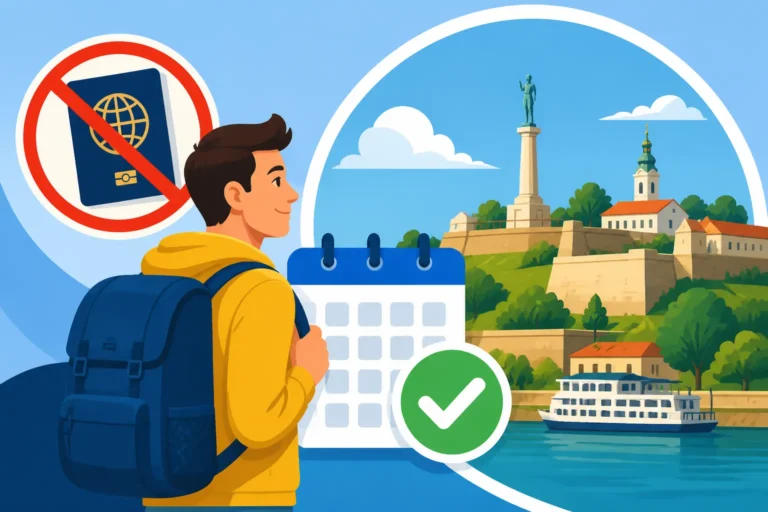
Serbia has a very generous visa-free policy, especially for citizens of the EU, USA, UK, Canada, Australia, and many other countries. Most of these nationalities can enter Serbia without a visa for up to 90 days within any 180-day period. This 90/180-day rule is critical. It means that once you've spent 90 days in Serbia (whether consecutively or spread out), you must leave the Schengen Area and Serbia for at least another 90 days before you can re-enter. This isn't just about Serbia; it's a common rule across many European countries, and Serbia adheres to a similar principle to prevent people from using it as a backdoor into the Schengen zone.
For example, if you enter on January 1st and stay until March 30th (90 days), you cannot re-enter Serbia until June 28th. Even if you leave for a week and come back, that initial 90-day count still applies. This can be a rude awakening for those who imagine they can simply pop across a border for a day and reset their clock. The immigration authorities track your entries and exits meticulously.
Countries typically enjoying visa-free entry for 90 days within a 180-day period include:
- European Union Member States
- United States
- United Kingdom
- Canada
- Australia
- Switzerland
- Norway
- Japan
- South Korea
- And many more.
It's always, always best to check the official Ministry of Foreign Affairs website of Serbia for the most up-to-date list relevant to your nationality before you travel, as agreements can change.
The Importance of the White Card (Beli Karton)
This is one of the most crucial, yet often overlooked, initial steps. The prijava boravka, or "white card" registration, is a legal requirement for all foreigners, even those staying visa-free, within 24 hours of arrival. If you're staying in a hotel, hostel, or registered accommodation, they will usually handle this for you automatically. However, if you’re renting an apartment from a private landlord, it's your responsibility to ensure this is done.
Your landlord (or you, with their presence and documents) must register your address at the local police station (the policijska stanica). You'll need your passport, your landlord's ID, and proof of ownership of the apartment (like the title deed). The police will stamp a small white slip of paper (hence "white card") with your details and the duration of your stay. Keep this safe! It's proof of your legal presence and will be required for almost every administrative process in Serbia, including opening a bank account, applying for a residence permit, or even getting a local SIM card. Losing it can cause significant delays and hassle.
I remember when I first arrived, my landlord, God bless him, was super laid back. He kept saying, "Ah, we'll do it later, no problem." But I pushed him. We went to the local policijska stanica in Palilula, and it took about 15 minutes. It might seem like a small detail, but believe me, you don't want to get caught without it. It's the paper trail that proves you're a responsible expat, following the local rules.
To delve deeper into this crucial step, you can read our guide on how to Register Your Address (Prijava) with the Police in Serbia.
Overstaying Your Welcome: Consequences and How to Avoid Them
Overstaying the 90/180-day rule or failing to register your white card can lead to serious consequences. These aren't just minor inconveniences; they can impact your ability to apply for future residence permits or even re-enter Serbia.
- Fines: You can face significant fines for overstaying or not having a valid white card. These fines can range from thousands to tens of thousands of RSD, depending on the severity and duration of the infraction.
- Deportation and Entry Bans: In severe cases, especially for repeat offenders or those who have overstayed significantly, you could face deportation and a ban from re-entering Serbia for a specified period, typically one to five years. This can completely derail any plans you had for living or working in the country.
- Problems with Future Applications: If you apply for a residence permit and the authorities discover you’ve overstayed or haven't registered your address, your application could be denied, or you might be required to leave the country and reapply from scratch, which is a massive waste of time and resources.
The best way to avoid these issues is simple: know your deadlines, keep track of your days, and always, always register your address. If you're nearing the end of your 90-day visa-free stay and plan to apply for a residence permit, make sure your application is submitted before your 90 days are up. Submitting an application in time provides legal grounds for you to stay while it's being processed.
The Gateway to Longer Stays: Type D Long-Stay Visas
If your nationality doesn't qualify for visa-free entry, or if you know right from the start that you intend to stay in Serbia for more than 90 days, the Type D long-stay visa is your first crucial step. This isn't just a formality; it's a pre-approval of your intent to reside, making your subsequent application for a residence permit smoother once you're in Serbia.
When You Need a Type D Visa and Why
As discussed, some nationalities require a visa for any entry into Serbia, even for short tourist stays. For those planning a longer stay, regardless of visa-free status, a Type D visa is highly recommended. While it's possible for visa-free nationals to apply for temporary residence directly from within Serbia, having a Type D visa can sometimes simplify the process by showing your commitment and pre-validating your reason for an extended stay. It signifies to the Serbian authorities that you have a legitimate, long-term purpose for being in the country.
Crucially, the Type D visa grants you the right to stay in Serbia for 90 to 180 days, during which you must apply for your temporary residence permit. It essentially bridges the gap between your arrival and the approval of your full residence permit, allowing you to avoid potential overstay issues.
Common Grounds for a Type D Visa
Just like residence permits, Type D visas are issued based on specific grounds. The most common ones for expats include:
- Employment: If you have a job offer from a Serbian company, this is the most common reason. Your employer will usually need to provide a formal letter of invitation or an employment contract. This aligns with the path to getting a Residence Permit for Work in Serbia.
- Study: If you've been accepted into a Serbian educational institution, you'll need a Type D visa for study purposes. The university's acceptance letter is key here.
- Family Reunification: If you're joining a spouse or close family member who is already a Serbian citizen or has a residence permit, you can apply under this category.
- Entrepreneurship/Self-Employment: For those planning to open a business or register as a freelancer (like a preduzetnik or 'paušalac'), this category allows you to enter and then formalize your business structure and residence.
- Property Ownership: While not a guarantee, owning property can sometimes be a basis for obtaining a Type D visa and subsequent temporary residence. However, it's not a direct "golden visa" route, and you'll still need to demonstrate sufficient funds to support yourself.
Each ground will have specific documentary requirements, so always check with the Serbian embassy or consulate in your region. They are the definitive source for what you’ll need.
The Application Process: From Home Country to Serbia
The Type D visa application process generally follows these steps:
- Gather Documents: This is where the notorious paperwork mountain begins. You'll need your passport, visa application form, recent passport-sized photos, proof of sufficient funds (bank statements), health insurance (remember Cigna Global might be an option here, as international insurance is usually accepted for the visa application), proof of accommodation in Serbia, and documents supporting your specific ground for the visa (e.g., job offer, university acceptance, marriage certificate). Seriously, this list can be extensive, and every document needs to be perfect.
- Schedule an Appointment: Contact the Serbian embassy or consulate in your country of residence to schedule an appointment for your visa application. Do this well in advance, as slots can fill up quickly.
- Attend the Interview and Submit Documents: Go to your appointment with all your original documents and their copies. Be prepared for a short interview where you might be asked about your reasons for moving to Serbia and your plans.
- Pay the Fee: There's an application fee, which varies depending on your nationality and the embassy.
- Wait for Processing: Processing times can vary significantly, from a few weeks to a couple of months. Apply well in advance of your planned travel date.
- Visa Issuance: Once approved, your Type D visa will be stamped into your passport.
It's a process that requires patience and meticulous attention to detail. Any missing or incorrect document can lead to delays or outright rejection. This is where Understanding Document and Translation Requirements for Serbia Immigration becomes incredibly important. You might also want to look into How to Get Your Documents Apostilled for Serbia Immigration if your home country requires it.
Securing Your Place: Temporary Residence Permits (Privremeni Boravak)
This is the big one. The temporary residence permit, or privremeni boravak, is your legal right to live in Serbia for a period longer than the initial visa-free allowance or Type D visa validity. It’s usually issued for one year and is renewable. Getting this permit is the primary goal for most expats planning a long-term stay.
Grounds for Temporary Residence: A Deep Dive
Serbia offers various grounds for obtaining temporary residence, each with its own set of requirements. Knowing which category you fall into is the first step.
1. Employment (Zaposlenje)
This is perhaps the most common route. If you have a job offer from a Serbian company, they will typically assist you with the application.
- Requirements: You'll need an employment contract (signed by both parties), evidence of your employer's registration, and sometimes proof that no suitable Serbian or EU citizen was available for the position (though this is becoming less common with the single permit system). Your salary must also be sufficient to support you.
- Process: Your employer often initiates part of the process, particularly relating to work permits. You will then compile your personal documents and submit them to the MUP. This is now largely integrated into the single permit system, which we'll cover next.
- Real-life Scenario: Marko, a software engineer from Germany, secured a job with a tech company in Belgrade. His HR department provided all necessary company documents and the employment contract. Marko then gathered his passport copy, beli karton, and proof of funds. The application was submitted, and after a few weeks, he received his shiny new residence card.
2. Study (Školovanje)
Serbia has a growing number of international students, and universities are becoming more adept at guiding foreign students through the process.
- Requirements: You'll need an acceptance letter from an accredited Serbian educational institution, proof of sufficient funds to cover your tuition and living expenses, and proof of accommodation.
- Process: Once accepted, you apply for a Type D visa for study (if required) and then for temporary residence upon arrival. The university typically issues the necessary official letters.
- Real-life Scenario: Anya from Ukraine was accepted into the University of Belgrade to study architecture. She provided her acceptance letter, a bank statement showing funds, her beli karton, and proof of health insurance. The MUP approved her student residence for one year, coinciding with her academic year. For more information, you can refer to our detailed guide on How to Apply for a Student Residence Permit in Serbia.
3. Family Reunification (Spajanje Porodice)
This category is for those joining a spouse, parent, or child who is either a Serbian citizen or already holds a valid residence permit.
- Requirements: You'll need an internationally recognized marriage certificate (if applicable), birth certificates (for children or parents), proof of the family member's Serbian citizenship or residence permit, and proof of sufficient funds for the entire family.
- Process: The Serbian citizen or resident family member acts as the sponsor. All documents must be officially translated and often apostilled.
- Real-life Scenario: Maria, a Spanish national, married Petar, a Serbian citizen. After moving to Belgrade, she applied for residence based on marriage. She submitted their marriage certificate (apostilled and translated), Petar’s Serbian ID, and her beli karton. This allowed her to stay and build a life with her husband. If you're planning this, check out our guide on How to Sponsor Your Spouse and Children for Residence in Serbia.
4. Property Ownership (Vlasništvo Nad Nepokretnošću)
While owning property doesn't automatically grant you residence, it can serve as a legitimate ground, provided you can also demonstrate financial self-sufficiency.
- Requirements: Proof of property ownership (title deed or list nepokretnosti), and significant proof of funds to support yourself without working in Serbia, unless you have another basis for work.
- Process: You apply to the MUP, presenting your property documents and financial statements. This is often combined with evidence of investments or other income streams.
- Real-life Scenario: David, a retiree from the UK, bought an apartment in Novi Sad. He applied for temporary residence, presenting his property deed, and bank statements showing a substantial pension income. He wasn't planning to work, so the property and his pension were sufficient grounds.
5. Entrepreneurship/Self-Employment (Osnivanje Preduzeća/Samostalna Delatnost)
Serbia is becoming a hub for entrepreneurs and freelancers, partly due to its favorable tax system for small businesses.
- Requirements: Proof of company registration in Serbia (e.g., as a preduzetnik or DOO), a business plan, and proof of funds to launch and sustain your venture.
- Process: You first need to register your business with the Serbian Business Registers Agency (APR). Once registered, you use these documents for your temporary residence application. This is a popular option for digital nomads.
- Real-life Scenario: Elena, a graphic designer from Argentina, decided to register as a preduzetnik in Serbia to offer her services remotely. After registering her business at the APR, she used her business registration papers and proof of her initial capital to apply for temporary residence based on entrepreneurship. This path is extensively covered in our guide, The Complete Guide to Freelancing in Serbia as an Expat.
6. Digital Nomad
While not a separate, explicit visa category in the way some other countries have, Serbia effectively accommodates digital nomads through the entrepreneurship or self-employment route, usually as a preduzetnik operating under the paušalni (lump-sum) tax regime.
- Requirements: Essentially the same as entrepreneurship: registration of a business entity (like a preduzetnik), often with a low tax burden. You must demonstrate sufficient funds to support yourself.
- Process: Register your business first, then apply for temporary residence based on your business activity.
- Real-life Scenario: Sarah, a content writer from the US, moved to Serbia and registered as a preduzetnik to continue working for her international clients. Her company registration and evidence of her remote income secured her temporary residence.
Understanding Serbian Residence Permits: Work, Study and Investment (2026) offers a broader overview of all these categories.
The Application Process: Documents, Deadlines, and Bureaucracy
Regardless of your ground, the general process for applying for temporary residence (Privremeni Boravak) is similar:
-
Gather Core Documents:
- Passport: Valid for at least three months beyond your intended stay.
- Application Form: Filled out in Serbian (often available online or at the MUP).
- Photographs: Recent passport-sized photos.
- Proof of Funds: Bank statements showing sufficient funds to support yourself (the required amount can vary but is generally equivalent to the average Serbian salary for the duration of your stay, often around €2000-€3000 for a year).
- Proof of Accommodation: Your beli karton (white card) registration, along with a rental contract or property deed.
- Health Insurance: Proof of comprehensive private health insurance covering your stay in Serbia. Many expats opt for international providers like Cigna Global, which offers comprehensive coverage for those living abroad. This is a critical requirement.
- Police Clearance Certificate: From your home country, and sometimes from Serbia itself if you've been here for a while.
- Marriage/Birth Certificates: If applying on family grounds, translated and apostilled.
- Motivation Letter: A simple letter explaining why you want to reside in Serbia.
- Receipt for Administrative Fees: These are paid at a post office or bank.
-
Specific Ground Documents: In addition to the core documents, you'll need the specific documents relevant to your chosen ground (e.g., employment contract, university acceptance, business registration).
-
Translations and Notarization: Almost all foreign documents will need to be translated into Serbian by a certified court translator. Some, like marriage certificates or academic degrees, might also need an apostille stamp from your home country.
-
Submit to MUP: Take all your documents to the MUP office in your place of residence. In Belgrade, this is typically the Foreigners Department at Savska 35. You'll likely need to take a number and wait. When your turn comes, the officer will review your application. Be prepared for them to ask for additional documents or clarifications on the spot.
-
Biometrics and Card Collection: If approved, you’ll be called to provide your fingerprints and a digital photo for your residence card. After that, there's another wait until your physical card is ready for collection.
The process for How to Apply for Temporary Residence (Privremeni Boravak) in Serbia can feel daunting, but being organized and patient will get you there.
Renewing Your Temporary Residence: Don't Get Caught Out!
Temporary residence permits are not forever. They're typically issued for one year, and you need to renew them before they expire.
- When to Apply: You should start the renewal process at least 30 days before your current permit expires, but ideally even earlier, say 45-60 days. This gives you a buffer in case of unforeseen delays or requests for additional documents.
- Required Documents: The documents are largely similar to your initial application, but you'll also need to prove that the grounds for your residence (e.g., employment, study) are still valid. For employment, this means a renewed contract or a letter from your employer. For self-employment, evidence of continued business activity and tax payments. You’ll also need new proof of health insurance, funds, and accommodation.
- Continuity: The MUP looks for continuity. If you're renewing based on employment, they want to see you're still employed. If you're studying, they want to see your academic progress.
- Changing Grounds: If you change your grounds for residence (e.g., from student to employee), you'll effectively be making a new application, and the requirements will shift accordingly. It's often best to consult with an immigration lawyer in such cases.
Many expats find the renewal process less stressful than the initial application because they already know the drill and the officials. However, don't get complacent! Keep all your documents updated and organized.
The Single Permit: Streamlining Work and Residence
For those coming to Serbia primarily to work, the "Single Permit" (Jedinstvena Dozvola) is a game-changer. Introduced to simplify the process, it combines the work permit and residence permit into one application, aiming to reduce bureaucratic hurdles.
What is the Single Permit and Its Advantages?
Historically, you'd apply for a work permit through the National Employment Service and then a separate residence permit through the MUP. This meant two sets of applications, two waiting periods, and often, conflicting requirements or processes. The Single Permit aims to solve this by creating a unified application handled primarily by the MUP.
- Simplicity: One application, one decision. This significantly cuts down on the back-and-forth between different institutions.
- Efficiency: The goal is faster processing times, although this can still vary.
- Clarity: A single document confirms both your right to reside and your right to work in Serbia.
This is a significant improvement for expats and their employers. Our guide, The Expat Guide to the Single Permit for Work and Residence in Serbia (2026), covers this in much greater detail.
Eligibility and Employer Sponsorship
The Single Permit is primarily for foreign nationals who intend to be employed by a Serbian entity.
- Eligibility: You must have a valid job offer or employment contract from a registered Serbian employer.
- Employer's Role: Your employer plays a crucial role. They initiate the process, typically through the electronic system, by submitting documents related to their company and your employment. This includes the employment contract, job description, and proof of their compliance with Serbian labor laws. The employer essentially sponsors your permit.
- Your Role: You then submit your personal documents (passport, beli karton, health insurance, proof of funds, educational qualifications, etc.) to complete the application.
It's a collaborative effort between you and your employer, with the employer usually taking the lead on the work-related aspects of the application.
Application Procedure for the Single Permit
The process for the Single Permit is largely digital, though physical documents may still be required at certain stages.
- Employer Initiates Application: Your Serbian employer starts the application through the electronic portal of the Ministry of Interior (MUP). They upload all necessary company documents and your employment contract.
- Expat Submits Personal Documents: Once the employer has submitted their part, you, as the expat, are notified and upload your personal documents to the same electronic system. This includes your passport, beli karton, proof of health insurance (again, consider robust international options like Cigna Global), proof of accommodation, and any required educational certificates or professional qualifications.
- Review and Potential Additional Requests: The MUP reviews the combined application. They might request additional information or documents if anything is unclear or missing.
- Decision and Issuance: If approved, you will be notified, and your temporary residence card, now serving as your Single Permit, will be issued. You will attend the MUP to provide biometrics and collect the card.
This streamlined process makes it considerably easier than the old dual-permit system. For example, my friend Anna, from Brazil, was hired by a marketing agency in Belgrade. Her agency handled the initial submission online, and she just had to upload scans of her passport and insurance, then visit the MUP once for biometrics and card collection. It was a much smoother experience than previous expats had described.
Bringing Your Loved Ones: Family Reunification and Dependent Residence
Moving to a new country is a big step, and for many, it's essential to have their family join them. Serbia has clear provisions for family reunification, allowing dependents of Serbian citizens or foreign residents to obtain their own residence permits.
Who Qualifies as a Dependent?
In Serbia, the following individuals are generally considered dependents for family reunification purposes:
- Spouse: Legally married partners. This requires an official marriage certificate, which ideally should be international or apostilled and translated.
- Minor Children: Biological or adopted children under the age of 18. Their birth certificates and any adoption papers are essential.
- Dependent Parents: In some specific cases, parents who are financially dependent on the primary resident may also qualify. This is usually more complex and requires strong proof of dependency.
It's important to note that unmarried partners, while increasingly recognized in other contexts, often face more hurdles under Serbian immigration law. For clarity and to avoid any issues, a legally recognized marriage is the most straightforward path for spouses.
The Sponsoring Process and Required Documentation
The process revolves around the primary resident (you, or your Serbian spouse) sponsoring the family members.
- Primary Resident's Status: The primary resident must hold a valid Serbian temporary or permanent residence permit, or be a Serbian citizen. Their status dictates the duration and validity of the dependent's permit.
- Proof of Relationship: This is paramount. For spouses, a marriage certificate (international, or apostilled and translated into Serbian) is required. For children, birth certificates (again, apostilled and translated).
- Proof of Accommodation: You need to demonstrate that you have adequate housing for the entire family. This means your rental agreement or property deed must show sufficient space for all family members.
- Proof of Sufficient Funds: This is critical. The primary resident must prove they have enough financial resources to support all family members without them becoming a burden on the state. This usually means a higher minimum amount in your bank account or a higher demonstrated income. The amount increases with each dependent.
- Health Insurance: Each dependent will need their own proof of health insurance covering their stay in Serbia. Cigna Global or other comprehensive international plans can be very suitable for families.
- Police Clearance: Depending on the country of origin and duration of stay, dependents may also need police clearance certificates.
- Submission: The application for family reunification is typically submitted to the MUP, either alongside the primary resident's renewal or as a separate application if the family joins later.
For a deeper dive into this, check out our guide on How to Add Dependents to Your Health Coverage in Serbia, which touches on the practical side of family healthcare.
Maintaining Family Status: What You Need to Know
Once your family members have their residence permits, there are a few things to keep in mind:
- Validity: The dependent’s residence permit is typically tied to the validity of the primary resident’s permit. If your permit needs renewal, so will theirs.
- Primary Resident Status Changes: If the primary resident's status changes (e.g., they lose their job and thus their work-based residence), it can affect the dependents' permits. This is why it’s important for the primary resident to maintain their legal status.
- Renewal: Just like your own temporary residence, dependent permits need to be renewed annually. You'll need to resubmit proof of relationship, accommodation, funds, and health insurance.
- Work Rights: Spouses on a family reunification permit usually gain the right to work in Serbia without needing a separate work permit. This is a significant advantage, as it allows them to seek employment freely. However, they may need to register their employment with the National Employment Service.
Bringing your family requires meticulous planning and document preparation. For instance, my colleague's wife, from Egypt, joined him after he had secured his work permit. They had to get their marriage certificate apostilled in Egypt, then translated in Serbia. The process took about two months, but once she received her permit, she was able to look for work without additional bureaucracy, which was a huge relief for them.
The Holy Grail: Permanent Residence (Stalni Boravak)
After years of temporary permits and renewals, many expats eventually set their sights on stalni boravak, or permanent residence. This is a significant milestone, granting you nearly all the rights of a Serbian citizen, except for voting and holding certain public offices.
The Path to Permanent Residence: Eligibility and Timeframes
The primary route to permanent residence in Serbia is based on continuous temporary residence.
-
Five Years of Continuous Temporary Residence: Generally, you must have legally resided in Serbia on a temporary residence permit for at least five consecutive years. This "continuous" aspect is key:
- Maximum Absences: During these five years, you cannot be absent from Serbia for more than six consecutive months at any one time.
- Total Absences: Your total cumulative absence over the five-year period must not exceed ten months.
- Breaks in Residence: Any significant break in your temporary residence (e.g., letting your permit expire and reapplying much later) can reset your five-year clock.
-
Other Grounds (Less Common for Expats):
- Serbian Origin: Individuals of Serbian descent may have an expedited path.
- Marriage to a Serbian Citizen: After three years of continuous temporary residence based on marriage to a Serbian citizen, you can apply for permanent residence. This is a faster track than the general five-year rule.
- Investment: While not a direct "golden visa," significant investments that demonstrably benefit the Serbian economy can sometimes be a factor, though this is usually combined with other grounds and a substantial track record.
The five-year mark, or three years for spouses of Serbian citizens, is often considered a significant threshold in an expat's journey. It means you've truly established your life here. Understanding the 3-Year Requirement for Permanent Residence in Serbia is especially useful for those married to Serbian nationals.
Application Requirements and Proving Continuity
The permanent residence application is more rigorous than temporary residence, focusing heavily on proving your continuous legal presence and integration.
- Standard Documents: Passport, application form, photos, proof of accommodation (beli karton history), and proof of financial means.
- Evidence of Continuous Temporary Residence: This is where you bring out your old residence cards. You’ll need to show all your previous temporary residence permits, demonstrating the uninterrupted five (or three) years.
- Detailed Entry/Exit Records: The MUP will meticulously review your passport stamps to verify your absence limits. If you have numerous stamps, they will count the days.
- Serbian Language Proficiency: While not always a formal, tested requirement, demonstrating some level of Serbian language knowledge can be beneficial and is sometimes informally assessed during the interview. It shows your commitment to integration.
- Police Clearance: Both from your home country and from Serbia.
- Motivation Letter: A comprehensive letter detailing your reasons for seeking permanent residence and your ties to Serbia.
- Proof of Integration: This can include property ownership (if applicable), children attending Serbian schools, tax records showing consistent contributions, or participation in local community life.
- Fees: There are higher administrative fees for permanent residence.
The MUP wants to see that you are genuinely settled and contribute to Serbian society. It's not just about ticking boxes; it's about demonstrating your commitment. For a step-by-step guide, refer to How to Apply for Permanent Residence in Serbia.
The Benefits and Responsibilities of Permanent Residence
Obtaining permanent residence significantly enhances your life in Serbia.
- Increased Stability: No more annual renewals! Your permanent residence permit is typically issued with a 10-year validity, and renewing it is a much simpler administrative task (usually just updating your photo and data).
- Freedom of Movement (within Serbia): You have unrestricted rights to live and work anywhere in Serbia, without needing to inform the MUP of changes in employment (though you must still register your address).
- Work Rights: You can work for any employer in Serbia without needing a separate work permit. You also have the same labor rights as Serbian citizens.
- Access to Public Services: You gain full access to Serbia’s public healthcare system (RFZO) and social benefits, much like a citizen, by contributing social and health insurance. Our guide on Health Insurance in Serbia: RFZO, Private and International Options Explained provides a good overview.
- Sponsorship Rights: You can more easily sponsor family members for their own residence permits.
- Path to Citizenship: Permanent residence is a prerequisite for applying for Serbian citizenship by naturalization.
However, permanent residence also comes with responsibilities:
- Maintaining Residence: You still need to avoid extended absences from Serbia to maintain your permanent resident status. If you leave Serbia for more than one year continuously, you risk losing your permanent residence.
- Compliance with Laws: You are expected to abide by all Serbian laws and regulations.
- Tax Obligations: You are now firmly a tax resident of Serbia (if you spend more than 183 days), and your worldwide income may be subject to Serbian taxation, though double taxation agreements exist.
Getting permanent residence is a testament to your journey as an expat in Serbia, offering peace of mind and deeper roots. It’s an achievement that truly makes Serbia feel like home. You can learn more about how to Move from Temporary to Permanent Residence in Serbia.
Beyond Residence: Serbian Citizenship
For those who truly commit to Serbia, the ultimate step is citizenship. This process is long and requires a deep connection to the country, but it offers the full rights and privileges of a national.
Naturalisation: The Standard Route
The most common way for expats to become Serbian citizens is through naturalisation.
- Minimum Residence Requirement: You must have held permanent residence in Serbia for at least three consecutive years. So, it's typically five years of temporary residence, then three years of permanent residence, making it an eight-year journey for most.
- Legal Capacity: You must be of legal age and have legal capacity.
- Financial Stability: You must demonstrate a stable and regular source of income in Serbia.
- No Criminal Record: A clean criminal record in both Serbia and your home country is essential.
- Allegiance: You must make a statement of allegiance to the Republic of Serbia.
- Serbian Language Proficiency: While less stringent than some countries, a basic understanding of Serbian is expected. You will need to show a certain level of proficiency.
- Release from Previous Citizenship (often, but not always): This is a critical point. Serbia's general rule for naturalisation often requires you to renounce your previous citizenship, unless your home country does not allow renunciation, or if there's a bilateral agreement between Serbia and your country. However, Serbia does generally allow dual citizenship under specific conditions, so it's vital to check the current laws and any agreements with your home country.
The process of naturalisation is a formal application submitted to the MUP, followed by a review by various state bodies. It's a testament to your long-term integration. For comprehensive details, see our article Serbian Citizenship: How to Naturalise After Permanent Residence (2026).
Citizenship by Origin or Marriage: Other Avenues
There are other, less common, routes to Serbian citizenship for expats:
- Citizenship by Origin: If you can prove that you have Serbian ancestry (e.g., a parent, grandparent, or even great-grandparent was Serbian), you may be able to acquire citizenship through descent, often with less stringent residence requirements. This can be a significantly faster and simpler path for some.
- Citizenship by Marriage: If you are married to a Serbian citizen, you can apply for citizenship after three years of continuous permanent residence (as mentioned above). This is often the fastest route for a non-Serbian spouse.
Each of these paths has specific documentation requirements, often focusing on historical records (birth certificates, marriage certificates) that establish the familial link.
Dual Citizenship: Is It Allowed?
This is a frequently asked question and a complex one. The Republic of Serbia generally allows dual citizenship.
- Acquiring Serbian Citizenship: If you acquire Serbian citizenship by naturalisation, you may not be required to renounce your previous citizenship, especially if your home country does not permit renunciation, or if there's a bilateral agreement. It's important to declare your existing citizenship during the application process.
- Citizens of Serbian Descent: Those acquiring citizenship by origin typically retain their original citizenship.
- Marriage to a Serbian Citizen: Spouses of Serbian citizens usually retain their original citizenship upon becoming Serbian.
However, the crucial point is your home country's laws. Some countries automatically revoke your citizenship if you acquire another. Always, always check the laws of your original citizenship country regarding dual nationality before embarking on the Serbian citizenship process. You don't want to find yourself stateless or inadvertently lose a citizenship you value.
For example, a US citizen can generally acquire Serbian citizenship and retain their US citizenship, as the US allows dual nationality. However, a German citizen might face restrictions unless an exception applies. This is where professional legal advice specific to your situation is invaluable.
Practical Tips and Avoiding Common Pitfalls
Having navigated the Serbian bureaucracy myself, I can tell you there are some universal truths and practical hacks that will make your life a whole lot easier.
The Power of Patience and Persistence
This isn't just a cliché; it's a survival skill in the Serbian administrative system. Things often move slowly. There will be unexpected requests. You might have to visit the same office multiple times.
- Don't Rush: Trying to speed things up often backfires. Plan ample time for each step.
- Be Prepared for the Unexpected: Assume you'll be asked for an extra document or that a rule will be interpreted differently. Keep calm, ask what exactly is needed, and come back prepared.
- A Smile Goes a Long Way: While frustration is natural, being polite and patient with the officials can sometimes yield better results. They are people, too, often dealing with a high volume of complex cases.
- Keep Copies of Everything: Seriously, every single document you submit, and every form you fill out, keep a copy. You never know when you'll need it again.
My first experience with renewing my permit involved being sent from one floor to another, then to another building, and finally back to the first floor, only to be told they were out of forms. I wanted to scream, but instead, I just smiled, asked when they'd have new forms, and returned a week later. It eventually worked out.
Translation, Notarization, and Apostille: Get It Right the First Time
This is a recurring theme, and for good reason. Improperly translated or certified documents are one of the leading causes of delays and rejections.
- Certified Court Translators (Sudski Tumač): Only translations done by officially certified court translators in Serbia will be accepted. Don't use a random translation service or Google Translate. You can find lists of certified translators online or ask for recommendations. They will stamp and sign their translation, certifying its accuracy.
- Notarization (Javni Beležnik): Some documents, especially copies of originals or signatures on contracts, will need to be notarized by a public notary in Serbia. They verify the authenticity of signatures or copies.
- Apostille: If your original documents (like birth or marriage certificates, police clearances) were issued in a country that is a signatory to the Hague Apostille Convention, they will likely need an apostille stamp from the issuing country before you bring them to Serbia for translation. This stamp internationally certifies the document's authenticity. If your country is not a signatory, you might need "superlegalization" at the Serbian embassy in your home country. This is extremely important to sort out before you leave your home country.
Failing to get the correct translation, notarization, or apostille means your documents will be rejected, and you’ll have to restart that part of the process, adding weeks or even months to your application. Our guide on Understanding Document and Translation Requirements for Serbia Immigration provides extensive details.
Here's a quick table to help you keep track:
| Document Type | Issued In Home Country | Issued In Serbia | Notes |
|---|---|---|---|
| Passport | Original | Original | Must be valid. |
| Birth/Marriage Certificate | Apostille + Certified Translation | Original (Serbian) or Certified Translation if foreign | Critical for family-based applications. |
| Police Clearance Certificate | Apostille + Certified Translation | Original (Serbian) | May be required for residence. |
| Diplomas/Degrees | Apostille + Certified Translation | Original (Serbian) or Certified Translation if foreign | For study or work permits, depending on profession. |
| Employment Contract | Certified Translation if foreign | Original (Serbian) | For work-based permits. |
| Bank Statement | Certified Translation if foreign | Original (Serbian) | Proof of funds. |
| Rental Agreement | Certified Translation if foreign | Original (Serbian) | Proof of accommodation. |
| Health Insurance Policy | Certified Translation if foreign | Original (Serbian) or Certified Translation if foreign | Mandatory for all permits. |
Remember to keep both the original documents and several copies, as well as the original translations and notarized copies.
Legal Assistance: When to Call in the Pros
While many expats manage the process themselves, there are times when hiring a legal professional, particularly one specializing in immigration law in Serbia, is a smart investment.
- Complex Cases: If your situation is unusual (e.g., non-standard grounds for residence, previous overstay, complex family situations, large investments), a lawyer can navigate the nuances.
- Language Barrier: If your Serbian isn't strong, a lawyer can communicate effectively with officials and ensure nothing is lost in translation.
- Time Constraints: If you're on a tight deadline or simply don't have the time to deal with bureaucracy, a lawyer can handle much of the legwork.
- Changing Regulations: Immigration laws can change. A good lawyer stays up-to-date and can advise on the latest requirements.
- Business Registration: For entrepreneurs, lawyers or specialized agencies often help with company registration and the subsequent residence permit applications. Companies like Sirelo, while focused on moving services, often have local partners or resources that can connect you with legal help for immigration.
Hiring a lawyer doesn't guarantee instant approval, but it significantly reduces the risk of errors and saves you a lot of stress and potential wasted time. It’s an investment in peace of mind.
Disclaimer
The information provided in this guide is intended for general informational purposes only and does not constitute legal, financial, or immigration advice. While we strive to keep the content accurate and up-to-date, immigration laws and procedures in Serbia can change frequently. It is essential to consult with the official authorities (Ministry of Interior, Serbian embassies/consulates) or a qualified legal professional specializing in Serbian immigration law for advice tailored to your specific situation. We are not liable for any actions taken or not taken based on the information presented herein.