How Do I Pay My Electricity Bill in Serbia?
Alright, let's talk about electricity bills in Serbia. For many of us expats, the first time that monthly envelope from EPS (Elektroprivreda Srbije) lands on the doormat, it can feel like deciphering an ancient scroll written in a language you barely understand. Beyond the Serbian script, the sheer number of charges, the meter readings, and then the question of how to actually pay it can be a real headache. This guide is here to unravel all that mystery, walking you through the ins and outs of settling your electricity bill, from understanding what you're paying for to the most convenient ways to get it done, so you can keep the lights on without the stress.
Understanding Your Serbian Electricity Bill from EPS
Before you can even think about paying, you’ve got to understand what you’re looking at. The electricity bill in Serbia is issued by Elektroprivreda Srbije, or EPS, which is the national power company. It’s a multi-page document that, frankly, doesn’t do much to make things easy for non-Serbian speakers. But trust me, once you break it down, it starts to make a little more sense.
Deciphering the EPS Bill Components
When you get your bill, you’ll notice it’s much more than just a single charge for your power consumption. There are several components that make up the final amount, and knowing what each represents can help you budget and understand your usage patterns.
First and foremost, you'll see your potrošnja (consumption), measured in kilowatt-hours (kWh). This is the actual electricity you've used. What's often confusing are the different zones: "zelena" (green), "plava" (blue), and "crvena" (red). These represent consumption tiers, with the green zone being the cheapest, blue moderately priced, and red the most expensive. This tiered system encourages energy saving, as the more electricity you use, the higher the average price per kWh becomes as you enter the more expensive zones. This is applied monthly, so if you have a particularly heavy month, you’ll see a significant jump in cost.
Beyond consumption, you'll find fixed charges. These include a flat fee for the network usage, a meter reading fee, and various taxes and duties. There's usually a charge for public lighting, even if you don't directly benefit from it, as it's part of the national grid's operational costs. Don't forget the VAT (PDV in Serbian), which is a standard 20% applied to most goods and services, including your electricity.
The bill also distinguishes between higher and lower tariffs, marked as viša tarifa (VT) and niža tarifa (NT). These correspond to peak and off-peak hours. Generally, the lower tariff applies during night hours, typically from 10 PM to 6 AM in the winter and 11 PM to 7 AM in the summer, and on Sundays and public holidays. Many expats learn to run dishwashers, washing machines, and other high-consumption appliances during these off-peak hours to save a bit of money. It’s a classic expat hack!
Reading Your Electricity Meter
Your electricity consumption is primarily based on meter readings. In most residential areas, an EPS employee comes around monthly to read your meter. You’ll find a section on your bill showing the stanje brojila (meter status) from the previous month and the current month, along with the difference, which is your consumption.
Sometimes, especially in older buildings or if the reader can't access your meter, an procenjena potrošnja (estimated consumption) might be used. This is usually based on your historical usage. While convenient, it can sometimes be inaccurate. If you notice a significant discrepancy, or you're simply more diligent, you can read your own meter and report it. This process is called samoočitavanje (self-reading) and can often be done via the EPS website or a dedicated phone line, though it's typically in Serbian. It’s worth learning a few key phrases or asking a Serbian friend to help you navigate this if you suspect an incorrect reading. Understanding The Expat Guide to Setting Up Utilities (Electricity, Water, Heating) in Serbia can give you a broader context on all utility setups.
Traditional Ways to Pay Your Electricity Bill
Even in the age of digital payments, many people in Serbia still prefer or rely on traditional, physical methods to pay their bills. These methods are reliable, though they might take a bit more time and patience.
Paying at the Post Office (Pošta Srbije) or Bank
This is arguably the most common and historically ingrained method for paying bills in Serbia. Every month, you’ll see queues forming at your local Pošta Srbije (Serbian Post Office) or bank branches.
The Process:
- Bring your bill: You must have the physical bill with you. It contains a unique barcode and reference number that the teller needs to process your payment.
- Wait in line: Patience is a virtue here. Lines can be long, especially towards the end of the month when bills are due.
- Present your bill and cash: When it’s your turn, hand over your bill and the exact amount in Serbian Dinars (RSD). Some places might accept card payments, but cash is king, especially at the post office.
- Keep your receipt: The teller will stamp your bill as "paid" and give you a separate receipt (potvrda o uplati). Keep this in a safe place, ideally stapled to your bill, as proof of payment. It’s your only defence if there’s a dispute later on.
Fees: Be aware that there's usually a small transaction fee (provizija) for paying at the post office or bank. This fee can vary slightly but is generally nominal, often around 45-70 RSD. While it might seem small, if you're paying multiple utility bills this way, it adds up. For more general advice on managing finances, check out Banking in Serbia: A Complete Guide for Foreigners (2027).
Paying at an EPS Office
While less common for regular monthly payments, paying directly at an EPS customer service office is an option, especially if you have an issue with your bill or need to clarify something. These offices are primarily for customer service inquiries, but they usually have a cash desk where you can settle your bill.
When to use this method:
- Bill disputes: If you believe there’s an error on your bill, paying at an EPS office allows you to speak with a representative directly before making the payment. This is far more efficient than trying to dispute a bill after you’ve paid it elsewhere.
- Reconnection after disconnection: In the unfortunate event that your electricity has been disconnected due to non-payment, you’ll often need to pay directly at an EPS office and show proof of payment to expedite reconnection. They might even require you to pay a reconnection fee here.
- First-time setup or major changes: If you’re setting up a new account or making significant changes to your service, paying at the office can be part of the administrative process.
You can find EPS offices in most major towns and cities. In Belgrade, for instance, there are several, including a prominent one in Takovska Street. Expect similar queues and the need for your physical bill and cash, although some larger offices might have better card payment facilities.
Modern and Convenient Payment Options
For those who prefer to avoid queues and manage their finances digitally, Serbia has made significant strides in offering convenient online payment methods. This is often the preferred route for most expats once they get set up.
Online Banking and Mobile Apps
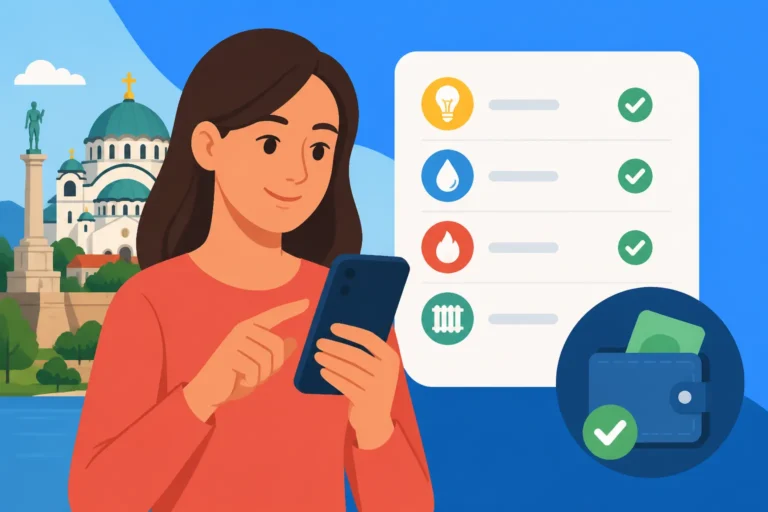
Once you've set up a local bank account, online banking will become your best friend for managing bills. Most Serbian banks offer robust online and mobile banking platforms that allow you to pay your electricity bill with just a few clicks or taps.
How it works (general steps, may vary slightly by bank):
- Log in to your online banking portal or app: This is usually accessible via your computer or smartphone.
- Navigate to the payments section: Look for options like Plaćanja, Uplatnice, or Računi.
- Scan the QR code or enter payment details: Many banks now have a brilliant feature that allows you to scan the QR code printed on your EPS bill using your phone's camera. This automatically populates all the necessary payment details, minimizing errors. If there's no QR code or you're on a computer, you'll need to manually enter the details from your bill:
- Svrha uplate (Purpose of payment): "Uplata računa za električnu energiju" (Payment for electricity bill)
- Primalac (Recipient): "Elektroprivreda Srbije" or "EPS Snabdevanje"
- Broj računa primaoca (Recipient's account number): This will be printed on your bill, usually starting with 840 (for the National Bank of Serbia).
- Poziv na broj (Reference number): This is crucial! It's your unique payment reference, usually a long string of numbers specific to your bill, which ensures your payment is correctly allocated to your account.
- Iznos (Amount): The total amount due on your bill.
- Confirm and pay: Review all the details carefully, then authorize the payment. You'll usually receive an instant confirmation.
Benefits:
- Convenience: Pay from anywhere, anytime, without waiting in lines.
- Speed: Payments are usually processed instantly or within a few hours.
- Record-keeping: Your bank automatically keeps a digital record of all your payments, making it easy to track expenses.
Most major Serbian banks like Banca Intesa, Raiffeisen Bank, UniCredit Bank, and OTP Bank offer excellent online banking services. While you're figuring out the initial setup for your bank accounts and online payments, having a reliable internet connection is crucial. If your home internet isn't quite sorted, or you're on the go, a local eSIM from a service like Airalo can be a lifesaver for staying connected and managing your digital banking. This is particularly useful in those first few weeks when everything feels like a scramble. Check out How to Set Up Internet and Mobile Service in Serbia for more on getting connected.
Direct Debit and Standing Orders
For ultimate convenience, consider setting up a direct debit (trajni nalog) with your bank. This authorizes your bank to automatically pay your EPS bill each month when it becomes due.
How to set it up:
You'll typically need to visit your bank branch to set this up initially. Bring your latest EPS bill, your ID, and your bank account details. The bank will help you complete the necessary forms to authorize EPS to automatically debit your account.
Advantages of direct debit:
- Peace of mind: You'll never miss a payment, avoiding late fees or potential disconnection.
- Automation: Once set up, it requires no further action from you.
- Budgeting: You know the payment will be made, simplifying your monthly financial planning.
Always ensure you have sufficient funds in your account each month to cover the direct debit, or it will fail, potentially incurring bank charges and still leaving your bill unpaid.
Common Challenges and Tips for Expats
Even with all these options, living in a new country always throws up unique challenges when it comes to mundane tasks like paying bills. Serbia is no exception.
Dealing with Missed Payments and Disconnections
Let’s be honest, we all forget things sometimes, especially when navigating new systems. Missing an electricity bill payment in Serbia isn’t the end of the world, but it does come with consequences.
If you miss a payment, EPS will typically send you a reminder, often with a warning that your service might be interrupted if the payment isn't made promptly. This reminder will usually include the original amount plus any accumulated interest for late payment.
What happens if you don't pay:
- Disconnection Notice: After a certain period (usually within 30-60 days of the due date, but this can vary), you'll receive a final warning stating that your electricity will be disconnected on a specific date if the bill remains unpaid.
- Disconnection: If you still don't pay, your power will be cut. This can be a significant inconvenience, especially if you rely on electricity for heating or cooking.
- Reconnection Fees: To get your electricity reconnected, you'll need to pay the outstanding bill, all accumulated late fees, and a separate reconnection fee. This fee can be substantial. You’ll then usually need to provide proof of payment to EPS and wait for a crew to come and restore your service, which can take a day or two.
Tip: If you know you're going to be late, or if you've simply forgotten, try to pay as soon as possible. Communication with EPS, even through a Serbian-speaking friend, can sometimes help, but generally, payment is the only solution.
Language Barriers and Getting Help
The biggest hurdle for many expats when dealing with utilities is the language barrier. Most official documents, customer service lines, and even some online portals are primarily in Serbian.
Strategies for overcoming the language barrier:
- Google Translate (or similar): Keep your phone handy to snap photos of your bill and translate sections you don't understand. It’s not perfect, but it gives you the gist.
- Serbian friends/colleagues: Don't be afraid to ask for help! Most Serbians are incredibly kind and willing to assist, especially with official matters. Ask a trusted friend to help you understand your bill or make a phone call to EPS if necessary.
- Professional assistance: For more complex issues or when first setting up, consider hiring a local assistant or using a relocation service that understands Serbian bureaucracy. Navigating all these administrative hurdles, from bills to getting settled, can be overwhelming. Many expats find it useful to have professional assistance with their move, perhaps coordinating with international movers through platforms like Sirelo to ensure a smoother transition and help with the initial paperwork.
- English-speaking branches: Some larger banks, especially in Belgrade, have English-speaking staff who can guide you through online banking setup for bill payments. Inquire when you open your account.
Billing Disputes and Contacting EPS
What if you think your bill is wrong? Maybe your meter reading seems off, or you're being charged for something you don't understand. Disputing a bill can be frustrating, but it's important to know your rights.
Steps for disputing a bill:
- Gather documentation: Have your bill, any previous bills, and any proof of meter readings (if you've done self-readings) ready.
- Contact EPS customer service: The best way to initiate a dispute is by visiting an EPS customer service office in person. Bring a Serbian speaker if you can. Explain your issue clearly and calmly.
- Written complaint: If the issue isn't resolved verbally, you may need to file a formal written complaint (prigovor). The customer service agent can usually provide you with the form. Be as detailed as possible and attach copies of all relevant documents. Keep a copy of your complaint for your records.
- Follow up: Bureaucracy can be slow. Be prepared to follow up on your complaint periodically.
The process can be slow and require persistence. However, if your claim is valid, EPS should eventually adjust your bill. It’s also worth understanding The Cost of Healthcare in Serbia: A Complete Breakdown for Foreigners (2026) and other common living expenses to get a full picture of budgeting in Serbia.
Here's a quick comparison of the common payment methods:
| Payment Method | Convenience Level | Speed of Payment | Transaction Fees | What to Bring | Pros | Cons |
|---|---|---|---|---|---|---|
| Post Office/Bank Branch | Low | Immediate | Low (45-70 RSD) | Physical bill, cash | Widely available, reliable physical receipt | Long queues, cash-only sometimes, language barrier |
| EPS Office | Low | Immediate | None (usually) | Physical bill, cash/card | Direct communication for disputes, fast reconnection | Limited locations, queues, mainly for problem resolution |
| Online Banking/App | High | Immediate/Hours | None/Low | Phone/PC, bill details/QR code | Pay from anywhere, anytime, digital records, QR scan | Requires Serbian bank account, initial setup might need help |
| Direct Debit | Very High | Automatic | None | Bank visit for setup | Zero effort after setup, never miss a payment | Requires bank account, need sufficient funds, initial bank visit |
Ultimately, paying your electricity bill in Serbia becomes second nature once you've gone through it a few times. Don't get discouraged by the initial complexities. Embrace the digital options, or make friends with your local post office teller – either way, you'll master this expat rite of passage in no time. For broader financial insights, you might find How Much Income Tax Will I Pay in Serbia in 2026? useful, as understanding your overall financial obligations is key to a smooth expat life. You may also want to explore How Do I Pay My Income Tax in Serbia? for tax-related payments.
Another helpful resource for getting established in your new Serbian home is the guide on How Do I Set Up Electricity After Moving to Serbia? which details the initial steps. And for navigating public utilities in general, including electricity, the comprehensive guide on The Expat Guide to Setting Up Utilities (Electricity, Water, Heating) in Serbia is a must-read.
Don’t forget that managing your household expenses is just one part of settling in. For a complete picture of everyday living, articles like How Much Does It Cost to Rent an Apartment in Belgrade in 2026? and How Much Is the Cost of Living in Serbia for Expats? can provide invaluable budgeting information.
Disclaimer
The information provided in this guide is for general informational purposes only and does not constitute professional advice. While we strive to keep the information up-to-date and correct, rules and regulations in Serbia can change. It is always recommended to consult with relevant authorities, legal professionals, or financial advisors for specific advice tailored to your situation.