How Do I Get a Tax Residency Certificate in Serbia?
Ah, the Serbian Tax Residency Certificate – a document that often feels like navigating a maze blindfolded, especially when you're trying to figure out your financial obligations between Serbia and your home country. Many of us expats have been there, juggling foreign tax requirements with Serbian ones, and sometimes, you just need a clear, official statement from the Serbian tax authorities. This guide is here to untangle that bureaucratic knot, walking you through exactly what this certificate is, why it's so important, and the precise steps you need to take to get your hands on one.
What Exactly Is a Serbian Tax Residency Certificate and Why Do You Need It?
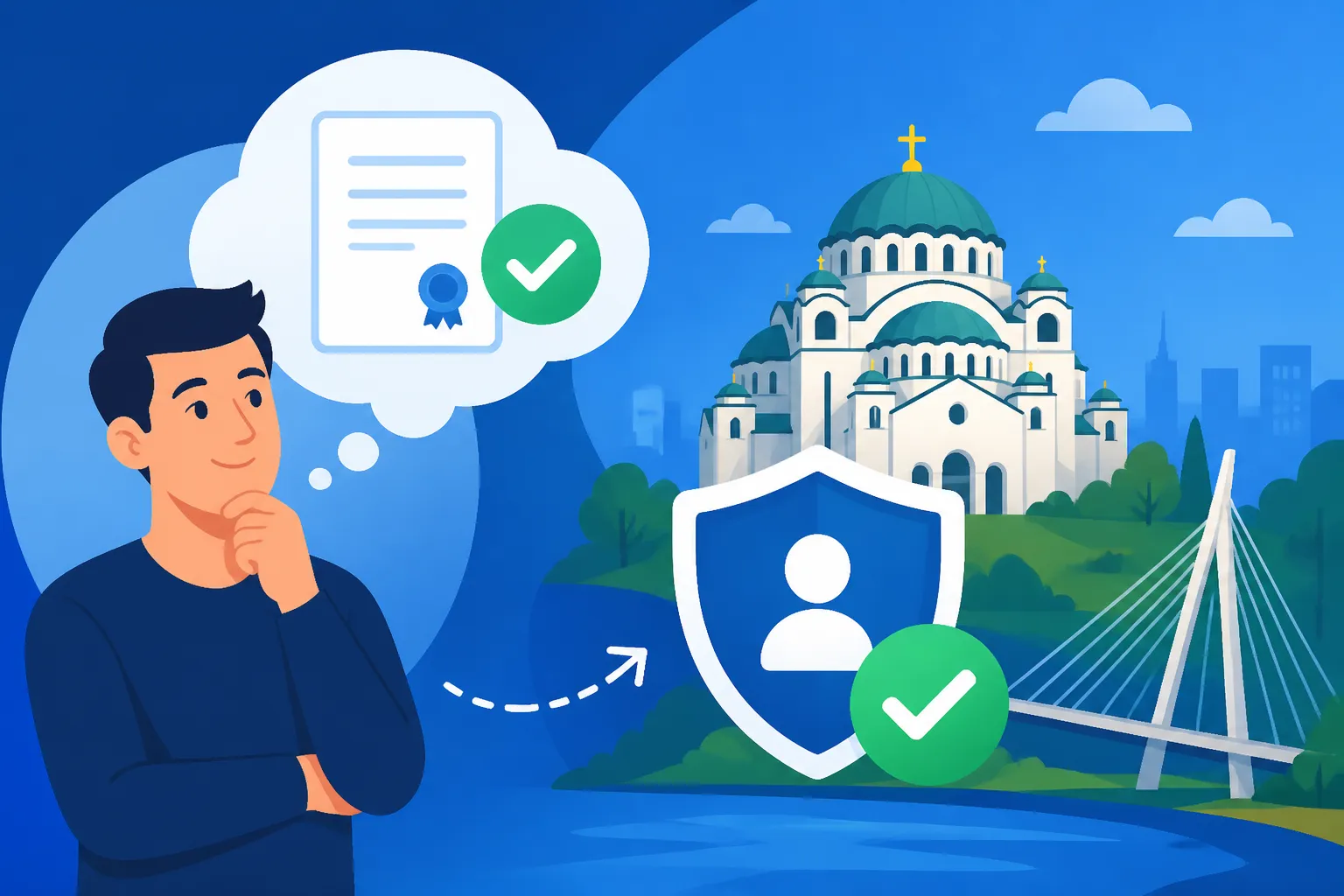
Let's cut to the chase: a Tax Residency Certificate from Serbia is an official document issued by the Poreska Uprava (Tax Administration) of Serbia. It formally confirms that you are considered a tax resident of the Republic of Serbia for a specific tax year, according to Serbian law. Think of it as your official ID card in the world of international taxation.
Now, why on earth would you need such a piece of paper? The primary reason, and arguably the most crucial one for many expats, boils down to avoiding double taxation. Many countries have what are called Double Taxation Agreements (DTAs) with Serbia. These agreements are designed to prevent you from paying income tax on the same earnings in two different countries. For instance, if you're earning money in Serbia but still have financial ties or income streams back in your home country, that country might still consider you a tax resident and try to tax your global income.
This is where the Serbian Tax Residency Certificate becomes your best friend. When you present this certificate to the tax authorities in your former country of residence, it serves as proof that you are indeed a tax resident of Serbia. This, in turn, allows you to invoke the provisions of the DTA between Serbia and your other country, ensuring that you only pay tax on your income once, in the country deemed your primary tax residence. It clarifies your position and prevents nasty surprises or overpayments. Without it, you might find yourself in a rather complicated and expensive situation, paying taxes twice on the same income – something no one wants! This is particularly vital for those with complex financial situations, for whom services like Taxes for Expats might be extremely beneficial in navigating the intricate details.
Who Is Considered a Tax Resident in Serbia?
Before you even think about applying for a Tax Residency Certificate, you need to understand if you actually qualify as a tax resident in Serbia. This isn't just a formality; it's a legal status with specific criteria. The Serbian tax law, like many others around the world, lays out clear guidelines for who is and isn't a tax resident. Misunderstanding these can lead to complications, so let's break it down. If you're looking for more comprehensive details on this, our guide on Tax Residency in Serbia: A Definitive Guide for Expats (2027) delves much deeper into the subject.
The 183-Day Rule: A Starting Point
The most straightforward and commonly applied rule for determining tax residency in Serbia is the "183-day rule." In essence, if you have spent 183 or more days within the territory of Serbia in any 12-month period that either begins or ends in the current tax year, you are generally considered a tax resident. This period doesn't have to be continuous; it's an aggregate count of days within that rolling 12-month window.
For example, if you arrived in Serbia in July 2023 and by June 2024 you had accumulated 183 days of physical presence, you would likely be considered a tax resident for the 2023 and 2024 tax years (or parts thereof). This is the easiest metric for the authorities to measure, often using entry and exit stamps in your passport or your residence permit dates.
However, the 183-day rule, while simple, isn't always the full picture. Sometimes, your circumstances are a bit more nuanced, and this is where the "centre of vital interests" comes into play.
Centre of Vital Interests: Beyond Mere Presence
Even if you haven't strictly met the 183-day physical presence rule, Serbia's tax authorities can still deem you a tax resident if they determine your "centre of vital interests" is in Serbia. This concept is far more subjective and can be a source of significant frustration for expats because it lacks a clear-cut numerical definition. It essentially asks: where do you truly live your life? Where are your strongest personal and economic ties?
Here's what the Poreska Uprava typically looks at when assessing your centre of vital interests:
- Personal Ties: Do you have family living with you in Serbia (spouse, children)? Are your social connections, friendships, and community involvement predominantly in Serbia? This can include club memberships, religious affiliations, or even where your children attend school.
- Economic Ties: This is a big one. Do you own property in Serbia? Do you have a permanent home available to you here? Is your primary source of income derived from Serbian employment or a Serbian business? Are your bank accounts primarily with Serbian banks? Do you have significant investments or assets here? For example, if you've opened a bank account in Serbia as a foreigner, that's a tangible tie.
- Habitual Abode: Where do you habitually return to? Even if you travel frequently, if your main home base, where you keep your personal belongings and spend your non-working hours, is in Serbia, that can be a strong indicator.
The tax authorities will weigh all these factors. It's not about ticking off one box; it's about the overall picture. For instance, you might have spent 170 days in Serbia but your spouse and children live here, you own an apartment, and your employment is with a Serbian company. In such a scenario, the Poreska Uprava would very likely consider your centre of vital interests to be in Serbia, thus making you a tax resident.
Understanding this distinction is crucial, as it will determine whether you are eligible to request the certificate in the first place. When in doubt, it's always wise to consult with a tax professional who specializes in Serbian and international tax law, as navigating these waters can be complex. You can also refer to our guide on Understanding the 183-Day Rule for Tax Residency in Serbia for more detailed clarification.
The Step-by-Step Process to Obtain Your Serbian Tax Residency Certificate
Alright, you've determined you're a tax resident in Serbia. Now comes the nitty-gritty: actually getting the certificate. While it might feel like a bureaucratic hurdle, once you know the steps and have your documents in order, it's quite manageable. Just remember to approach it with patience and a willingness to follow instructions to the letter, as is often the way with administrative processes here.
Step 1: Gather Your Essential Documents
Before you even step foot in the Poreska Uprava, you need to prepare a set of documents. Having everything ready will save you multiple trips and a lot of headaches.
Here’s a checklist of what you’ll likely need:
- Passport: Your valid passport with your personal details and entry/exit stamps.
- Serbian Residence Permit (Boravišna Dozvola): This is absolutely crucial as it proves your legal right to reside in Serbia for an extended period. Make sure it's current.
- Proof of Address in Serbia: A rental contract, property ownership document, or a utility bill (like an electricity bill from EPS or an internet bill) in your name. This demonstrates that you have a fixed abode here.
- Proof of Income/Employment in Serbia:
- If employed: Your employment contract with a Serbian company.
- If self-employed/entrepreneur: Your registration documents for your business (e.g., APR registration), proof of income (invoices, bank statements).
- If not working/retired: Proof of financial means (e.g., bank statements showing sufficient funds, pension statements).
- Evidence of Social and Health Contributions: If you are employed or self-employed, showing proof that you are contributing to the Serbian social and health insurance system strengthens your claim of economic ties. Our guide on Understanding Mandatory Health Insurance Contributions in Serbia might be helpful here.
- Completed Application Form (Zahtev): This is the official request for the certificate. The form is called "Zahtev za izdavanje uverenja o poreskom rezidentstvu Republike Srbije" (Request for Issuance of a Certificate of Tax Residency of the Republic of Serbia). You can usually find this form on the Poreska Uprava website or get a physical copy at their office. It’s important to fill it out accurately and completely.
- Administrative Fee (Taksa): There is an administrative fee associated with obtaining this certificate. The amount can change, so it's always best to check the current fee on the Poreska Uprava website or directly at their office. You’ll usually pay this at a post office (Pošta Srbije) or a bank using a pre-filled slip, and then bring the proof of payment (uplatnica) with you.
- Any additional documents requested by the foreign tax authority: Sometimes, the foreign country requesting the certificate might have specific requirements, like requesting proof for a particular tax year or specific type of income. Bring any such documentation.
Step 2: Fill Out the Application Form
The "Zahtev" form, though in Serbian, is fairly standard. You'll need to input your personal details (name, address, passport number, TIN/PIB), the period for which you require the certificate (e.g., for the calendar year 2023), and the purpose (e.g., for presentation to foreign tax authorities for DTA purposes). If you're not confident in your Serbian, bring a trusted Serbian-speaking friend or hire a translator to help you fill it out. Accuracy is key to avoid delays.
Step 3: Head to Your Local Poreska Uprava Office
You need to submit your application and supporting documents to the Poreska Uprava office responsible for your registered address in Serbia. This is important – you can’t just go to any branch; it must be the one covering your specific municipality. For example, if you live in Novi Beograd in Belgrade, you'd go to the Novi Beograd branch. If you’re unsure which office that is, you can check your registered address details.
When you go, ensure you have:
- All original documents from Step 1 (they may want to see them and will take copies).
- Copies of all documents (it's often better to bring these yourself rather than rely on them making copies for you).
- The completed "Zahtev" form.
- Proof of payment for the administrative fee.
Present all these to the relevant counter. Be prepared for a wait, especially during busy times. It's often best to go early in the morning.
Step 4: Follow Up and Collection
After submitting your application, you'll typically be given a receipt or a tracking number. The processing time can vary, but generally, you should expect to wait anywhere from a few days to a couple of weeks. If you haven't heard back within that time frame, don't hesitate to call the office or visit again to inquire about the status of your application. Sometimes a friendly reminder is all that's needed.
Once your certificate is ready, you'll be notified to pick it up. Again, remember to bring your ID when collecting it. It’s a moment of triumph when you finally hold that piece of paper in your hand!
Here's a quick summary table of the key steps:
| Step | Action | Required Documents/Items | Estimated Timeframe |
|---|---|---|---|
| 1. Document Gathering | Collect all necessary proofs of identity, residence, and financial ties. | Passport, Residence Permit, Proof of Address, Proof of Income/Employment, Social/Health Contribution Proof. | Varies (can be ongoing) |
| 2. Form Completion | Accurately fill out the official "Zahtev za izdavanje uverenja o poreskom rezidentstvu Republike Srbije". | Application Form (Zahtev). | 30-60 minutes |
| 3. Fee Payment | Pay the administrative fee at a post office or bank. | Proof of Payment (Uplatnica). | 15-30 minutes |
| 4. Submission | Visit your local Poreska Uprava office with all documents. | Originals & Copies of all documents, Completed Zahtev, Uplatnica. | 1-2 hours (including wait) |
| 5. Follow-Up & Collection | Await notification, track application, and collect the certificate. | Receipt/Tracking Number, Photo ID for collection. | Few days to 2 weeks |
For a more general understanding of dealing with the tax authorities, check out Filing Your Tax Return with the Poreska Uprava in Serbia: The Complete Walkthrough (2027).
Common Challenges and Tips for Expats Navigating Serbian Tax Bureaucracy
Let's be honest, dealing with any country's bureaucracy can be a challenge, and Serbia is no exception. While things have certainly improved over the years, there are still some quirks that can trip up even the most seasoned expat. Getting your Tax Residency Certificate might present a few hurdles, but with a bit of foresight and the right attitude, you can overcome them.
Language Barriers: The Silent Stumbling Block
The most immediate challenge for many will be the language. The Poreska Uprava staff primarily communicate in Serbian, and while some younger officials might speak English, you shouldn't count on it. The application form itself is entirely in Serbian. This can be incredibly frustrating when you're trying to understand specific requirements or explain a nuanced situation.
Tips for Language Barriers:
- Bring a Serbian Speaker: This is non-negotiable if you’re not fluent. A friend, a colleague, or even a professional translator can make a world of difference. They can help clarify questions, ensure you understand instructions, and fill out forms correctly.
- Use Translation Apps: For quick, on-the-spot understanding, Google Translate or similar apps can be useful for signs or simple questions, but they aren't a substitute for a human interpreter for complex discussions.
- Prepare in Advance: Write down your questions or explanations in English and have them translated into Serbian beforehand. This way, you can present a clear, pre-translated statement if needed.
Inconsistent Information: The Bureaucratic Enigma
It's not uncommon to receive slightly different information depending on who you speak to or which office you visit. One official might tell you one thing, and another something subtly different. This isn't unique to Serbia, but it can be particularly vexing when you’re trying to follow a precise process.
Tips for Inconsistent Information:
- Document Everything: Keep a record of who you spoke to, when, and what they advised. If possible, ask for written confirmation of any unusual advice.
- Get a Second Opinion: If something sounds off, try to confirm it with another official (if possible) or, better yet, a reliable local tax advisor or lawyer. This is where professional services, as mentioned before, can be invaluable.
- Refer to Official Sources: Always prioritize information directly from the Poreska Uprava’s official website or published regulations over anecdotal advice. However, be aware that even official websites can sometimes lack the precise, practical details you need.
The "Zahtev" Form and Supporting Documents: The Paper Chase
Ensuring your "Zahtev" form is filled out perfectly and that you have every single supporting document they could possibly ask for is crucial. Missing one tiny piece of paper or having an incorrectly completed form can send you back to square one, prolonging the process.
Tips for Documents:
- Over-Prepare: It's better to have too many documents than too few. Bring originals and copies of everything.
- Organize: Keep your documents neatly organized in a folder, perhaps with a checklist, so you can easily present them.
- Specifics Matter: Pay close attention to dates, names, and addresses on all documents. They must match perfectly. If you have different names on different documents (e.g., maiden vs. married name), bring additional proof of the name change.
- Consider Certified Translations: For documents not originally in Serbian (like foreign employment contracts or marriage certificates), you might be asked for a certified translation by a sworn court interpreter. It's often safer to get these done in advance.
Payment and Logistics: The Small Details That Can Derail You
Paying the administrative fee might seem simple, but ensuring you have the correct bank details on the payment slip (uplatnica) and making the payment at the right type of institution (post office or specific bank) can sometimes be a minor logistical hurdle. Also, remember you can't typically pay the fee directly at the Poreska Uprava counter.
Tips for Payment and Logistics:
- Get the Correct Uplatnica: Ask at the Poreska Uprava counter for the exact payment details and account number (broj računa) for the administrative fee for the Tax Residency Certificate, or look it up on their official website. They usually have pre-printed slips available.
- Use Local Payment Services: Services like Wise (formerly TransferWise) can be incredibly useful for managing funds internationally, but for this specific administrative fee, you'll almost certainly need to pay in Serbian Dinars (RSD) at a local post office or bank. Keep some cash handy for these smaller, specific payments.
- Expect Waiting Times: Government offices in Serbia, especially the Poreska Uprava, can have long queues. Plan your visit accordingly, ideally going in the early morning shortly after they open. Bring a book or something to keep you occupied.
Navigating Serbian bureaucracy requires a dose of patience and a willingness to adapt. By understanding these common challenges and arming yourself with these tips, you'll be much better equipped to successfully obtain your Serbian Tax Residency Certificate and keep your international tax affairs in order. Remember, many expats have successfully gone through this process, and so can you!
Disclaimer
Please note that the information provided in this guide is for general informational purposes only and does not constitute legal, tax, or professional advice. Tax laws and administrative procedures in Serbia can change, and individual circumstances vary significantly. While we strive to keep our content accurate and up-to-date, we recommend consulting with a qualified Serbian tax advisor or legal professional for advice tailored to your specific situation before making any decisions. We are not responsible for any actions taken based on the information presented herein.