What Is the Best Way to Send Money to Serbia?
Moving your hard-earned money from abroad to Serbia can feel like navigating a maze, especially when you're just getting settled in. You've got bills to pay, rent to cover, or maybe you're planning a big purchase, and the last thing you need is a hefty chunk of your funds disappearing into hidden fees or getting stuck in a slow, bureaucratic process. This guide is here to cut through the confusion and explain the best, most cost-effective, and hassle-free ways to send money to Serbia, helping you keep more of your money where it belongs – in your pocket.
Understanding Your Options: Banks vs. Dedicated Transfer Services
When it comes to getting your money to Serbia, you essentially have two main avenues: the traditional banking system or the newer, often more agile, online money transfer services. Both have their place, but for expats living here, one usually shines brighter than the other. It’s not just about speed or fees; it’s about understanding the quirks of the Serbian financial landscape and how each method interacts with it.
Traditional Bank Transfers
Ah, the good old bank transfer. It's the method many of us default to because it feels familiar and secure. You walk into your bank back home, fill out a form, and off your money goes, theoretically. For very large sums, sometimes people prefer this method purely out of a sense of established trust with their own bank, but this perception often comes with a hefty price tag and a lot of waiting around.
The reality of traditional international bank transfers, especially to Serbia, can be a stark contrast to what you might expect. First, there are the fees. Your sending bank will charge you a fee, usually a flat rate that might seem reasonable at first glance. But then, there are often intermediary bank fees – those mysterious charges that pop up as your money travels through the global financial network. These can be unpredictable and can take another chunk out of your transfer. Finally, the receiving bank in Serbia, particularly if it's not a direct partner of your sending bank, might also levy a fee. By the time the money lands, you might be surprised by how much less actually arrived. On top of this, banks notoriously offer less-than-favorable exchange rates. They add their own margin on top of the actual interbank rate, which is another hidden fee effectively eating into your transfer. This spread, though seemingly small per unit, can add up to a significant loss on larger transfers.
Then there's the speed, or lack thereof. While some transfers might go through in a few business days, it's not uncommon for them to take a week, or even longer, especially if there are weekends, public holidays, or unexpected delays in the SWIFT network. For an expat in Serbia, waiting around for money can be incredibly frustrating, particularly when rent or other urgent payments are due. Furthermore, dealing with Serbian banks can sometimes be a test of patience, often requiring šaltersko poslovanje—that's "counter service" where you physically go to a branch, wait in line, and deal with paperwork, even for receiving transfers. This is a far cry from the instant, digital transactions we might be used to in other countries. It’s crucial to understand these aspects if you're considering using your traditional bank.
Online Money Transfer Platforms
Now, let's talk about the game-changers: online money transfer platforms. These services have really disrupted the traditional banking model, offering a much more streamlined, transparent, and often cheaper way to send money across borders. For expats in Serbia, they are often the preferred choice, and for good reason. Services like Wise (formerly TransferWise) have revolutionized how we think about international transfers. They operate on a different principle, often using local bank accounts in various countries to facilitate transfers, meaning your money doesn't have to travel the full international SWIFT route. This approach drastically cuts down on fees and speeds up the process.
The primary advantages here are lower fees and significantly better exchange rates. These platforms typically use the mid-market rate – the true exchange rate you see on Google – or very close to it, adding only a small, transparent fee. This means more of your money actually gets converted at a fair rate and reaches your recipient. The difference, especially for regular or larger transfers, can be substantial compared to what traditional banks offer. Speed is another huge factor. Many transfers, particularly to major currencies, can arrive within minutes or a few hours. Even for Serbia, transfers often complete within 1-2 business days, which is a massive improvement over traditional banks. The entire process is usually handled through a user-friendly website or mobile app, allowing you to initiate and track transfers from anywhere, without needing to visit a physical branch.
Of course, no method is without its minor drawbacks. These platforms often have daily or per-transaction limits, which might be a consideration for exceptionally large transfers – though for most everyday needs, the limits are more than sufficient. You also need to be comfortable with digital platforms and setting up an account online, which typically involves identity verification. But for most expats, the convenience, cost savings, and transparency far outweigh these minimal considerations. When you're looking to send money into Serbia regularly or in significant amounts, these platforms are often a no-brainer. They really simplify the process of how to transfer money into and out of Serbia as an expat.
Navigating Exchange Rates and Fees: The Real Cost of Sending Money
One of the biggest lessons you learn as an expat dealing with international finances is that the advertised fee isn't always the only fee. The true cost of sending money is often hidden in plain sight, disguised within less-than-favorable exchange rates and sneaky intermediary charges. Understanding these mechanisms is crucial to ensure you're getting the most bang for your buck when sending funds to Serbia.
The Hidden Costs of Poor Exchange Rates
Let's talk about the exchange rate, because this is where many traditional banks quietly make a significant profit off your transfer. You see a rate advertised, say, on your bank's website, but it's rarely the "mid-market rate." The mid-market rate is the real rate at which banks and financial institutions exchange currencies with each other – essentially, the midpoint between the buy and sell rates. What your bank typically gives you is a rate that has a "spread" applied to it, meaning they've already taken their cut before your money is even converted.
Imagine you're sending €1,000 to Serbia. If the mid-market rate is 1 EUR = 117 RSD, but your bank offers you 1 EUR = 114 RSD, you're immediately losing 3 RSD for every Euro. On a €1,000 transfer, that's 3,000 RSD, which is roughly €25-€30, just on the exchange rate alone. This is money that never even enters the transfer calculation; it's simply absorbed by the bank. Over time, and with multiple transfers, these small differences add up to substantial amounts. This is precisely where online services like Wise shine; they are transparent about their exchange rates, often providing the mid-market rate or very close to it, with a clear, upfront fee. They make their money from this small, fixed fee, not by manipulating the exchange rate. Always, always compare the exchange rate, not just the transfer fee, when deciding how to send your money.
Understanding Transfer Fees
Beyond the exchange rate, there are the actual transfer fees. These can come in various forms and can also be a source of frustration and unexpected costs. When you initiate a bank transfer, particularly an international one using the SWIFT network, you'll almost certainly encounter a sending fee from your bank. This might be a flat fee, say €20 or €30, regardless of the amount you send. This seems straightforward enough.
However, the plot thickens with what are known as "correspondent bank fees" or "intermediary bank fees." As your money travels from your bank in, say, Germany, to a bank in Serbia, it often passes through several other banks along the way, especially if there isn't a direct banking relationship between the two countries. Each of these intermediary banks can (and often does) deduct its own small fee for processing the transaction. These fees are opaque, hard to predict, and you usually only find out about them when the final amount arrives short in the recipient's account. This can be infuriating, as you budgeted for a certain amount to arrive, only to find a smaller sum. Finally, the receiving Serbian bank might also charge a fee for incoming international transfers, further eroding your funds. These layered fees can make a seemingly inexpensive bank transfer end up being quite costly.
Online transfer services, on the other hand, usually employ a different model. They charge a single, transparent fee that is clearly stated upfront before you confirm the transfer. This fee might be a fixed amount for smaller transfers or a small percentage for larger ones, but it’s always visible. This transparency is a massive relief for expats who need to budget accurately and avoid nasty surprises. You know exactly how much you're sending, how much the fee is, what exchange rate you're getting, and precisely how much will arrive in RSD in your Serbian bank account. This kind of clarity is invaluable when managing your finances from afar.
Step-by-Step Guide to Sending Money to Serbia
Alright, now that we've dug into the 'whys,' let's get into the 'hows.' Regardless of which method you choose, there are specific steps and details you’ll need to navigate. Knowing these in advance can save you a lot of headaches, missed payments, and frantic phone calls.
From Your Home Country Bank to a Serbian Bank Account
If you opt for a traditional bank transfer, you'll need to gather some specific information before you can even think about pushing that "send" button. This information is universal for international transfers, but it's particularly important to get it right when sending to Serbia, where even a tiny error can cause significant delays or even send your money to the wrong place.
First, you'll need the full name and address of the recipient as it appears on their Serbian bank account. Then, you'll need their International Bank Account Number (IBAN). This is a longer string of alphanumeric characters than a typical account number and uniquely identifies the recipient's account. Crucially, you'll also need the SWIFT/BIC (Society for Worldwide Interbank Financial Telecommunication / Bank Identifier Code) for the recipient's bank in Serbia. This code identifies the specific bank and branch. For example, if your friend banks with Raiffeisen Bank in Belgrade, you’ll need their specific SWIFT code. Make sure to double-check these details with the recipient, perhaps by asking them to send you a screenshot of their bank details or a recent statement. Once you have all this, you'll typically log into your online banking or visit your branch. You'll specify the amount, the currency you're sending, and the currency you want it to be received in (RSD for Serbia). You’ll then input all the recipient's details. Be prepared for a few security checks from your bank. Once confirmed, you might get an estimated arrival date, but as we discussed, these can sometimes be optimistic. Transfers initiated this way will likely be subject to the higher fees and less favourable exchange rates mentioned earlier, and could take several business days to clear.
Using an Online Money Transfer Service
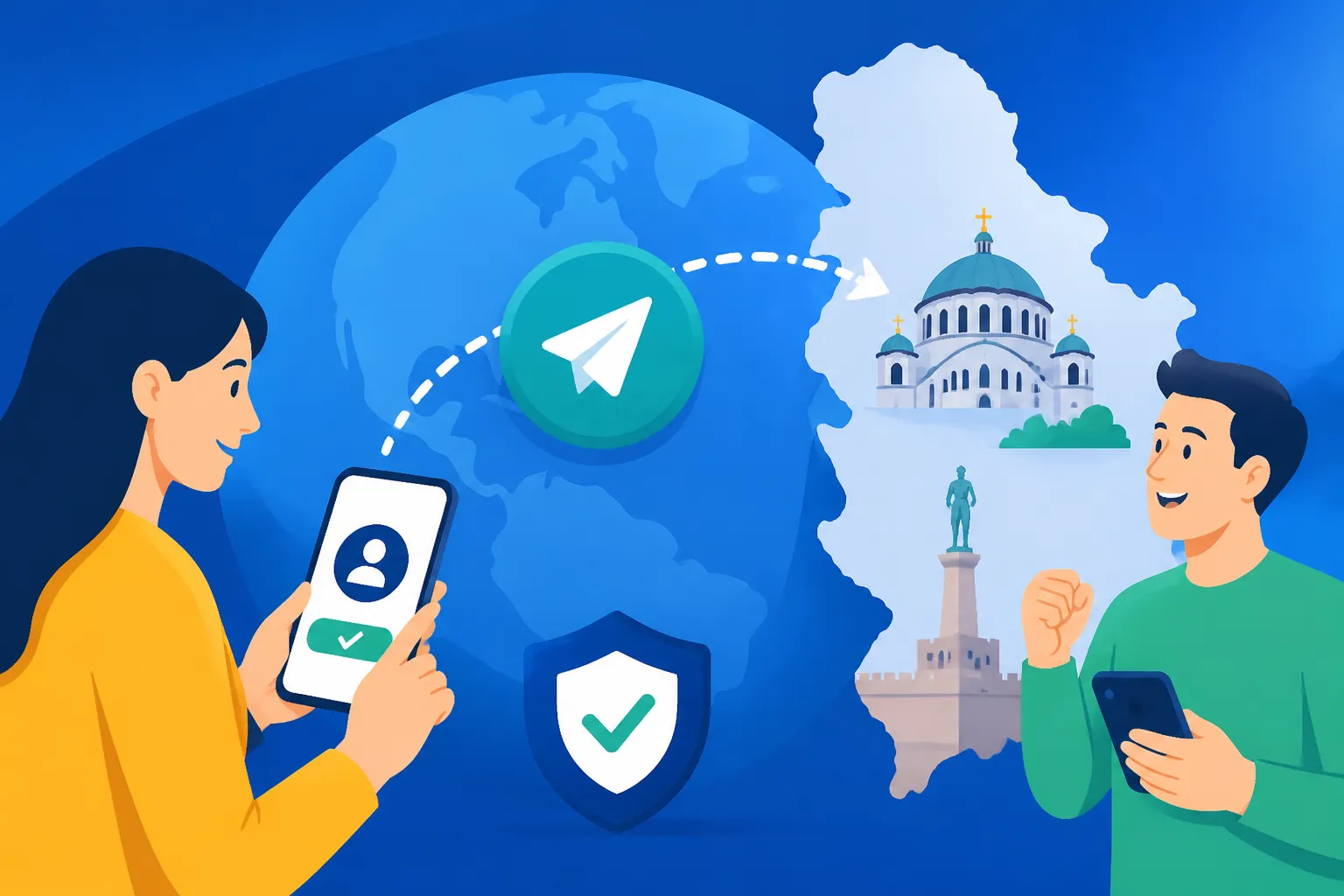
This is generally the more straightforward and expat-friendly option. Services like Wise have made the process incredibly intuitive, designed for people who need to move money regularly without the fuss. The first step is to create an account on their platform. This typically involves providing your personal details and undergoing an identity verification process, which usually requires uploading a photo ID and sometimes proof of address. This is standard procedure for financial institutions and ensures compliance with anti-money laundering regulations. Once your account is verified, you're ready to make a transfer.
You'll then specify the amount you want to send and the destination currency (RSD). The platform will immediately show you the exact exchange rate, the transparent fee, and the precise amount of Serbian Dinars that will arrive in the recipient's account. This clarity is a breath of fresh air. Next, you’ll enter the recipient’s details: their full name, address, IBAN, and the name of their Serbian bank. Just like with traditional banks, accuracy here is key. Finally, you’ll need to fund your transfer. Most services offer multiple ways to do this, including direct debit from your bank account, a debit card payment, or a bank transfer from your existing account to their local account. Debit card payments are often the fastest, sometimes incurring a slightly higher fee. Once funded, the transfer is initiated, and you'll receive updates on its progress. Many transfers to Serbia through platforms like Wise can arrive within hours or a day or two, making them a much more reliable option for urgent needs. Setting up how to set up online banking with a Serbian bank can also make the receiving end smoother.
Receiving Money in Serbia
On the Serbian side, receiving money, especially larger sums, isn't always as simple as it arriving in your account. Expats often forget that Serbian banks have strict regulations regarding the source of funds, particularly for incoming international transfers. For smaller, regular transfers, you might not notice anything, but for larger amounts – say, for buying property or a car, or even a substantial salary transfer – your bank might call you.
They'll likely ask for documentation proving the source of the funds. This isn't them being nosy for the sake of it; it's a legal requirement to combat money laundering and ensure financial transparency. Be prepared to provide bank statements from your sending account, a salary slip, a contract of sale, or any other document that clearly explains where the money came from. If you're using a specific type of income for your residence permit, for example, proving the legitimacy of these funds is even more critical. Make sure you keep clear records, especially if you're dealing with issues like How to File Your Annual Tax Return in Serbia or understanding income tax and the flat 10% rate in Serbia. Having a local Serbian bank account, which is relatively straightforward for foreigners to open, is essential. When you're ready to open one, guides like The Expat Guide to Opening a Bank Account in Serbia and Can Foreigners Open a Bank Account at a Serbian Bank? can be incredibly helpful. You'll likely open an account in RSD, but some banks offer foreign currency accounts too. Understanding the Dinar (RSD) and foreign currency accounts in Serbia will help you decide what's best for your needs.
Special Considerations for Expats in Serbia
Living as an expat in Serbia means dealing with unique financial situations. From large transfers for property to understanding local tax obligations, there are nuances to sending money here that go beyond just the rates and fees. Being prepared for these specifics can save you considerable stress and potential issues down the line.
Large Transfers and Tax Implications
If you're planning to send a significant sum of money to Serbia, perhaps for an investment, a property purchase, or moving your life savings, you need to be aware of the potential tax implications and reporting requirements. Serbia's Tax Administration (Poreska Uprava) takes a keen interest in large incoming funds, not necessarily to tax them immediately, but to understand their origin. This is part of a broader effort to prevent illicit financial activities.
While Serbia has a flat 10% personal income tax, simply receiving a large sum from abroad isn't automatically taxed as income. However, you will likely be asked by your Serbian bank, and potentially by the tax authorities, to provide documentation proving the source of these funds. This could be a sale of property in your home country, an inheritance, a loan agreement, or evidence of significant savings. It's crucial to have these documents ready and, if necessary, translated by a sworn court translator into Serbian. For complex financial situations or very large transfers, it might be wise to consult with a local tax advisor or specialists like Taxes for Expats. They can provide guidance on specific declaration requirements and help you ensure you're compliant with Serbian tax law. This also ties into understanding your tax residency rules and the 183-day test in Serbia. Having your tax ID (PIB) as a foreigner in Serbia is a foundational step for all financial interactions.
Setting Up Local Banking for Easier Transfers
One of the best pieces of advice for any expat in Serbia is to establish a robust local banking setup as soon as possible. While you might initially rely on international transfers directly to a recipient's account, having your own Serbian bank account simplifies receiving funds immensely and also makes it easier to manage daily expenses. Most Serbian banks are accustomed to dealing with foreign residents, and opening an account is a relatively straightforward process once you have your residence permit (boravak).
When considering which bank to choose, look for one that offers good online banking services and perhaps a foreign currency account alongside your main Dinar (RSD) account. This can be particularly useful if you receive payments in Euros or USD and want to hold them before converting to RSD. Banks like Raiffeisen Bank, UniCredit Bank, and OTP Bank are popular choices among expats, often providing English-speaking staff and decent digital platforms. You can find more detailed guidance on how to choose the best bank for expats in Serbia. Once your account is set up, you can easily receive funds from international transfer services directly into your own account, giving you full control over when and how you convert currencies and use your money.
Speed and Urgency
Sometimes, life happens, and you need money now. Perhaps an unexpected medical expense, a sudden travel plan, or an administrative fee that needs immediate payment. In these urgent situations, the speed of your money transfer method becomes paramount. While traditional bank transfers can take several days, this isn't always an option when time is of the essence.
This is where the agility of online money transfer services truly shines. As mentioned earlier, many transfers can be completed within minutes or a few hours, especially if you fund the transfer with a debit card. Imagine a scenario: your car breaks down in Belgrade, and you need to pay for repairs quickly, but your local funds are low. Initiating a quick transfer from your foreign bank account via a service like Wise can mean the difference between getting back on the road tomorrow or waiting several agonizing days. Always consider the potential for unforeseen circumstances when deciding on your primary method for sending money. For regular, ongoing transfers, convenience and cost are key, but for emergencies, speed often trumps all. It's also worth researching how to get a same-day sick note in Serbia or what to do in a medical emergency in Belgrade, as quick access to funds can sometimes be critical.
Here's a quick comparison of the main methods:
| Feature | Traditional Bank Transfer (SWIFT) | Online Money Transfer Service (e.g., Wise) |
|---|---|---|
| Exchange Rate | Marked up from mid-market rate (less favorable) | Close to mid-market rate (more favorable) |
| Transfer Fees | Sender fee + potential intermediary bank fees + recipient fees (opaque) | Single, transparent fee (fixed or small percentage) |
| Speed | 2-7 business days (can be longer) | Minutes to 2 business days (often much faster) |
| Transparency | Low (hidden fees, unclear final amount) | High (all costs and final amount shown upfront) |
| Ease of Use | Can involve branch visits, complex forms, specific codes | User-friendly app/website, digital setup, minimal paperwork |
| Best For | Very large, non-urgent transfers where familiarity is key | Regular transfers, urgent needs, smaller to medium sums, cost-efficiency |
| Customer Support | Your bank's standard support | Online chat, email, sometimes phone (often multilingual) |
| Required Info | Recipient Name, Address, IBAN, SWIFT/BIC | Recipient Name, Address, IBAN, Bank Name |
When you're trying to figure out what is the best multi-currency account in Serbia or which options best suit your financial needs, weighing these factors carefully will certainly help.
In conclusion, while traditional bank transfers offer a sense of familiarity, for most expats sending money to Serbia, online money transfer platforms like Wise offer a superior combination of lower costs, better exchange rates, transparency, and speed. They are built for the digital age and designed to make cross-border money movement as smooth as possible, allowing you to focus on enjoying your life in Serbia rather than worrying about your finances.
Disclaimer
The information provided in this guide is for general informational purposes only and does not constitute financial, legal, or tax advice. While we strive to keep the information up-to-date and accurate, regulations and financial practices in Serbia can change. It is always recommended to consult with a qualified financial advisor, tax professional, or legal expert for advice tailored to your specific situation, and to confirm the most current requirements with official Serbian institutions or your chosen financial service provider.