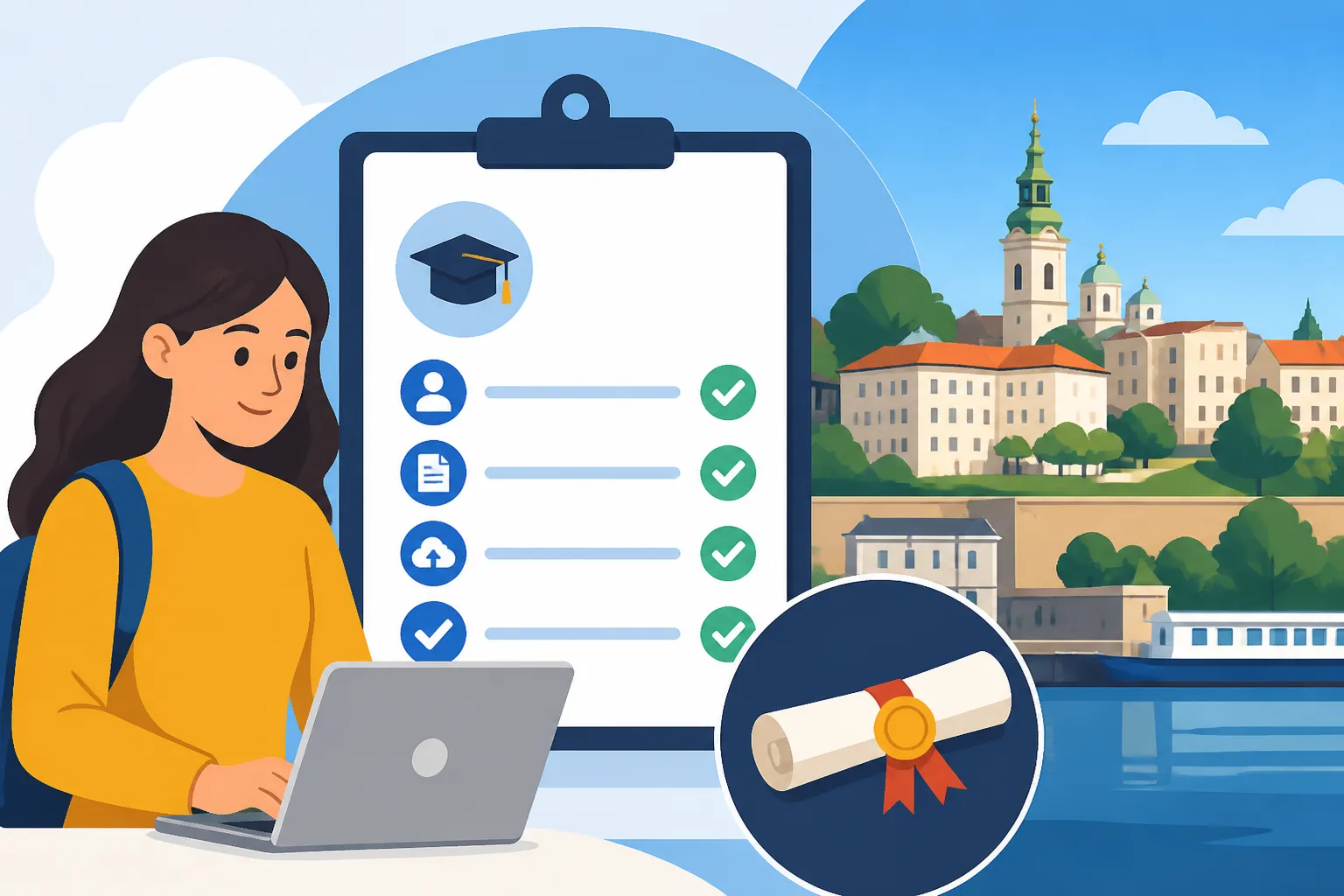
How Do I Apply for a Diploma Course in Serbia?
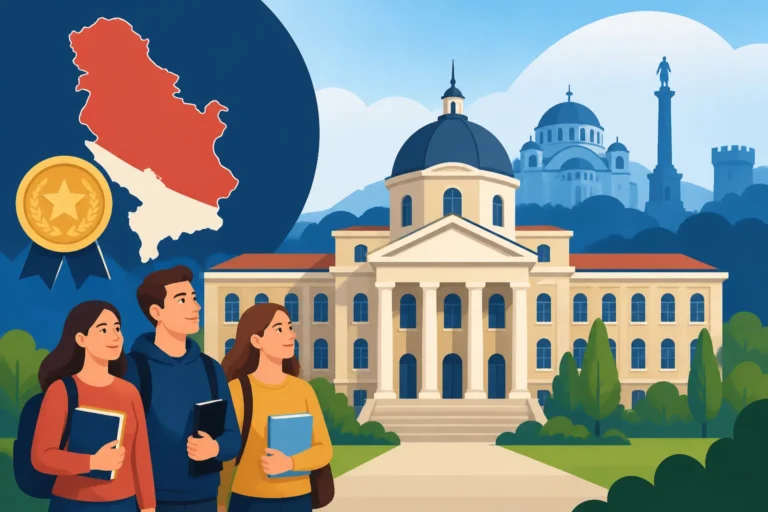
So, you're thinking about furthering your education in Serbia, specifically eyeing a "diploma course," and you're probably wondering where to even begin. Trust me, navigating the Serbian education system as an expat can feel like a labyrinth, with unique terminology and administrative hurdles that can leave you scratching your head. This guide is here to untangle that process, offering you a realistic, step-by-step roadmap to applying for diploma-level programs in Serbia, from understanding what these courses actually entail to securing your student residence permit.
Unpacking "Diploma Courses" in Serbia: What Are We Talking About?
When you talk about a "diploma course" in many Western countries, it often conjures up images of vocational training, shorter programs, or perhaps post-secondary qualifications that aren't a full Bachelor's degree. In Serbia, the term can be a bit more fluid, but generally, what foreigners might refer to as a "diploma course" largely falls into two main categories: higher vocational schools and specialized professional programs, often offered by universities. It's important to get this distinction clear from the outset, so you know exactly what kind of institution you're targeting and what kind of qualification you'll ultimately receive.
Understanding Higher Vocational Schools (Visoke Strukovne Škole)
These institutions are perhaps the closest equivalent to what many expats think of as a "diploma course." In Serbian, they are officially called Visoke Strukovne Škole (Higher Vocational Schools) or sometimes Visoke Škole Strukovnih Studija (Higher Schools of Vocational Studies). Their primary goal is to provide practical, applied knowledge and skills directly relevant to a specific profession. They are less theoretical than traditional university degrees and are designed to prepare students for immediate entry into the workforce.
Programs at these schools typically last for three years, leading to a "Higher Vocational Diploma" or "Bachelor of Applied Studies" (strukovni inženjer, strukovni ekonomista, etc.). Fields like IT, graphic design, tourism, hospitality, business administration, and various engineering specializations are very popular here. For example, institutions like the ICT College of Vocational Studies in Belgrade (Visoka škola elektrotehnike i računarstva strukovnih studija) offer excellent programs in areas like Internet technologies, software engineering, and multimedia. The education focuses heavily on hands-on experience, projects, and often includes mandatory internships, making graduates highly employable. This path is often chosen by those who want to gain specific, marketable skills without committing to a full four-year academic university program. The teaching style is generally more direct and less abstract, which can be a relief for some students who prefer a practical learning environment.
Specialized Professional Programs and University Certifications
Beyond the dedicated vocational schools, some universities in Serbia also offer shorter, specialized professional programs or certification courses. These are often post-baccalaureate or advanced programs designed to either upgrade existing skills, provide a new specialization, or serve as a bridge to further studies. They might not always lead to a traditional "diploma" in the same sense as a Visoka škola, but they do result in a certificate or professional qualification that is recognized within their specific industry.
For instance, faculties at the University of Belgrade or the University of Novi Sad might offer one-year or two-year specialist programs (specijalističke strukovne studije) in fields like project management, specific IT niches, or advanced language training. These are typically aimed at individuals who already hold a Bachelor's degree and wish to deepen their expertise in a very specific area. While less common for entry-level "diploma" seekers, it's worth exploring university faculty websites if you're looking for highly niche training. These programs usually demand a higher level of previous academic achievement and can be quite intensive. The benefit here is the association with a respected university name, which can carry weight in certain professional circles. These certifications can be a fantastic way to quickly pivot into a new career path or enhance your existing professional portfolio.
Your Step-by-Step Guide to Applying for Diploma Programs as a Foreigner
Alright, so you’ve got a better handle on what kind of diploma course you're aiming for. Now comes the nitty-gritty: the application process itself. This stage is where many expats hit their first real administrative wall in Serbia. It’s not necessarily difficult, but it requires meticulous attention to detail, a healthy dose of patience, and a willingness to navigate bureaucracy that might operate at a different pace than you’re used to back home.
Gathering Your Essential Documents and Handling Translations
This is arguably the most critical, and often most frustrating, part of the entire application process. Serbian institutions are sticklers for official documentation, and everything needs to be in pristine order. You'll need an array of documents, and most importantly, any foreign-issued document will require official translation and often an apostille.
Here’s a general checklist of what you'll typically need:
- Passport: A valid passport with sufficient validity (usually at least six months beyond your intended stay).
- Previous Educational Diplomas/Certificates: Your high school diploma, any previous vocational training certificates, or university degrees.
- Academic Transcripts: Detailed records of your grades and courses from all previous educational institutions.
- Birth Certificate: Yes, even this seemingly basic document needs to be official and correctly prepared.
- Proof of Financial Means: Documents showing you have sufficient funds to cover your tuition and living expenses during your studies. This could be bank statements, a scholarship letter, or a notarized statement of support from a sponsor.
- Health Insurance: Proof of international health insurance that covers your stay in Serbia. Remember, while Serbia has an affordable public healthcare system, you'll need this sorted for your residence permit. You can learn more in The Complete Guide to Healthcare in Serbia for Expats (2027).
- Letter of Intent/Motivation Letter: Explaining why you want to study that particular program in Serbia.
- Application Form: Duly filled out for the specific institution.
Now, about the translations and apostilles: every single official document not originally in Serbian must be translated into Serbian by a certified court interpreter in Serbia. You cannot just use any translator from your home country. This is a common pitfall. Once translated, many documents also need an apostille stamp from your home country, which certifies the authenticity of the document for international use. This is especially true for educational certificates and birth certificates. The nostrifikacija (recognition) process for your foreign diploma, which we'll discuss shortly, also requires these precise translations and apostilles. Start this process early, as it can take time and involves multiple administrative steps. I know it's a pain, but cutting corners here will only lead to delays and headaches further down the line.
Navigating Admissions, Entrance Exams, and Interviews
Once your documents are in order, you can move on to the actual application. Most vocational schools and university programs will have specific application periods, often in May-July for the academic year starting in October. It's crucial to check the exact dates on the institution's official website.
- Application Submission: This can often be done online, but some institutions may require an in-person submission of your physical documents. Always double-check. Pay any application fees promptly.
- Entrance Exams: Many diploma-level programs, especially in competitive fields like IT or design, require entrance exams. These could test your general knowledge, specific subject aptitude (e.g., mathematics for engineering programs), or even artistic abilities for design courses. For programs taught in Serbian, you might also have a Serbian language proficiency test. Even for English-taught programs, some basic Serbian might be expected or tested, as it shows your commitment to living and studying in the country. Don't underestimate these exams; adequate preparation is key.
- Interviews: Some programs, particularly those with a strong practical component or limited spaces, might include an interview stage. This is your chance to demonstrate your motivation, passion for the field, and why you believe you're a good fit for their program and for studying in Serbia. Be prepared to discuss your academic background, career aspirations, and any relevant experience.
After all this, you'll (hopefully!) receive an admission letter. This letter is absolutely vital, not just for your peace of mind, but for the next big hurdle: your student residence permit.
Securing Your Student Residence Permit: The Crucial Next Step
Getting accepted into a program is fantastic, but it's only half the battle. As a non-EU/EEA citizen, you'll need to secure a temporary residence permit in Serbia based on your studies. This is a separate, but directly linked, administrative process with the Ministry of Interior (MUP). Many expats find this part quite daunting, as it involves a new set of documents, forms, and navigating another layer of bureaucracy.
Your admission letter from the Serbian educational institution is the cornerstone of your student residence permit application. You'll generally apply for a Type D (long-stay) visa from your home country if required, or directly for temporary residence if you're from a visa-exempt country and apply within Serbia (typically within 90 days of entry).
Key documents for the residence permit include:
- Valid Passport: Original and photocopies.
- Admission Letter: Original from your educational institution.
- Proof of Financial Means: As mentioned earlier, proving you can support yourself.
- Proof of Accommodation: A signed rental agreement (ugovor o zakupu) or a statement from your host in Serbia, officially notarized.
- Health Insurance Policy: Valid for the duration of your intended stay.
- White Card (Beli Karton): Your address registration, which you should obtain from the local police station or through your landlord within 24 hours of arrival. You can learn more about this in How to Register Your Address (Prijava) with the Police in Serbia.
- Application Form: For temporary residence.
- Paid Administrative Fees: There are various fees associated with the application.
The MUP process can take several weeks, sometimes even months, so apply as early as possible. Remember, you cannot legally study or work on just a tourist visa. Your student residence permit is what grants you the right to be in Serbia for the purpose of education. For a deep dive into this, check out our guide on How to Apply for a Student Residence Permit in Serbia. The process requires patience, multiple visits to different offices, and sometimes a lot of waiting. It’s part of the expat experience here, I promise.
Important Considerations Before Diving Into Your Serbian Diploma Journey
Before you even start gathering documents, there are a few foundational elements you really need to consider. These aren't just logistical hurdles; they're factors that will deeply impact your experience and success while studying for your diploma in Serbia.
Language: Serbian Proficiency and English Options
This is a big one. While Serbia is increasingly offering programs in English, particularly at the Master's and PhD levels, many of the Visoke Strukovne Škole and even some specialized university programs at the diploma level are primarily taught in Serbian. If you're aiming for a Serbian-taught program, you absolutely need to have a good grasp of the Serbian language, or at least be committed to learning it rapidly. Some institutions might offer preparatory Serbian language courses, but relying solely on those might put you at a disadvantage.
Even if your program is in English, learning some basic Serbian will dramatically improve your day-to-day life, your ability to integrate, and your overall experience. Serbs appreciate the effort, and it opens up so many doors. Navigating markets, public transport, or even just socialising becomes infinitely easier. I highly recommend starting with a language learning platform like iTalki before you arrive, or finding local tutors once you're here. There are also excellent language schools in Belgrade and Novi Sad that cater to foreigners. Don't underestimate the power of language in making a new place feel like home. Many students find that mastering key phrases helps them in the long run.
The Financial Landscape: Tuition, Living Costs, and Hidden Fees
Let's talk money, because while Serbia is generally more affordable than many Western European countries, it's not "free." You need a clear understanding of the financial commitments involved.
- Tuition Fees: These vary significantly between institutions and programs. Public Visoke Strukovne Škole generally have lower tuition fees than private ones. University specialist programs can also have varying costs. For international students, fees typically range from €1,000 to €3,000 per academic year, though some specialized programs, especially in IT or medical fields, might be higher. Always check the exact fee structure on the institution's website.
- Living Costs: Beyond tuition, you need to budget for rent, food, transport, utilities, and personal expenses. Belgrade, being the capital, is generally the most expensive city, followed by Novi Sad. However, compared to Western European capitals, it's still very manageable. A rough estimate for a student living modestly might be €500-€800 per month, excluding tuition, depending on your lifestyle and accommodation choice. Rent will be your biggest outgoing. For a detailed breakdown of expenses, check out The Complete Guide to Cost of Living in Serbia for Expats (2026).
- Hidden Fees: Don't forget about administrative fees for applications, exams, residence permits, and document legalisation (translations, apostilles). These can add up. Factor in the cost of health insurance, which is mandatory for your residence permit. Also, think about initial setup costs when you arrive, like buying essentials for your apartment. When considering your overall financial plan, especially if you foresee working in Serbia after your studies, it's wise to understand the tax implications. Resources like Taxes for Expats can be helpful even at this early stage for long-term planning.
| Expense Category | Estimated Monthly Cost (EUR) | Notes |
|---|---|---|
| Tuition (Average) | €100 – €250 | Varies greatly by institution/program; calculated as annual fee / 12 months |
| Rent (Single Room/Shared) | €200 – €400 | For a single room in a shared apartment or a small studio outside city center (Belgrade/Novi Sad) |
| Utilities | €50 – €100 | Electricity, water, heating, internet, phone (can be higher in winter) |
| Food & Groceries | €150 – €250 | Cooking at home, occasional eating out |
| Public Transport | €10 – €20 | Monthly student pass for city transport (e.g., BusPlus in Belgrade) |
| Books & Supplies | €20 – €50 | Program-specific, can vary each semester |
| Personal Expenses | €50 – €100 | Leisure, entertainment, occasional shopping |
| Total Estimated (excluding tuition) | €480 – €920 | This is a modest estimate; lifestyle choices will significantly impact this. |
Recognising Your Prior Education (Nostrifikacija)
This is another bureaucratic hurdle that can trip up even the most prepared expat. Before you can officially enrol in a Serbian educational institution, your previous foreign educational qualifications (e.g., high school diploma, Bachelor's degree) must be recognized by the Serbian authorities. This process is called nostrifikacija or ekvivalencija.
For diploma-level courses, typically your high school diploma will need to be recognized. If you're applying for a specialist program that requires a Bachelor's, then your Bachelor's degree will need to go through this process. This can be handled by the ENIC/NARIC Centre within the Serbian Ministry of Education, Science and Technological Development, or directly by the university/institution if it has delegated authority. The process involves submitting authenticated and translated copies of your diplomas and transcripts. It can take anywhere from a few weeks to several months, so again, start this well in advance of your application deadlines. Without recognized prior education, your application cannot proceed. It's a non-negotiable step. For a complete guide on this complex process, make sure to read How to Get Your Foreign Qualification Recognised in Serbia.
Beyond the Classroom: Making the Most of Student Life in Serbia
Studying for a diploma in Serbia isn't just about what happens in the lecture hall; it's about the entire experience of living in a vibrant, welcoming, and culturally rich country. As an expat, immersing yourself in student life and the broader Serbian culture will make your journey truly unforgettable.
Accommodation: Finding Your Home Away From Home
Finding suitable accommodation is often one of the first practical challenges for new students. While Serbian universities do have student dormitories (studentski dom), these are primarily allocated to Serbian citizens, and availability for international students can be extremely limited. Don't rely on getting a dorm room.
Your most likely option will be to rent a private apartment. Belgrade, Novi Sad, and Niš, where most educational institutions are located, have a robust rental market. You can look for a room in a shared apartment to save costs and meet new people, or opt for a small studio apartment if your budget allows. Many students use local real estate agencies or online portals like "Halo Oglasi" or Facebook groups specifically for rentals in student areas. Popular student neighbourhoods in Belgrade include Vračar, Stari Grad (though pricey), Palilula, and parts of Novi Beograd. Aim to secure accommodation before you arrive or plan for a short-term stay (like an Airbnb) while you search in person. Be prepared to pay a deposit, usually one or two months' rent, along with your first month's rent upfront. For a full breakdown, check out The Complete Guide to Renting an Apartment in Serbia.
Working While Studying: The Realities for International Students
Many international students need or want to work to support themselves or gain experience. The good news is that with a valid student residence permit, international students are generally permitted to work in Serbia. However, there are limitations. The Serbian Labour Law allows students to work part-time, typically up to 20 hours per week, during the academic year, and often full-time during official breaks.
The type of work available often leans towards roles in hospitality, retail, or if you have specific skills, part-time positions in IT or language teaching. Finding employment can be challenging without Serbian language proficiency, especially in customer-facing roles. Networking, using online job boards, and checking with your institution's career services (if they have one) are good starting points. Remember, your primary purpose in Serbia on a student visa is to study, so ensure your work commitments don't jeopardise your academic performance. Understanding your entitlements and the legal framework is essential. Our article Can International Students Work Part-Time in Serbia? delves deeper into this topic, providing clarity on regulations and practical advice for finding student jobs. Balancing your studies with work requires good time management and a realistic assessment of your capabilities.
Disclaimer
The information provided in this guide is intended for general informational purposes only and does not constitute legal, financial, or immigration advice. While we strive to keep the information accurate and up-to-date, laws, regulations, and procedures in Serbia can change frequently. Always consult with official Serbian government sources, legal professionals, or educational institutions for the most current and specific advice pertaining to your individual circumstances. Reliance on any information in this guide is solely at your own risk.