How Long Can I Stay in Serbia Without a Visa?
One of the most common anxieties for anyone considering a move to Serbia, or even just a longer visit, revolves around the seemingly simple question: "How long can I actually stay here without getting into trouble?" Many foreigners arrive with assumptions based on Schengen Area rules, only to find Serbia has its own distinct set of regulations, and misinterpreting them can lead to stressful encounters with immigration, fines, or even entry bans. This guide will meticulously unravel the complexities of Serbia’s visa-free stay limits, arming you with the knowledge to plan your visit or relocation smoothly and legally.
Understanding Serbia's Visa-Free Entry Rules
Navigating the entry requirements for Serbia can feel a bit like decoding a secret message, especially since the rules aren't always universally applied. Serbia has a mix of bilateral agreements and a general policy that dictates how long citizens from different countries can stay without needing a formal visa. It's crucial to understand that Serbia is not part of the European Union or the Schengen Area, meaning its visa rules operate independently. Therefore, the "90 days in 180 days" rule that many are familiar with from Schengen doesn't automatically apply here in the same way for every nationality, though it's a good general benchmark for many.
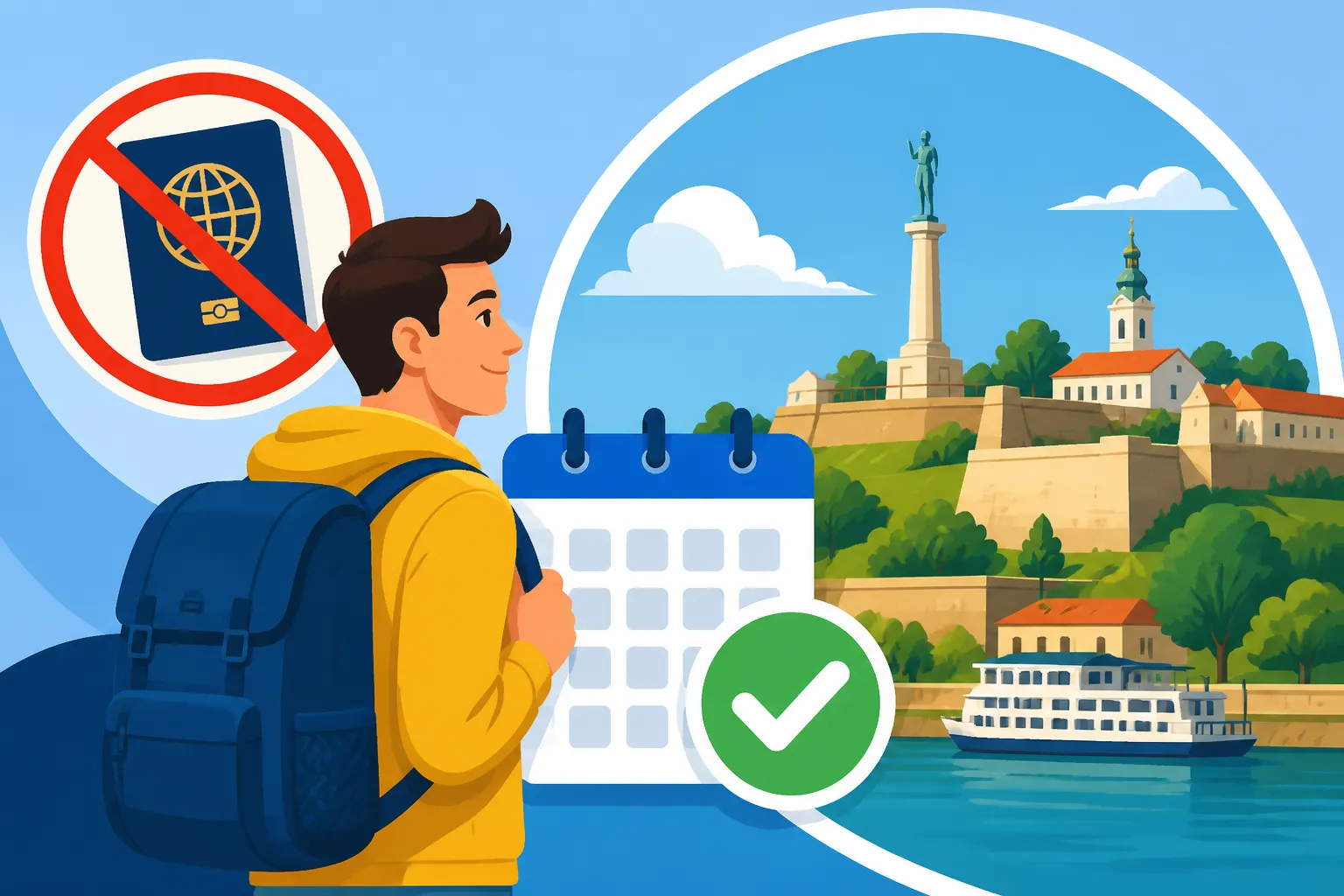
For a significant number of countries, including those from the EU, UK, USA, Canada, Australia, and many others, a visa is not required for stays up to 90 days. This allows for tourism, short business trips, or initial exploration of the country. However, it's paramount to stress that "90 days" isn't a free pass for everyone, nor is it always a straightforward calculation. Some countries might have shorter visa-free periods, like 30 days, while others might have special arrangements allowing for slightly longer stays or easier extensions. For example, some neighbouring countries or those with specific bilateral agreements might have different stipulations. It’s always your responsibility to verify the exact rules for your specific nationality before you even book your flight. The official website of the Ministry of Foreign Affairs of Serbia is your best friend here, as it provides the most up-to-date and accurate information. Don't rely solely on what a friend told you or a forum post from five years ago; things change.
The purpose of your visit also plays a role. Visa-free entry is generally for tourism, visiting friends/family, or non-remunerated business activities. If your intention is to work, study, or reside in Serbia for an extended period, even if your nationality enjoys visa-free entry, you will eventually need to apply for a temporary residence permit (called privremeni boravak). The visa-free period serves as a buffer, allowing you to enter and then initiate your residence application from within the country, which is a massive relief compared to needing to apply from your home country. This flexibility is one of the reasons many expats find Serbia appealing, but it still requires careful planning and adherence to deadlines to avoid falling foul of immigration laws. For a broader overview, take a look at our article, "The Complete Guide to Serbia Visas and Immigration for Expats (2027)".
The "90 Days in 180 Days" Rule Explained for Serbia
Alright, let's get into the nitty-gritty of this "90 days in 180 days" rule, which, while common, is frequently misunderstood. For most nationalities that don't require a visa to enter Serbia, the standard allowance is to stay for a maximum of 90 days within any 180-day period. This is not a calendar year rule; it's a rolling 180-day window. This means that every single day you spend in Serbia without a residence permit counts towards that 90-day limit. When you want to calculate how many days you have left, you need to look back 180 days from your current date (or your planned exit date) and count all the days you were physically present in Serbia.
Let's illustrate this with a hypothetical scenario that often trips people up:
- Scenario 1: You enter Serbia on January 1st and stay for 90 consecutive days, exiting on March 31st. You have used up your full 90 days. You cannot re-enter Serbia again until 90 days have passed from your last entry, effectively meaning you must wait until roughly June 29th (180 days from Jan 1st – 90 days of stay = 90 days of absence required).
- Scenario 2: You enter on January 1st and stay for 30 days, leaving on January 30th. You re-enter on March 1st for another 30 days, leaving on March 30th. You have now used 60 days. You re-enter on May 1st for 30 days. You've now used your full 90 days within the 180-day rolling period. Even though you had gaps, the total time spent in the country accumulates.
Every time you cross the border, your passport will be stamped with the entry date. When you leave, it's stamped with the exit date. These stamps are critical. Border police meticulously count these days, and they have digital systems to track your entries and exits. Trying to argue or feign ignorance at the border won't get you anywhere if you've overstayed. The consequences of overstaying can range from hefty fines, which can be paid on the spot at the border (often in Euros), to being flagged in the system, potentially leading to future entry bans or difficulties in obtaining a residence permit later on. Trust me, it's not worth the stress or the potential black mark on your immigration record.
It's your responsibility to keep track of your days. Many expats use simple spreadsheets or apps to monitor their travel dates. Remember, the 180-day window is constantly shifting. If you're planning a longer stay or frequent visits, this calculation becomes absolutely vital. If you're serious about staying longer, it's best to apply for a residence permit before your 90-day visa-free period is nearing its end. Do not wait until the last minute! Understanding how this works is paramount to staying legal and stress-free in Serbia. We also have a detailed article covering, "How Long Can I Stay in Serbia Without a Visa?" which provides additional scenarios.
Registering Your Stay (Prijava Boravka)
Beyond just counting your days, there's another crucial step you must take, even if you're only staying for a short visa-free period: registering your address, known as prijava boravka. This is not optional; it's a legal requirement for all foreigners, regardless of nationality or whether they need a visa. You (or your landlord, hotel, or host) must register your presence with the local police (Ministry of Interior, MUP) within 24 hours of your arrival in Serbia.
If you're staying in a hotel, hostel, or registered tourist accommodation, they will typically handle this for you automatically. They are legally obliged to do so. However, if you're renting an apartment, staying with friends, or owning property, the responsibility usually falls on you or your landlord. Your landlord needs to go with you to the local police station (the MUP) relevant to your address to complete the registration. You'll need your passport, and they'll need their ID and proof of property ownership. Upon successful registration, you'll receive a small white slip of paper, or increasingly, a digital confirmation. Keep this document safe! It is proof of your legal presence in the country and is often requested when extending your stay, dealing with banks, or even sometimes just by authorities. Failure to register can lead to fines and complications down the road, even if you haven't overstayed your visa-free period. For a comprehensive guide on this process, check out "How to Register Your Address (Prijava) with the Police in Serbia".
Extending Your Stay Beyond Visa-Free Limits
If you've fallen in love with Serbia (and let's be honest, it's easy to do) and want to stay longer than your visa-free period allows, you absolutely must apply for a temporary residence permit, known as privremeni boravak. This is the legal pathway to extending your stay beyond the initial 90-day (or shorter) window. It's not a matter of simply asking for an extension of your tourist stay; it’s a formal application based on a specific, justifiable reason.
The most common grounds for obtaining a temporary residence permit include:
- Work: If you've found a job with a Serbian employer or plan to start your own business. This is increasingly streamlined through the Single Permit for Work and Residence in Serbia.
- Study: Enrolling in a Serbian educational institution, from universities to language schools. For this, you would need to apply for a "How to Apply for a Student Residence Permit in Serbia".
- Family Reunification: If you're joining a spouse, parent, or child who is a Serbian citizen or already holds a residence permit.
- Property Ownership: Owning real estate in Serbia can be a basis for residence.
- Business/Entrepreneurship: Setting up and running a company or becoming a freelancer (preduzetnik).
- Other Justifiable Reasons: This can include religious activities, scientific research, or humanitarian grounds.
The application process for a temporary residence permit takes place at the local police department (MUP) in charge of foreigners, usually in the city where you are registered (prijava boravka). It involves submitting a substantial dossier of documents, which will vary depending on your chosen ground for residence. Generally, you'll need your passport, proof of financial means, proof of accommodation, health insurance (more on this in a moment!), and documents supporting your reason for stay (e.g., employment contract, university enrollment letter, property deed). Many of these documents will need to be officially translated into Serbian by a sworn court translator.
It’s absolutely crucial to initiate this process well before your visa-free period expires. The MUP understands that processing times can take weeks, even months, but you still need to submit your application while you are legally present in the country. If your visa-free period expires before you've submitted your residence application, you will be considered an overstayer, and your application will likely be rejected. If you submit your application while still legal, you are generally allowed to remain in Serbia while your application is pending, provided you have the confirmation of submission. For more on the process, read "How to Apply for Temporary Residence (Privremeni Boravak) in Serbia".
The Importance of Health Insurance for Longer Stays
When you're applying for a temporary residence permit in Serbia, one document that is consistently required is proof of health insurance. This isn't just a formality; it's a vital safety net. While Serbia does have a public healthcare system, access for foreigners without a residence permit or a valid Republic Health Insurance Fund (RFZO) registration is limited, usually to emergency care only, and even then, costs can apply.
For those on a visa-free stay or awaiting their first residence permit, having comprehensive international health insurance is non-negotiable. It protects you from unexpected medical bills for everything from a simple doctor's visit to hospitalisation. Companies like Cigna Global offer excellent plans tailored for expats, providing peace of mind knowing you're covered no matter what bumps come your way. Don't skimp on this part of your planning; medical emergencies are unpredictable, and being uninsured in a foreign country can quickly drain your savings and cause immense stress. Even if your stay is short, it's wise to have travel insurance.
Practical Tips and Avoiding Common Pitfalls
So, you've got the lowdown on visa-free stays and the path to longer residency. Now, let's talk about some practical advice that can save you a world of trouble and make your experience in Serbia much smoother. As an expat who’s been through the mill, I can tell you that a little preparation goes a long way.
Always Carry Your Documents
This might seem obvious, but it's surprising how many people forget. While you might not be stopped daily, it is a legal requirement for foreigners to carry their passport (or national ID card if from a country with a bilateral agreement) and your address registration slip (prijava boravka) at all times. If you're a resident, your residence card (boravišna dozvola) is your primary identification. You don't need to brandish it everywhere, but keep it accessible. In Belgrade, Novi Sad, or any major city, you might be asked for ID by police during routine checks, especially around public transport hubs or late at night. Presenting your documents promptly and politely will ensure a hassle-free interaction.
Plan Your Logistics Ahead of Time
Moving to a new country involves a lot more than just getting your visa sorted. Think about how you’ll get your belongings over, where you’ll live, and how you’ll manage your finances. If you're bringing a significant amount of personal items, companies like Sirelo can help you find reliable international movers, comparing quotes and making sure your precious cargo arrives safely. Sorting out your housing early is also critical, as you’ll need a rental agreement for your prijava boravka and potentially for your residence permit application. Having everything lined up reduces stress and gives you a solid foundation for your new life in Serbia.
Seek Professional Advice for Complex Cases
Serbia's immigration laws, while generally clear, can have nuances, especially for less common scenarios or if you have a complex background. Don't hesitate to consult with a local immigration lawyer or a reputable expat service provider if you're unsure about your specific situation. They can help you understand the "Understanding the Grounds for Temporary Residence in Serbia", assist with document preparation, translations, and liaise with the MUP on your behalf. This small investment can save you significant headaches, time, and potential legal issues in the long run. Many people try to go it alone and end up making mistakes that are far more costly to fix.
Stay Informed and Respect Local Regulations
The administrative processes in Serbia can sometimes feel bureaucratic and slow. Patience is truly a virtue here. Always approach officials with respect and a calm demeanor, even if you’re feeling frustrated. Staying up-to-date with official sources (MUP, Ministry of Foreign Affairs) is critical, as rules can change. Remember, you are a guest in Serbia, and respecting its laws and cultural norms will greatly enhance your experience. Understanding "Understanding the Cost and Timeline of the Serbia Residence Process" can also help set realistic expectations.
By understanding the visa-free rules, meticulously tracking your days, registering your address, and planning for an extension if needed, you can enjoy your time in Serbia without the looming fear of immigration issues. It's an incredible country, and with a little preparation, you can make your stay here as long and rewarding as you wish.
Here’s a quick summary of common visa-free durations for illustrative purposes. Always check specific, up-to-date information for your nationality with official Serbian government sources.
| Nationality/Region | Visa-Free Stay Duration (Typical) | Key Notes |
|---|---|---|
| European Union (EU) Citizens | 90 days within 180 days | Generally similar to Schengen rules for calculation. Includes countries like Germany, France, Italy, Spain, etc. |
| United States (USA) Citizens | 90 days within 180 days | Standard visa-free entry for tourism and non-remunerated business. |
| United Kingdom (UK) Citizens | 90 days within 180 days | Applies post-Brexit. |
| Canada, Australia, New Zealand | 90 days within 180 days | Standard visa-free entry. |
| Brazil, Argentina, Israel | 90 days within 180 days | Many Latin American and Middle Eastern countries have similar arrangements. |
| Russia, Ukraine | 30 days within 60 days | Specific bilateral agreements often apply, which can be shorter than the general 90/180 rule. Always check the exact agreement for your country as these can change. (Note: As of latest info, Russia is 30/60. Ukraine is 90/180). Crucially important to verify. |
| China | 30 days within 60 days | Specific bilateral agreement. |
| India | Visa required (or short visa-free) | Generally requires a visa for entry; exceptions for diplomatic or official passports. |
| Bosnia and Herzegovina | 90 days | Special agreement, does not always follow the 180-day rolling rule. |
| North Macedonia | 90 days | Special agreement, does not always follow the 180-day rolling rule. |
| Montenegro | 90 days | Special agreement, does not always follow the 180-day rolling rule. |
Disclaimer:
The information provided in this guide is for general informational purposes only and does not constitute legal advice. Visa and immigration laws are complex and subject to change without notice. Always consult the official websites of the Serbian Ministry of Foreign Affairs or the Ministry of Interior (MUP), or seek advice from a qualified immigration lawyer in Serbia for accurate and up-to-date information pertaining to your specific situation.